Natural Cornrow Hairstyles: 4 Patterns That Protect and Impress
Cornrows that work with your natural texture — no extensions required. Protective styling that actually protects.
Natural cornrows get overlooked. People hear “cornrows” and immediately think feed-ins, extensions, waist-length braids with added hair. But cornrows on natural hair — your real texture, no additions — are a different animal entirely. They sit flatter against the scalp. They’re lighter. They don’t pull your edges out over time. And they can last just as long as any extension style if you know how to maintain them. The catch? Natural cornrows show every mistake. There’s no added hair to hide uneven parts or sloppy braiding. You need clean parts, consistent tension, and a pattern that works with your curl type instead of fighting it. Here are four approaches that nail it.
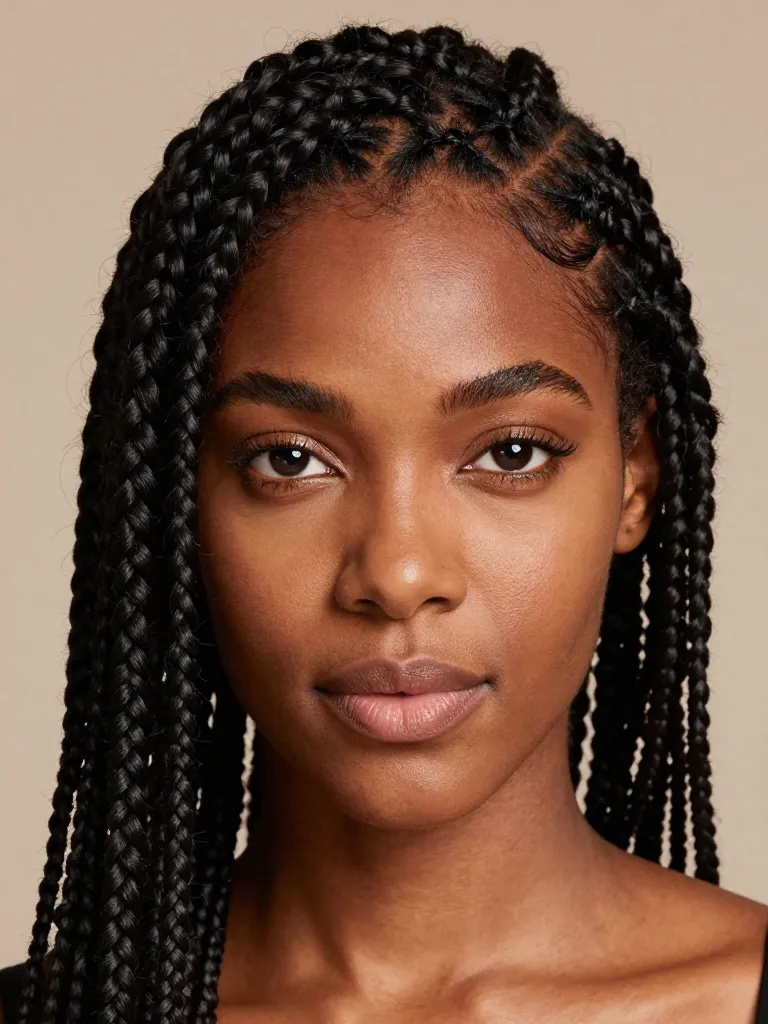
1. The Classic Straight-Back
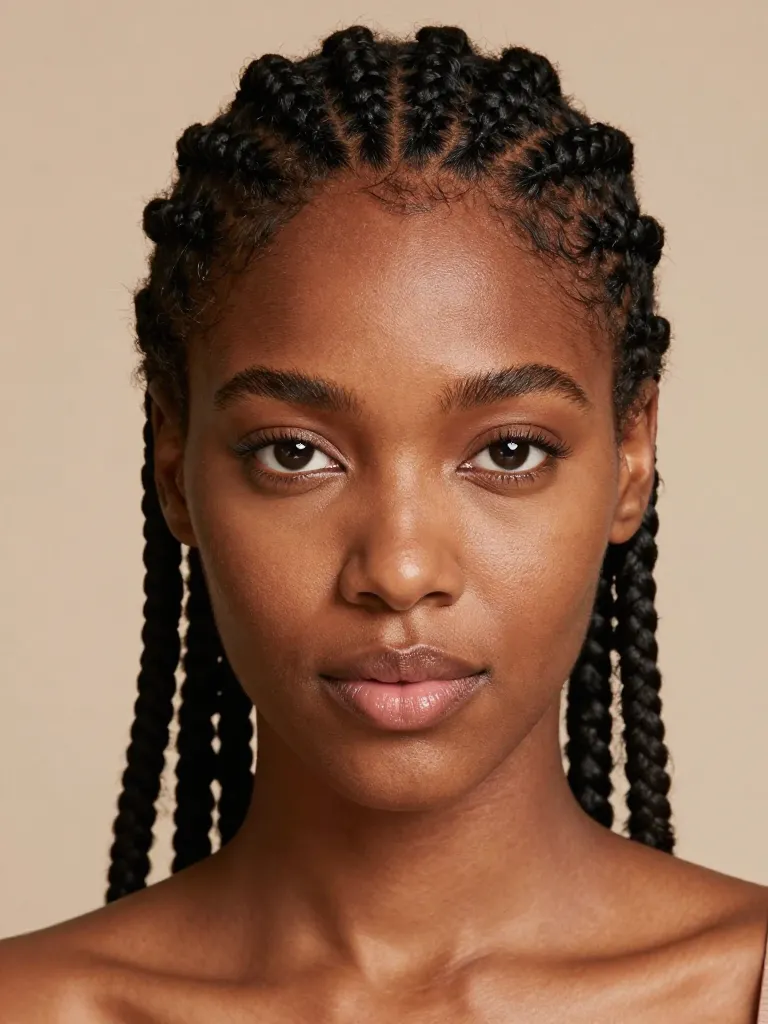
The classic straight-back is the foundation. Every cornrow style builds on this technique, so if you can do straight-backs well, you can do anything. The braids run from your hairline directly back to the nape, evenly spaced, with consistent tension throughout. On natural hair without extensions, the braids sit flatter and closer to the scalp, which actually looks cleaner than added-hair versions. The key challenge is keeping the parts straight and the tension even — natural hair has more texture to work through, which means each row takes longer to braid but holds better once it’s done. This is the style that earns respect in any braiding circle.
2. The Curved Feed Pattern
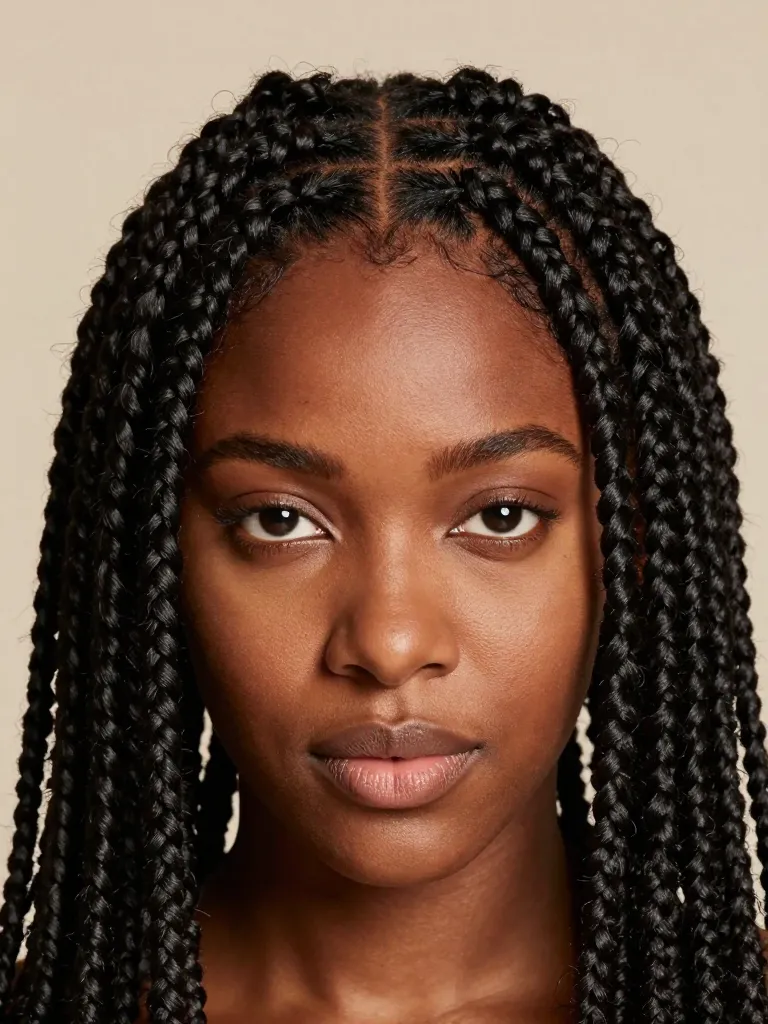
Curved cornrows add visual interest without adding complexity. Instead of straight lines, each row follows a gentle arc — starting at the center part and curving outward toward the ear. The effect is almost topographic, like contour lines on a map. This pattern works especially well on natural hair because the curves can follow your natural growth patterns instead of fighting them. If your hair grows in a swirl at the crown (and most natural hair does), curved rows accommodate that instead of forcing it flat. The trick is marking your curves before you start braiding — use the end of a rat-tail comb to draw the pattern on your scalp first.
3. The Zigzag Statement
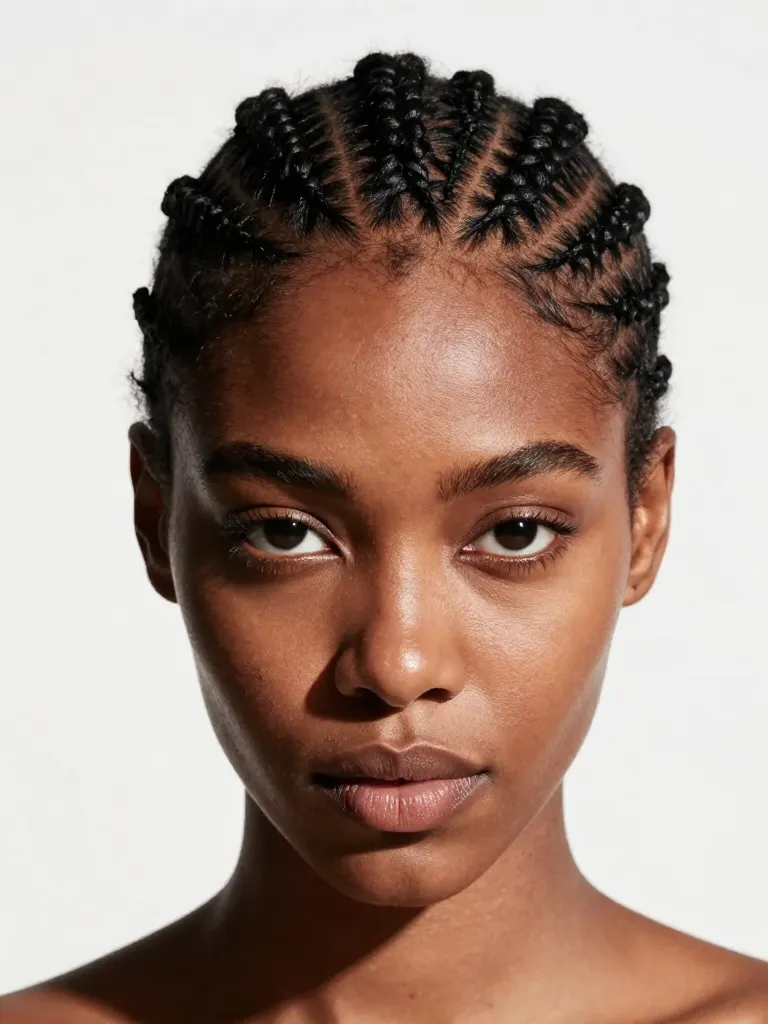
Zigzag cornrows are where geometry meets hair. Instead of straight or curved lines, the braids follow sharp angles — alternating direction at set intervals to create a zigzag pattern across the scalp. This requires tighter control than straight-backs because each angle change needs to be crisp. On natural hair, the zigzag actually holds better than on relaxed hair because the texture provides more grip at each turn. Start with wider zigzags if you’re new to this — narrow zigzags look incredible but require precision that takes practice. The finished style has a graphic quality that photographs exceptionally well.
4. The Halo Braid
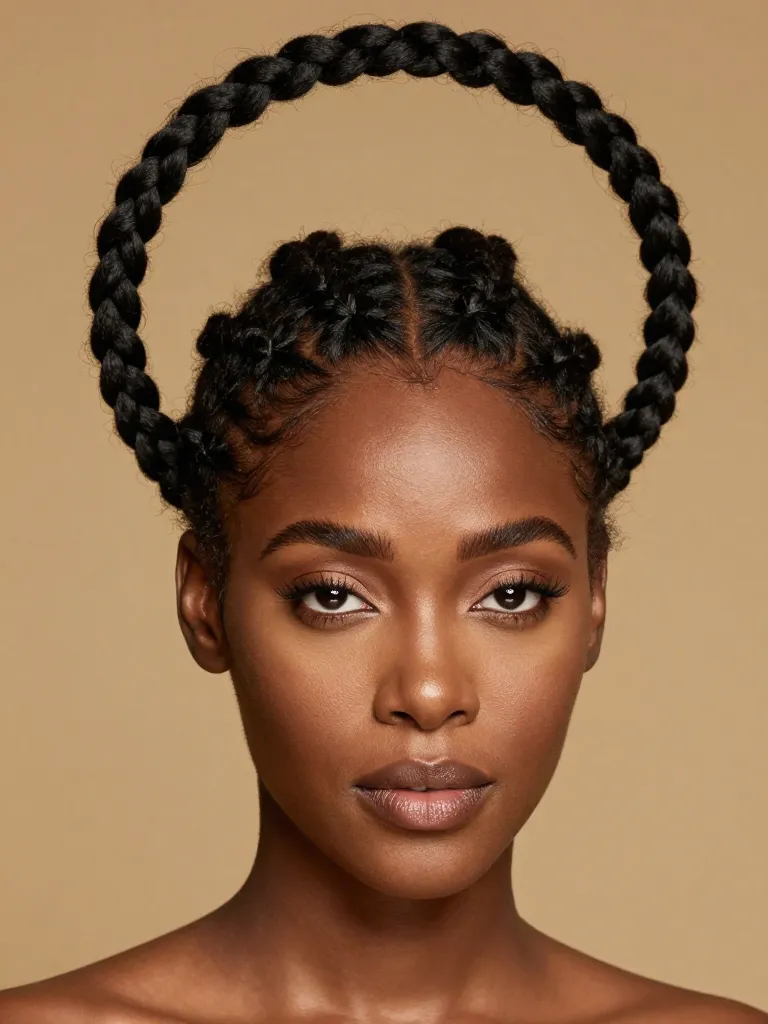
The halo braid is one cornrow that wraps around your entire head. It starts at the nape, travels up one side, across the crown, down the other side, and back to where it began. The result is a single continuous braid that frames your face and tucks all your natural hair away. This is maximum protection — every strand is enclosed, nothing is exposed to friction or weather. It’s also the most versatile base style: wear it as-is for a clean minimalist look, or pin flowers, scarves, or jewelry into the braid for events. On natural hair, the halo sits lower and flatter than with extensions, which actually looks more elegant.
Tools & Products
| Item | Purpose | Category |
|---|---|---|
| Rat-tail comb | Parting and sectioning — the precision tool for clean lines | tools |
| Edge control gel | Smoothing edges and flyaways for a polished finish | styling |
| Satin scarf or bonnet | Nightly protection to extend braid life | maintenance |
| Lightweight oil (jojoba or argan) | Scalp moisture without buildup | care |
Related Guides
Cornrows on natural hair for men — braiding without extensions — Men’s guide to cornrowing natural hair with specific techniques for shorter lengths.
How to braid cornrows on men — step-by-step tutorial — Full braiding tutorial with video-ready steps for cornrow technique.
Natural cornrows are having a moment, but they’ve always been here. No extensions, no additions, no pretending to be something you’re not — just your texture, your skill, and a pattern that makes people look twice. The beauty of cornrowing natural hair is that the texture does half the work. Your curls provide grip, body, and hold that added hair can’t replicate. The other half is your hands — clean parts, consistent tension, and the patience to braid through texture that wants to coil back on itself. Start with straight-backs. Master the foundation. Then let the patterns get wild.
Grab your rat-tail comb. Part a line. Start braiding.