Cornrows on Natural Hair for Men: How to Braid Without Extensions
Your natural hair is the braiding material. No synthetic. No extensions. Just your texture.
Most cornrow tutorials assume you’re adding synthetic braiding hair. But what if you want cornrows using only your natural hair? Natural hair cornrows are a different animal. Without synthetic hair to add bulk and length, the braids are thinner, closer to the scalp, and more dependent on your hair’s natural texture and density. The advantage: no blending, no synthetic hair maintenance, no hot-water sealing, and a more natural look. The disadvantage: the braids are thinner, may not last as long, and are less forgiving of uneven tension because there’s no synthetic hair to mask imperfections. This guide covers how to cornrow natural hair specifically — the prep, the technique, and the maintenance that makes natural-hair cornrows work.
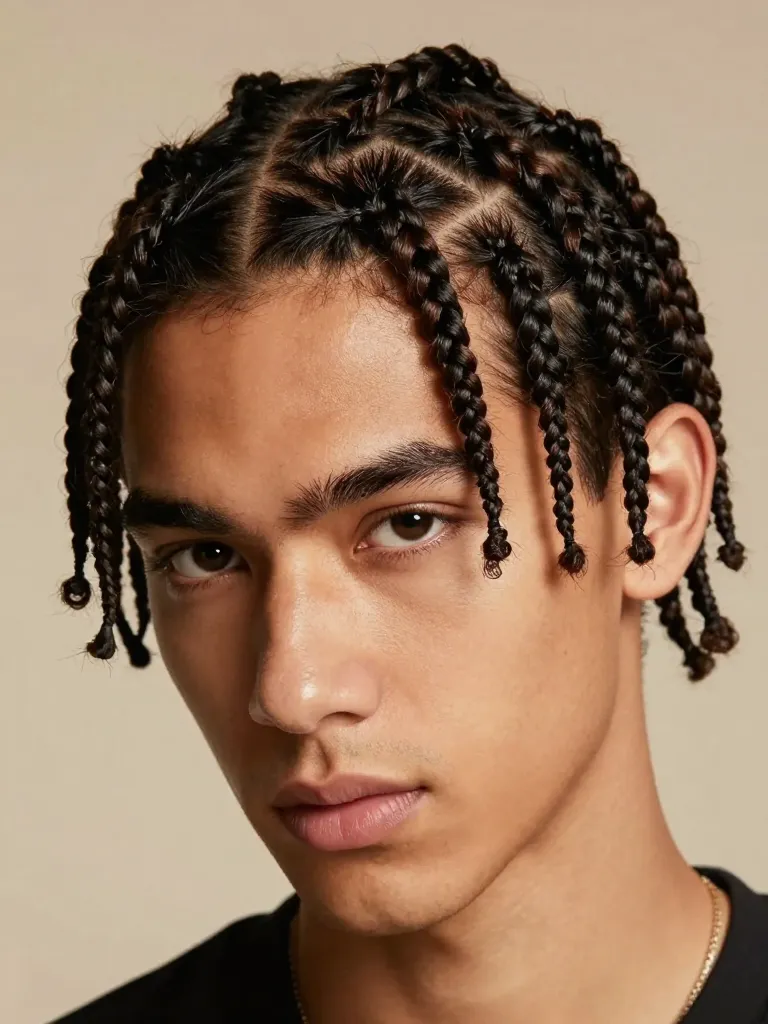
Step 1: Assess Your Hair’s Braiding Readiness
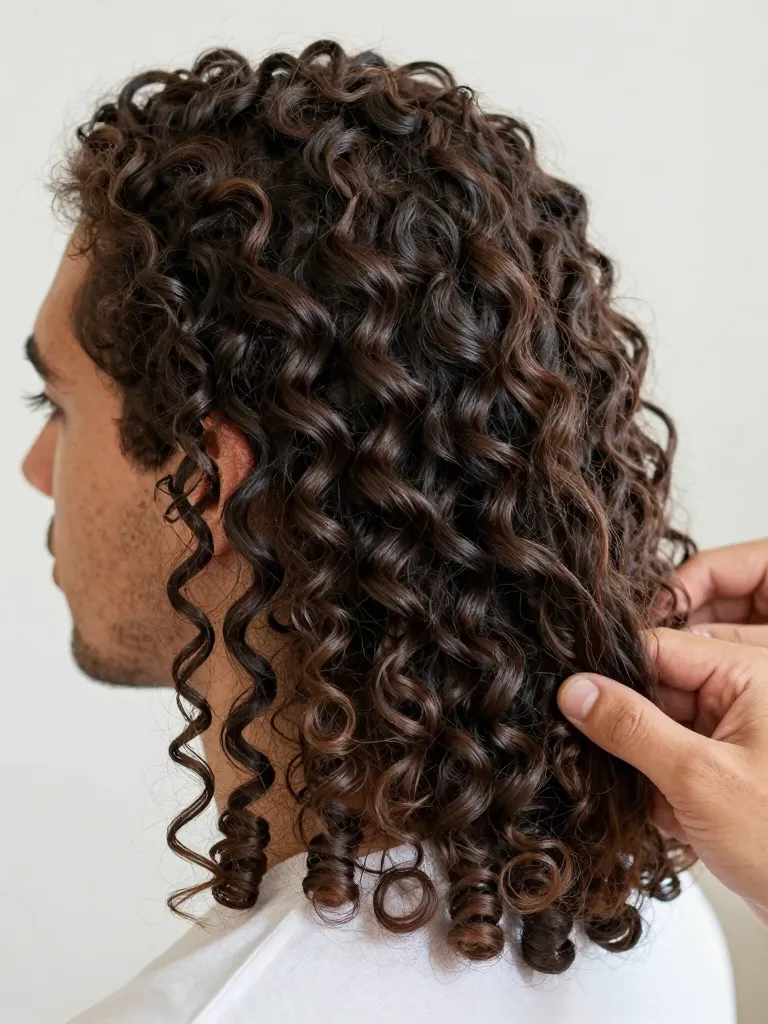
Natural hair cornrows require minimum length — 2 inches at the bare minimum, 3-4 inches for comfortable braiding. Below 2 inches, there’s not enough hair to grip and the braids unravel within hours. Assess your hair’s density too: thin hair produces very fine braids that may not hold well, while thick hair produces robust braids that can look bulky. The texture matters as well — tightly coiled hair (type 4a-4c) grips itself naturally and produces the cleanest cornrows, while looser curl patterns (type 3) may slip more and need more tension to hold. Before braiding, stretch your natural hair using a blow dryer on low heat with a concentrator nozzle, or use the banding method (wrapping sections with elastic bands overnight). Stretched hair is easier to part, easier to braid, and produces smoother, more uniform cornrows than shrunken coily hair.
Timing: 15-20 minutes
Prerequisites: Blow dryer with concentrator (or elastic bands for banding method, Moisturizing conditioner
Step 2: Moisturize and Detangle — The Foundation of Clean Braids
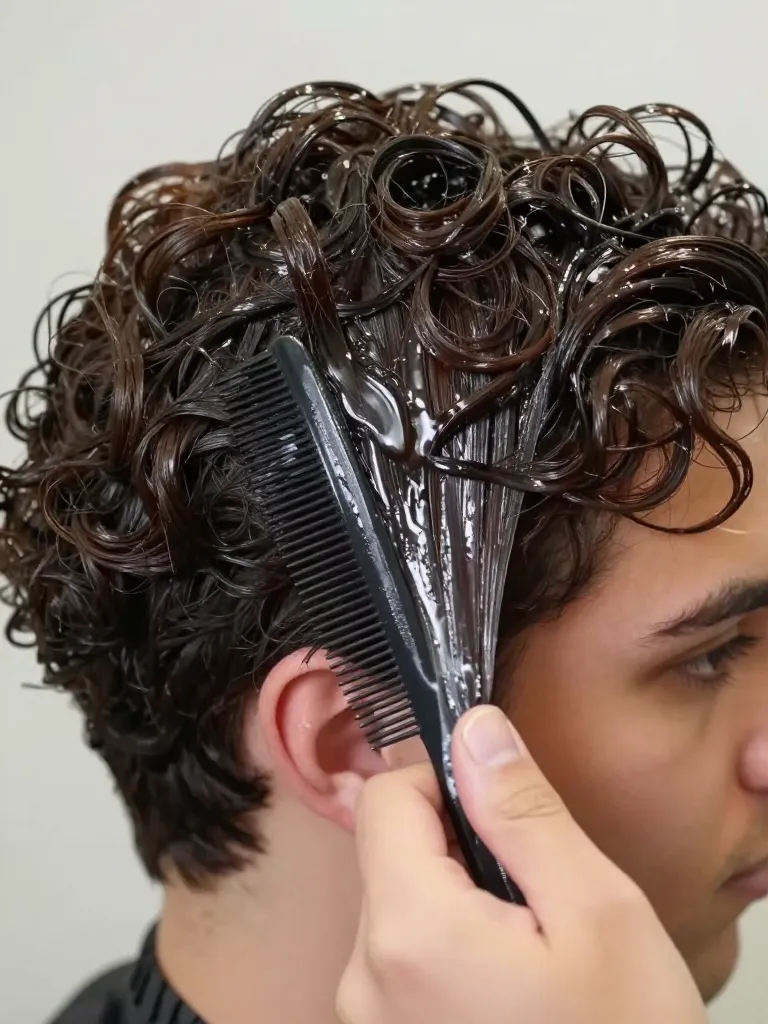
Natural hair cornrows are less forgiving of tangles than synthetic-extension braids. Without synthetic hair to add slip and weight, any knots or tangles in your natural hair create bumps and uneven sections in the braid. Start with freshly washed, conditioned hair. Apply a generous amount of moisturizing conditioner — the slip is what makes detangling possible. Use a wide-tooth comb or detangling brush, starting from the ends and working up to the roots. Never start from the roots — this pushes tangles together and creates a matted section. The goal is hair that’s smooth, tangle-free, and evenly moisturized from root to tip. This prep step is the difference between cornrows that look professional and cornrows that look like you rushed through it.
Timing: 15-20 minutes
Prerequisites: Moisturizing conditioner, Wide-tooth comb or detangling brush, Patience
Step 3: Part and Braid — Natural Hair Technique Adjustments
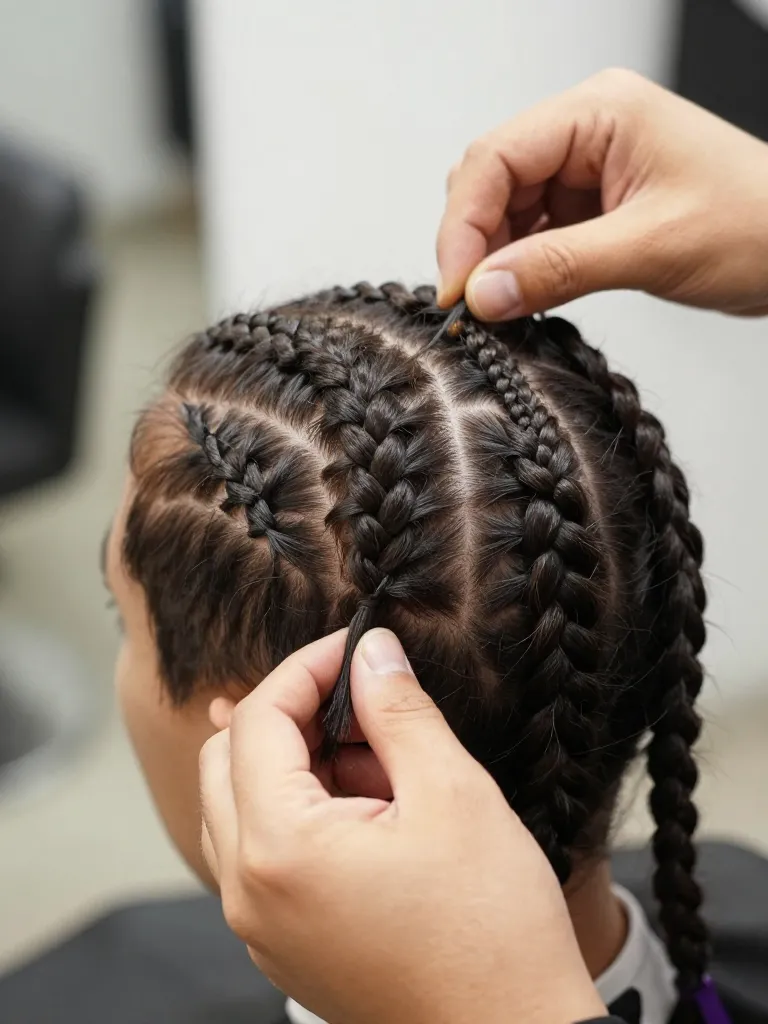
Natural-hair cornrows use the same feed-under technique as extension cornrows, but with adjustments. The sections are smaller — because there’s no synthetic hair adding bulk, you need more rows to cover the same area. The tension needs to be tighter — natural hair is lighter than synthetic hair and has less grip, so firmer tension keeps the braids flat. The braiding rhythm is faster — without the feed-in step of adding synthetic hair, each stitch is quicker. Part the hair into rows (0.5-1 inch wide for natural-hair cornrows — narrower than extension cornrows). Braid each row using the feed-under technique, maintaining firm, consistent tension. The braids will be thinner than extension cornrows — this is normal and expected. Natural-hair cornrows have a more subtle, refined look compared to the bold statement of extension braids.
Timing: 10-15 minutes per row
Prerequisites: Rat-tail comb, Sectioning clips, Braiding gel, Steady hands
Step 4: Seal and Set the Style
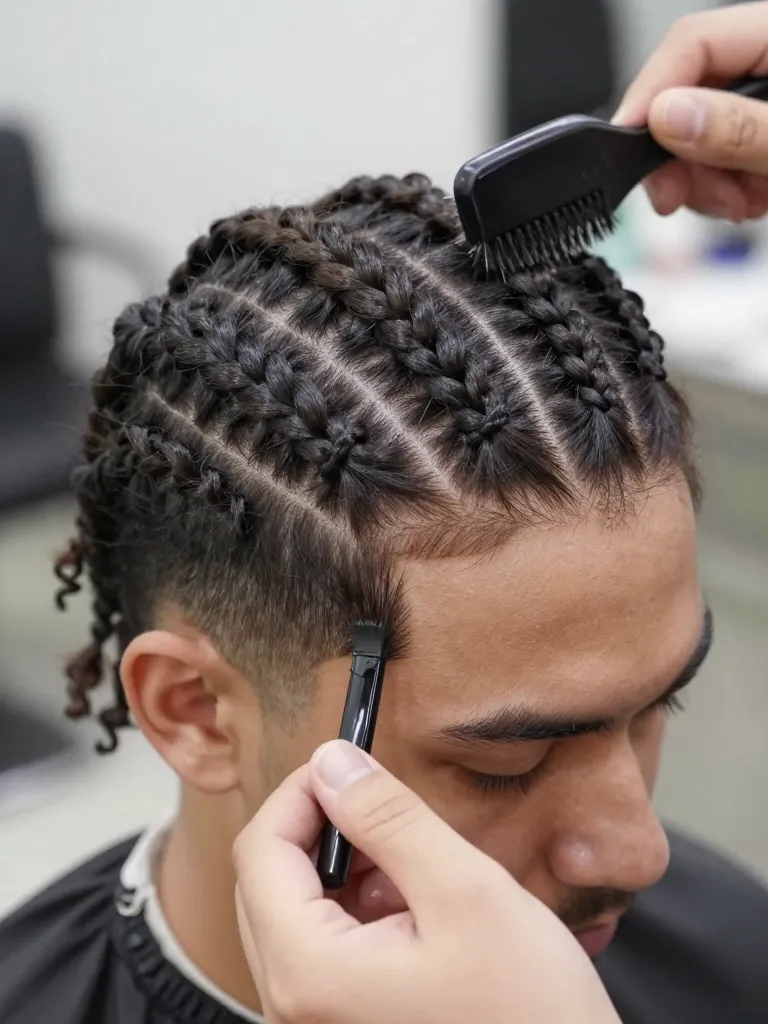
Natural-hair cornrows don’t need hot-water sealing (that’s for synthetic hair). Instead, set the braids with a light mousse or setting lotion — apply it over the braids and smooth with your palms. This reduces frizz and helps the braids hold their shape. Apply edge control to the hairline and baby hairs for a polished finish. For extra hold, you can tie the braids down with a satin scarf for 15-20 minutes — this presses the braids flat and sets the style. Natural-hair cornrows typically last 1-2 weeks — less than extension cornrows because natural hair is lighter and more prone to frizzing. But the trade-off is a more natural, refined look that reads as effortless rather than constructed.
Timing: 10-15 minutes finishing
Prerequisites: Mousse or setting lotion, Edge control, Soft brush, Satin scarf
Step 5: Maintain Natural-Hair Cornrows
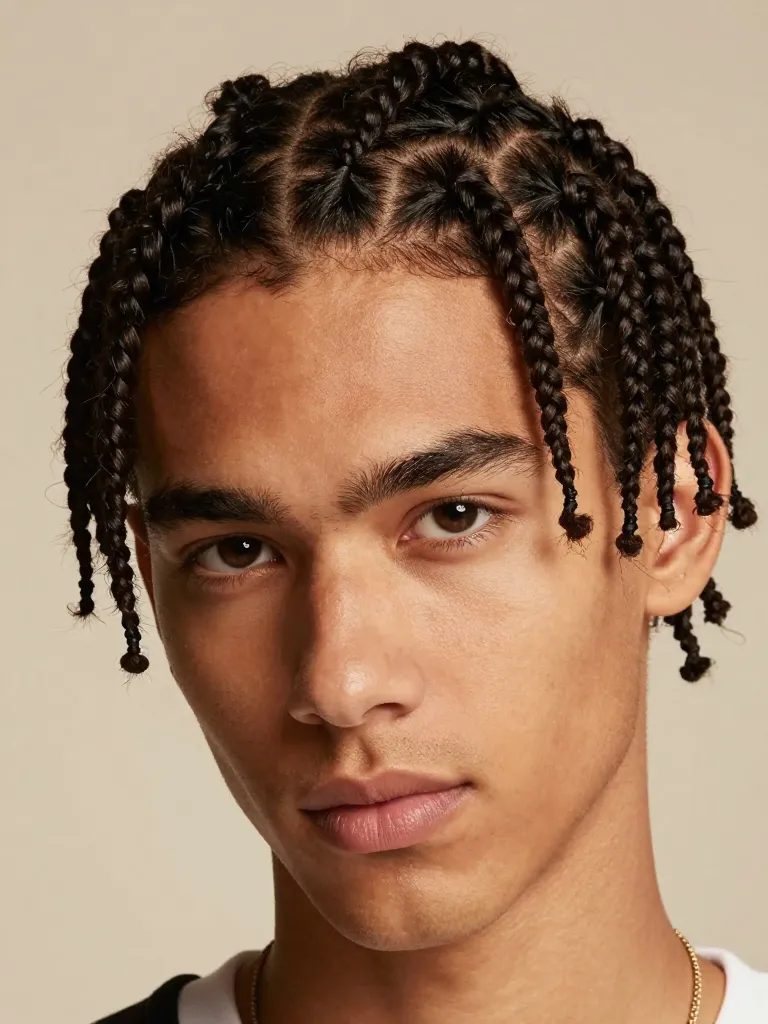
Natural-hair cornrows need more frequent maintenance than extension braids because natural hair is more prone to frizz and shrinkage. Every night, wrap in a satin durag or sleep on a satin pillowcase. Every morning, smooth any frizzy braids with a small amount of mousse applied with your fingers. Oil the scalp every 2-3 days with lightweight oil — natural hair needs moisture to stay pliable and resist breakage. When the braids start looking fuzzy (usually after 5-7 days), you can refresh them by applying mousse and re-smoothing with your palms. Natural-hair cornrows are a lower-commitment style than extension braids — they’re easier to install, easier to take down, and put less stress on the hair. They’re the braided style for guys who want the cornrow look without the weight and maintenance of synthetic hair.
Timing: 5 minutes daily maintenance
Prerequisites: Satin durag, Lightweight oil, Mousse
Safety Warnings
⚠️ Natural hair is more fragile than synthetic hair — excessive tension causes breakage faster
⚠️ Don’t braid wet natural hair — it shrinks as it dries, which creates painful tension and uneven braids
⚠️ Give your hair 1 week rest between natural-hair cornrow installations
Why This Works
Natural-hair cornrows work because they leverage the hair’s inherent grip and texture. Coily hair (type 4a-4c) has a natural interlocking tendency — the coils grip each other, which is what makes cornrowing possible without extensions. The tighter the coil pattern, the better the grip, and the cleaner the cornrow. This is why type 4 hair produces the sharpest natural-hair cornrows. The absence of synthetic hair means the braids are lighter, which reduces traction on the follicles. The trade-off is durability — natural hair is more prone to frizz and environmental moisture than synthetic hair, which is why natural-hair cornrows last 1-2 weeks instead of 2-3. But for guys who want a braided style that’s lighter, more natural-looking, and easier on the hair, natural-hair cornrows are the superior choice.
Pro Tips
- Stretch before braiding: Stretched natural hair braids cleaner than shrunken hair — always stretch first
- Tighter tension than extensions: Natural hair is lighter and slips more — maintain firm tension throughout
- Smaller sections: 0.5-1 inch sections for natural-hair cornrows — narrower than extension braids
- Mousse is your friend: Light mousse reduces frizz and sets the braids — use it daily on natural-hair cornrows
- Satin every night: Non-negotiable — cotton absorbs moisture and creates friction that frizzes natural-hair braids
- Lower commitment style: Natural-hair cornrows are easier to install and take down — great for guys new to braids
Natural-hair cornrows are the purest form of men’s braiding. No synthetic hair, no extensions, no hot-water sealing — just your natural texture, braided close to the scalp in clean, defined rows. The braids are thinner and more refined than extension cornrows, with a look that reads as effortless and natural. The technique is the same as extension cornrowing — feed-under, consistent tension, clean parts — but the material is different, and that changes the approach. If you have 3+ inches of natural hair and want a braided style that’s lighter, more natural, and easier on your follicles, natural-hair cornrows are the move.
Your hair is the material. The technique is the tool. Build accordingly. ✂️