How to Get the Korean Two-Block Haircut: The Complete DIY Guide
The sides go short. The top goes long. The line between them is pure geometry.
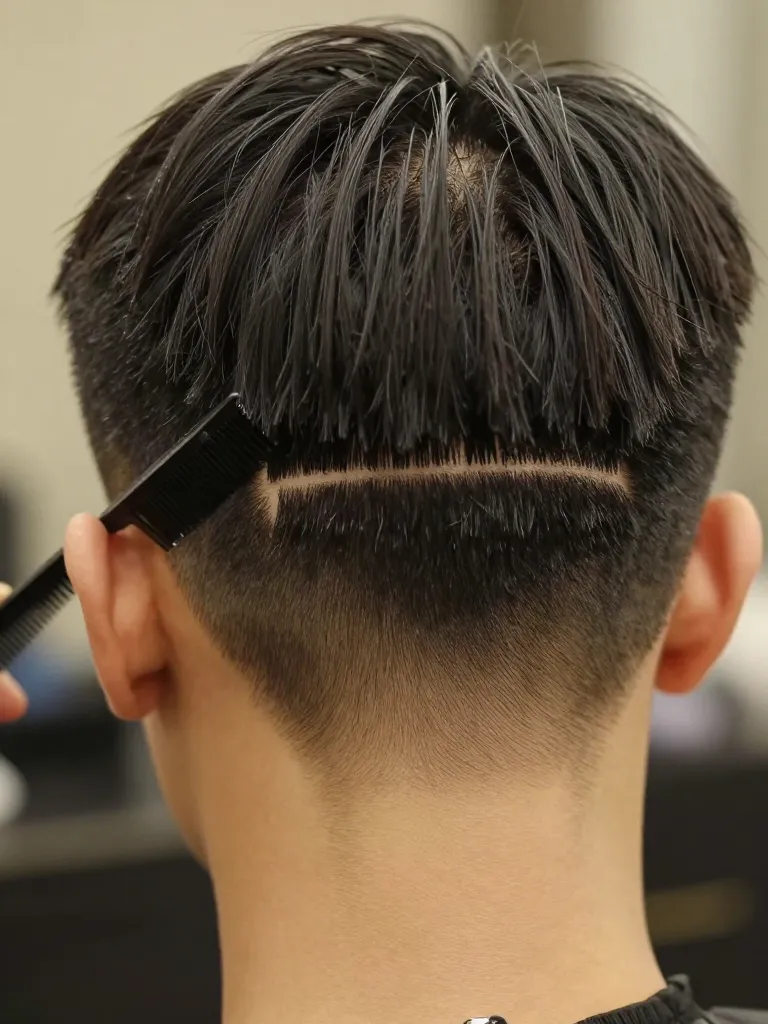
The two-block haircut is the most recognizable Korean men’s haircut on the planet — and the most misunderstood. People think it’s just ‘short sides, long top.’ It’s not. The two-block is about creating two distinct geometric zones on the head: a clippered lower block (sides and nape) and a layered upper block (top and crown) that can be 3-4 times the length of the lower block. The transition between them isn’t a fade — it’s a deliberate architectural break. Getting this cut right means understanding where each block starts, how to layer the top for movement, and how to style the contrast. Here’s the complete guide.
Step 1: Define the Lower Block Boundary
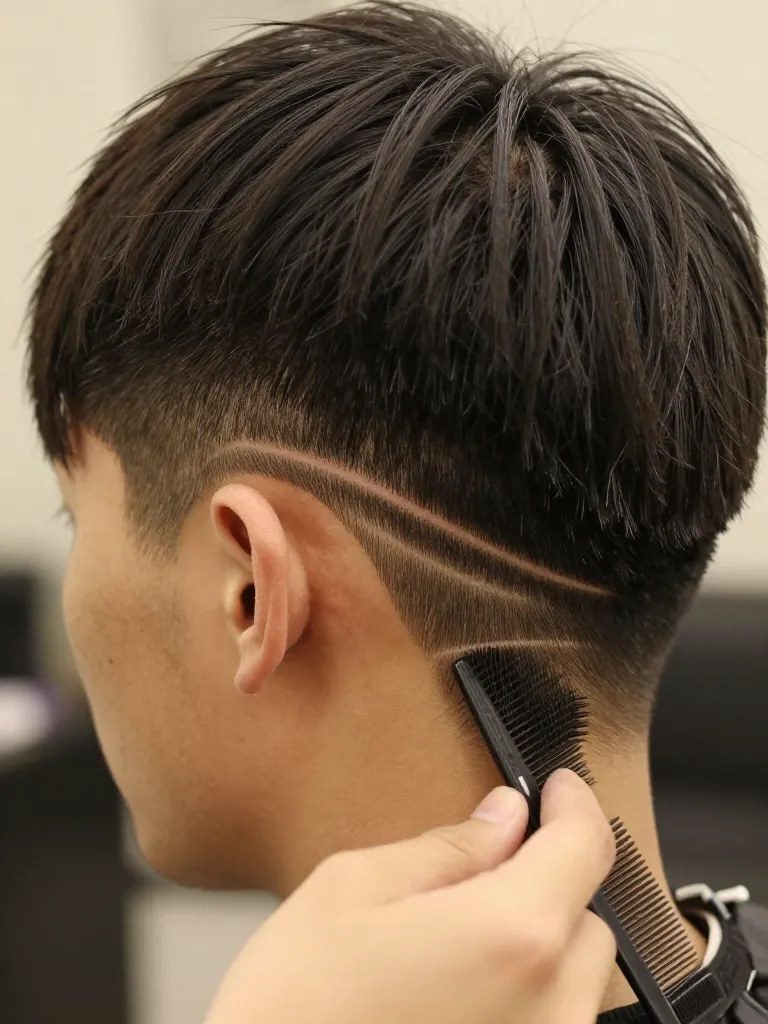
The two-block starts with one critical line: where the lower block ends and the upper block begins. This line runs horizontally from temple to temple, curving around the occipital bone (the bump at the back of your skull). The standard placement is 1-1.5 inches above the ear, following the natural curve of the skull. Use a rat-tail comb to create a clean part line. Clip everything above this line up and out of the way. Everything below — the sides, sideburns, and nape — is the lower block. This is the zone that gets clippered. The precision of this line determines whether your two-block looks intentional or accidental.
Step 2: Clipper the Lower Block
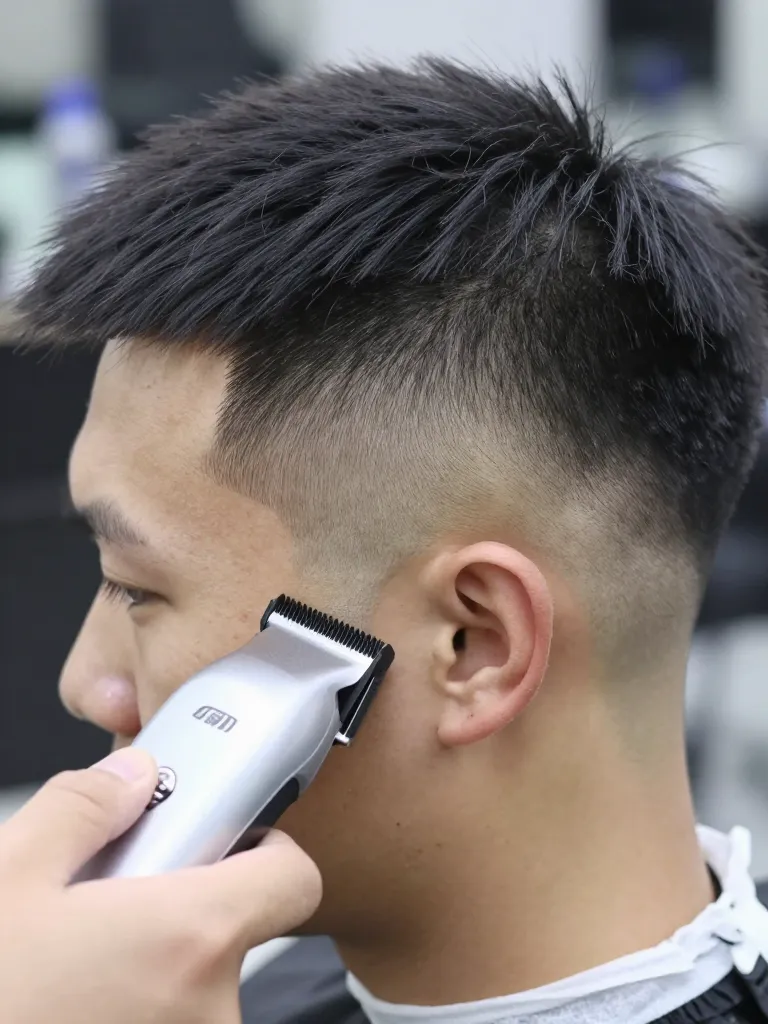
With the upper block clipped out of the way, take your clippers with a #2 guard (6mm) — this is the standard Korean two-block length for the lower block. Start at the nape and work upward in smooth, overlapping strokes. Keep the clipper flat against the head — don’t scoop or you’ll create uneven lengths. The goal is uniform stubble from the nape line up to the sectioning line you just created. For the sideburns, taper down to a #1 guard at the very edge for a clean fade into skin. At the temples, follow the natural hairline — don’t round it off or create a widow’s peak. The lower block should read as one uniform zone of short hair.
Step 3: Layer the Upper Block for Movement
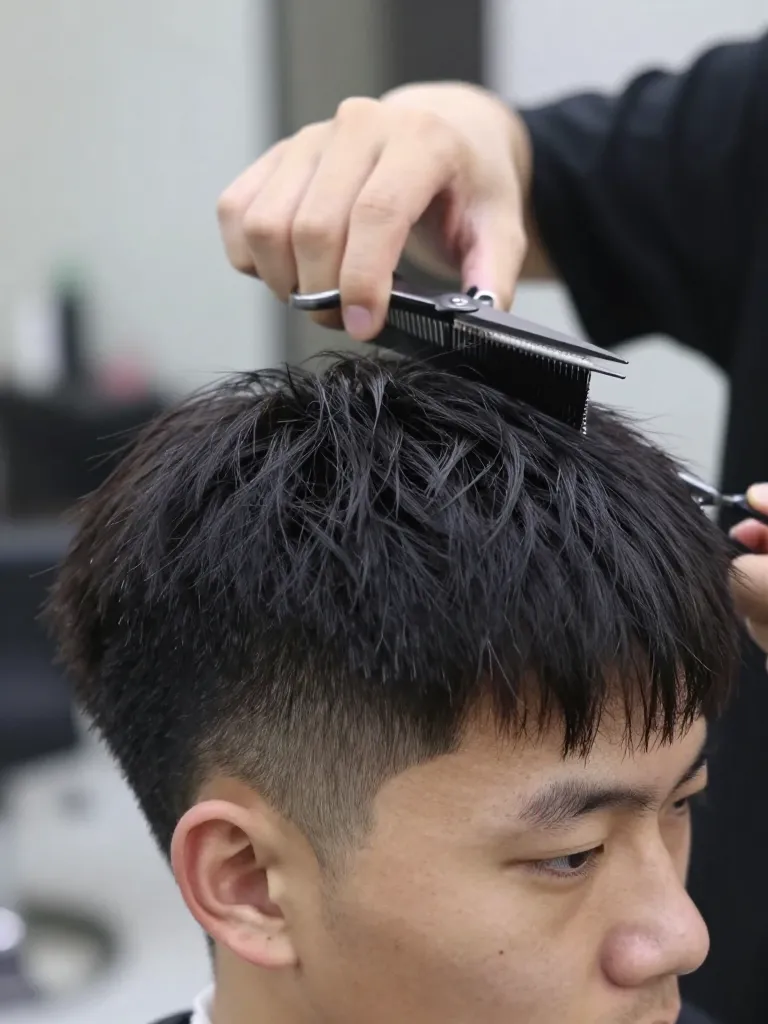
The upper block is where the two-block haircut lives or dies. Release the clipped top section. The crown should be 4-5 inches — this is the maximum length zone. Working forward, gradually decrease to 3-4 inches at the fringe. Take vertical sections and point-cut into the ends at steep angles — this creates the choppy, piece-y texture that prevents the top from looking like a helmet. For the front fringe area, cut at an angle so the center is slightly shorter than the sides — this creates the natural curtain shape when styled. The layering must be aggressive enough that the top has visible movement when dry, not just when wet and styled.
Step 4: Refine the Transition Zone
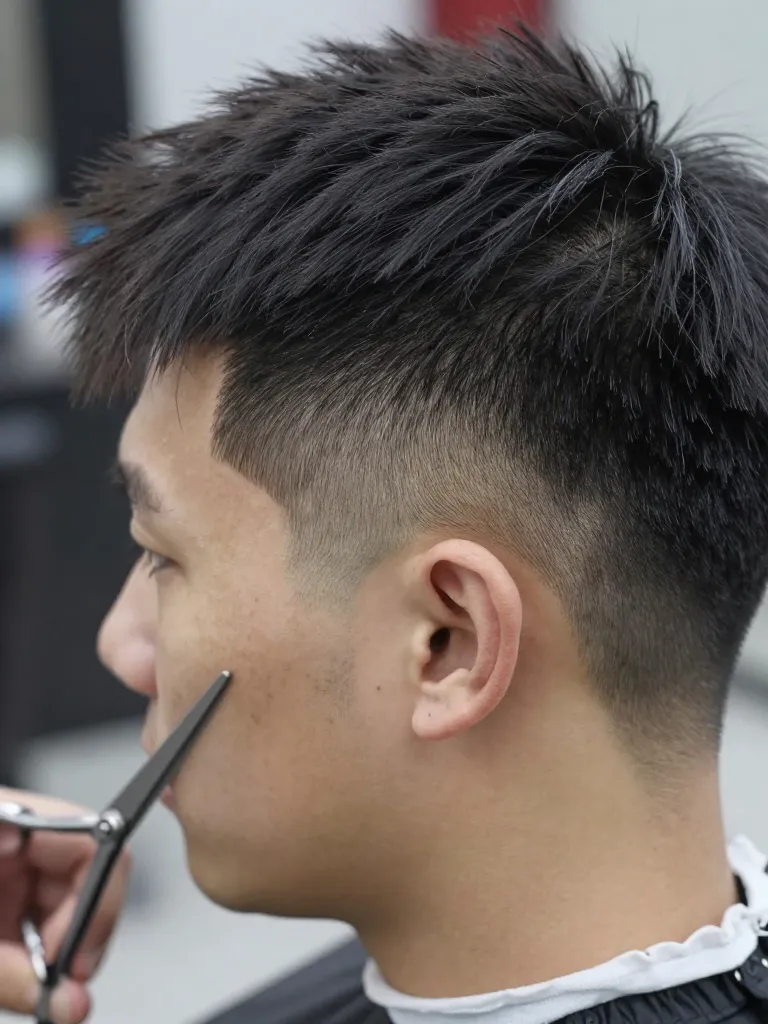
The transition zone — where the clippered lower block meets the layered upper block — is what separates a professional two-block from a DIY disaster. The standard Korean two-block has a visible transition line (it’s not a fade), but it shouldn’t be a hard shelf. Using thinning shears, work along the transition line in short, choppy strokes. Remove weight from the underside of the upper block where it meets the lower block. This softens the line without eliminating it. The transition should read as ‘intentional geometric contrast’ — not ‘forgot to finish the haircut.’ For a more dramatic two-block, leave the transition sharp. For a more wearable version, blend 0.5-1 inch above and below the line.
Step 5: Style the Two-Block
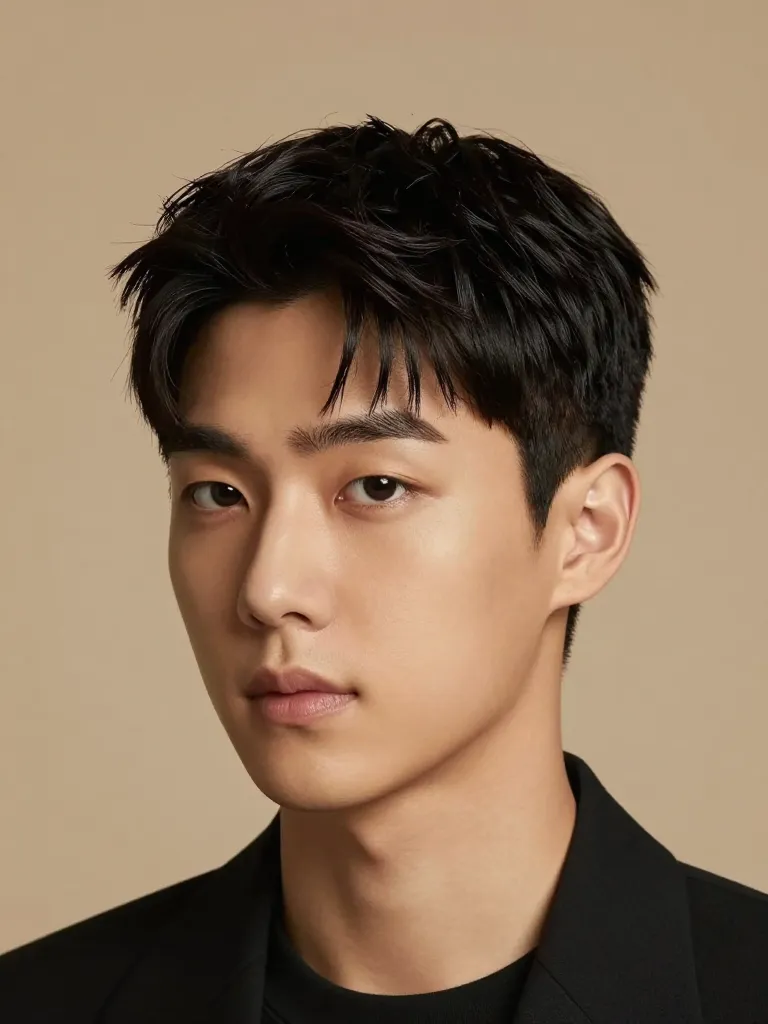
Styling the two-block is about emphasizing the contrast between the two zones. Start with damp towel-dried hair. Apply a matte clay or texturizing paste — work it through the upper block only, scrunching and lifting at the roots for volume. For the classic Korean two-block look, sweep the top to one side with your fingers, creating a deep side part that follows the natural growth direction. For a curtain fringe variation, part in the center and let the fringe fall forward. For maximum impact, blow-dry the upper block while directing it to one side — this builds volume and locks in the direction. The lower block needs zero product — its job is to disappear. The upper block needs to command attention.
Safety Warnings
- Always use clipper guards — going guardless on the lower block creates razor burn and uneven patches
- Never cut the upper block wet to your target length — straight Asian hair shrinks 0.5-1 inch when dry
- Point-cut at steep angles on the upper block — shallow cuts create blunt texture that looks like a shelf
Why This Works
The two-block haircut works because it treats the head as two separate architectural zones rather than one uniform surface. The clippered lower block creates a clean, minimal frame that makes the face appear slimmer and more angular — it’s visual subtraction. The layered upper block adds height, movement, and drama — it’s visual addition. The contrast between the two zones creates a geometric silhouette that’s visible from every angle, which is why the two-block photographs so well from the side and back, not just the front. Korean barbering techniques specifically account for the thickness and straightness of Asian hair — aggressive point-cutting and layering create the movement that straight hair won’t produce on its own.
Pro Tips
Related Articles
The two-block haircut is proof that the best Korean men’s haircuts aren’t about following trends — they’re about understanding geometry. Two distinct zones, one clean transition, unlimited styling options for the upper block. The lower block does the work of framing. The upper block does the work of impressing. Together, they create a silhouette that’s been making K-drama audiences question their haircut choices for a decade. The barber’s #3 guard could never.
Two blocks. One skull. Zero comparison to the generic fade. ✂️