How to Cut and Style a Men’s Mullet for Straight Hair
Straight hair doesn’t have texture problems. It has flatness problems. Here’s how to solve both.
Straight hair and mullets have a complicated relationship. Straight hair lays flat, which means the ‘party in the back’ can quickly become ‘curtain in the back’ if you don’t engineer the volume and texture correctly. The good news: straight hair holds clean lines better than any other texture, which means your gradient will look sharp, your layers will separate cleanly, and your fade (if you go that route) will be crisp. The bad news: you need to actively create the texture that curly-haired guys get for free.
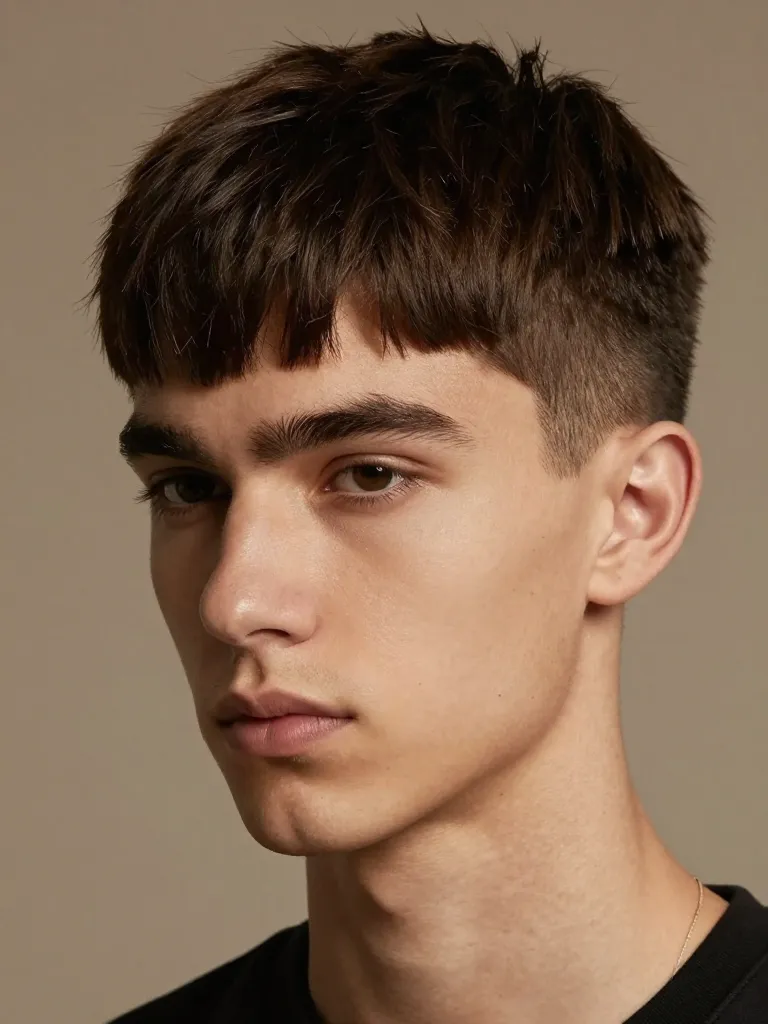
Step 1: Establish the Length Differential
- Rat-tail comb
- Sectioning clips
- Mirror
For straight hair, the length differential between front and back needs to be more dramatic than wavy or curly hair — because straight hair lays flat, the mullet silhouette relies entirely on length contrast, not texture volume. Part your hair from ear to ear at the crown apex. Clip the front/top up. The back should be left at 4-5 inches past the nape — longer than you’d go with curly hair, because straight hair shrinks zero. The front/top will be cut to 2-3 inches on top, 1-1.5 inches on the sides. That 3-4 inch differential is what makes the mullet readable on straight hair.
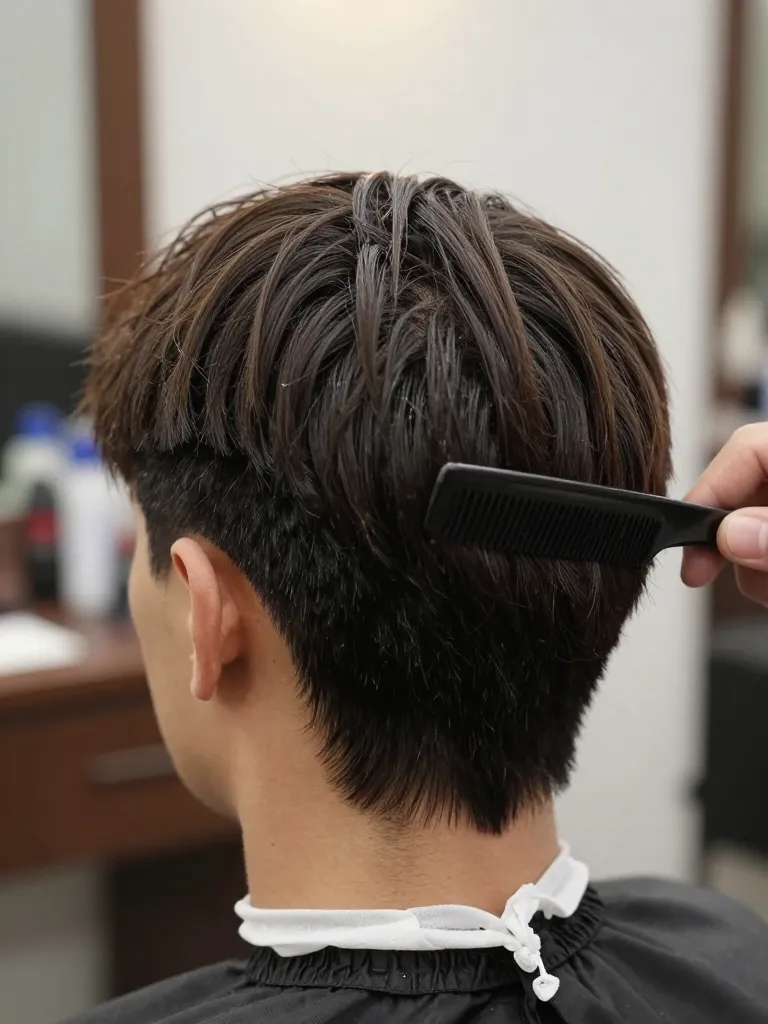
Step 2: Cut the Back with Internal Layering
- Sharp shears
- Comb
- Sectioning clips
Straight hair needs internal layering more than any other texture — without it, the back hangs like a flat curtain. Comb the back hair straight down. Cut the outer layer to your target length (collar to mid-collar). Then, take horizontal sections through the interior and cut each one 0.5-1 inch shorter than the layer above. This creates internal weight removal — the outer layer looks full and shaped, but the inside has space for movement.
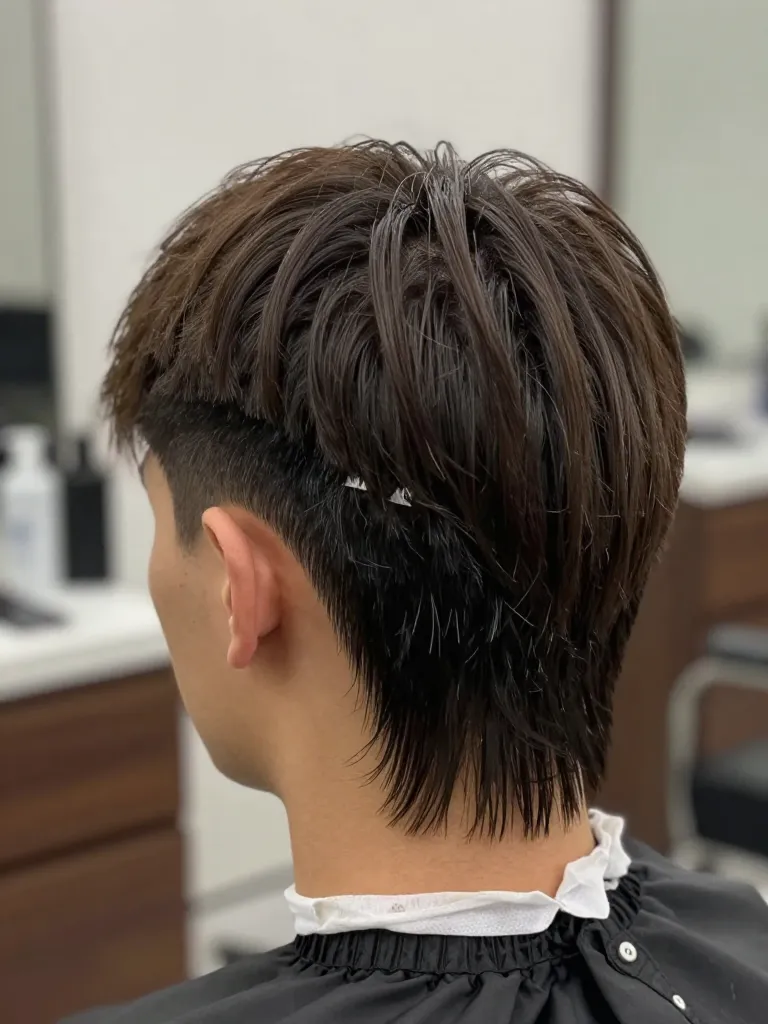
Step 3: Build the Textured Top
- Sharp shears
- Comb
- Mirror
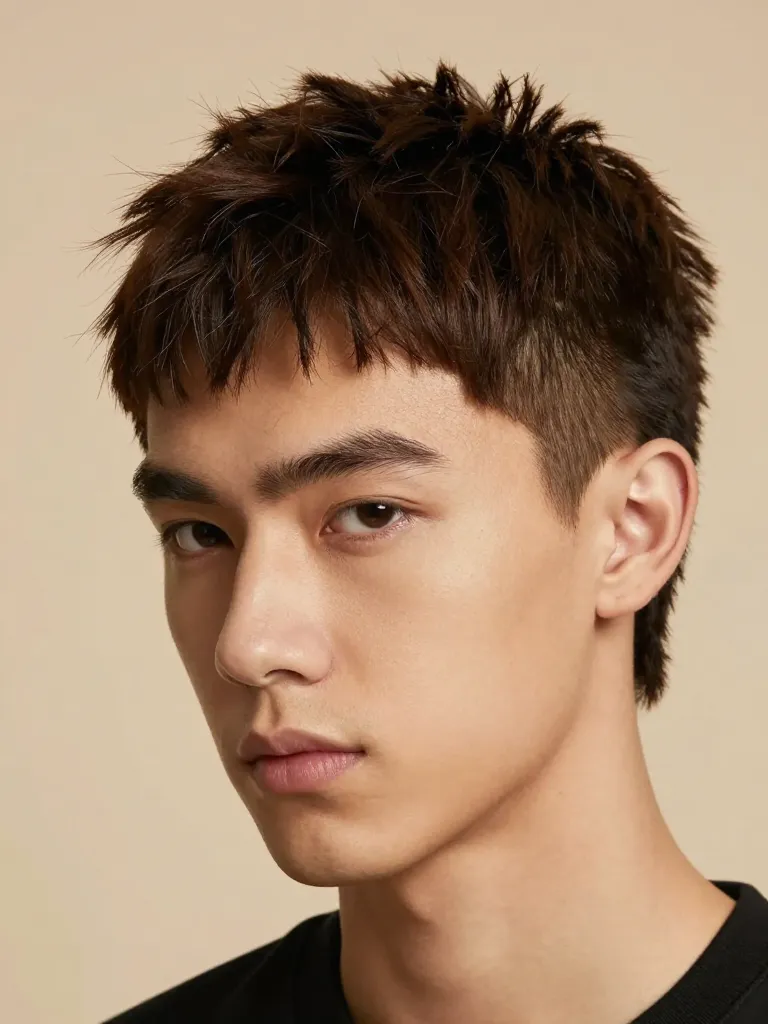
The top of a straight-hair mullet needs aggressive texturing to avoid looking like a helmet. Release the clipped front/top section. Take vertical sections and point-cut into the ends at steep angles — this creates the choppy, piece-y texture that straight hair doesn’t naturally have. The crown should be 2-3 inches (enough for volume when styled). The fringe should be 2-3 inches, cut at an angle so it’s shorter in the center and longer at the temples. Work toward the back, gradually lengthening the layers so they blend into the back section.
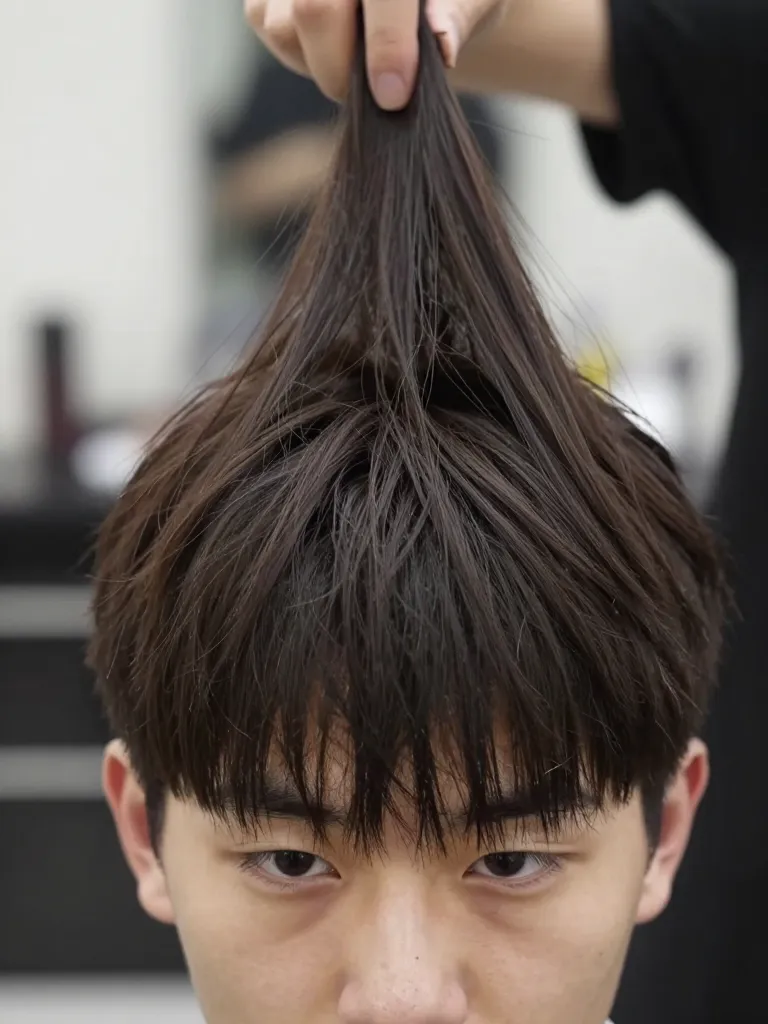
Step 4: Texturize the Back for Movement
- Razor comb
- Regular shears for refinement
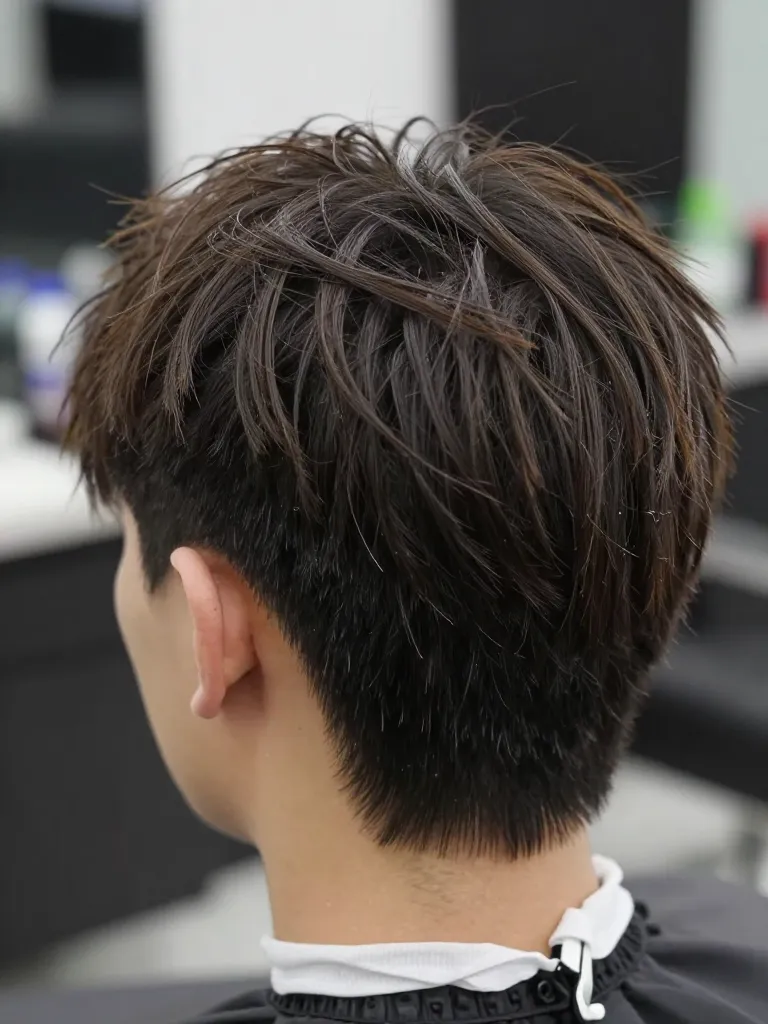
The back of a straight-hair mullet needs active texturing — it won’t create movement on its own. Using a razor comb, work through the mid-lengths and ends in short, choppy strokes. Focus on removing weight from the interior while keeping the outer shape intact. The goal is visible strand separation — when you run your fingers through the back, you should feel individual sections, not a solid mass.
Step 5: Style for Volume and Texture
- Matte clay or paste
- Blow dryer
- Flexible-hold hairspray
Straight-hair mullets need product to live. Without it, gravity wins and the back flattens by lunchtime. Start with damp hair. Apply a matte clay or texturizing paste — work it through the mid-lengths and ends, scrunching the back to activate the texture. For the top, blow-dry while directing the hair forward and slightly up — this builds volume at the crown and creates the textured crop shape. Finish with a light mist of flexible-hold hairspray.
Why This Works
Straight hair and mullets work together because straight hair excels at the one thing mullets need most: clean lines. The gradient from short front to long back reads as sharper and more geometric on straight hair than any other texture. The challenge — flatness — is solved through internal layering (structural weight removal) and texturing (surface-level movement creation). The product layer is the final engineering: matte clay adds grip and separation that straight hair doesn’t have naturally, while the blow dryer builds the volume that gravity tries to remove.
Safety Warnings:
- Always use sharp hair-cutting shears — dull blades crush straight hair cuticles and cause visible split ends
- Razor in one direction only on straight hair — back-and-forth strokes cause frizz
- Cut less than you think — straight hair shows length more than curly hair at the same measurement
Pro Tips
Related Guides
- All men’s mullet variations — the full overview
- Curly mullet guide for men — if your hair has natural wave or curl
The straight-hair men’s mullet is an exercise in creating texture where none exists naturally. You’re engineering movement through internal layering, surface texturing, and product application. The result is a mullet that looks effortlessly textured — which is the hardest kind of effort. But when it works, it works. The clean lines, the sharp gradient, the piece-y texture — straight hair gives you a precision that other textures can’t match.
Straight hair, sharp lines, engineered texture. That’s the formula. ✂️