How to Cut a Taper Fade Haircut for Men: The Low-Maintenance Fade Guide
The fade that only touches the edges. Subtle, refined, and it grows out in weeks.
The taper fade is the fade for guys who don’t want a fade. Or more accurately, it’s the fade for guys who want the clean edges of a fade without the commitment of a full skin gradient. The taper fade only shortens the hair at the natural growth edges — the sideburns, around the ears, and the neckline. The rest of the side is left at natural length or slightly trimmed. The result is a cut that reads as ‘well-groomed’ rather than ‘just left the barber chair.’ It grows out gracefully (4-6 weeks between visits), works in conservative environments, and pairs with longer top styles that need a clean neckline without losing side length. Here’s how to build it.
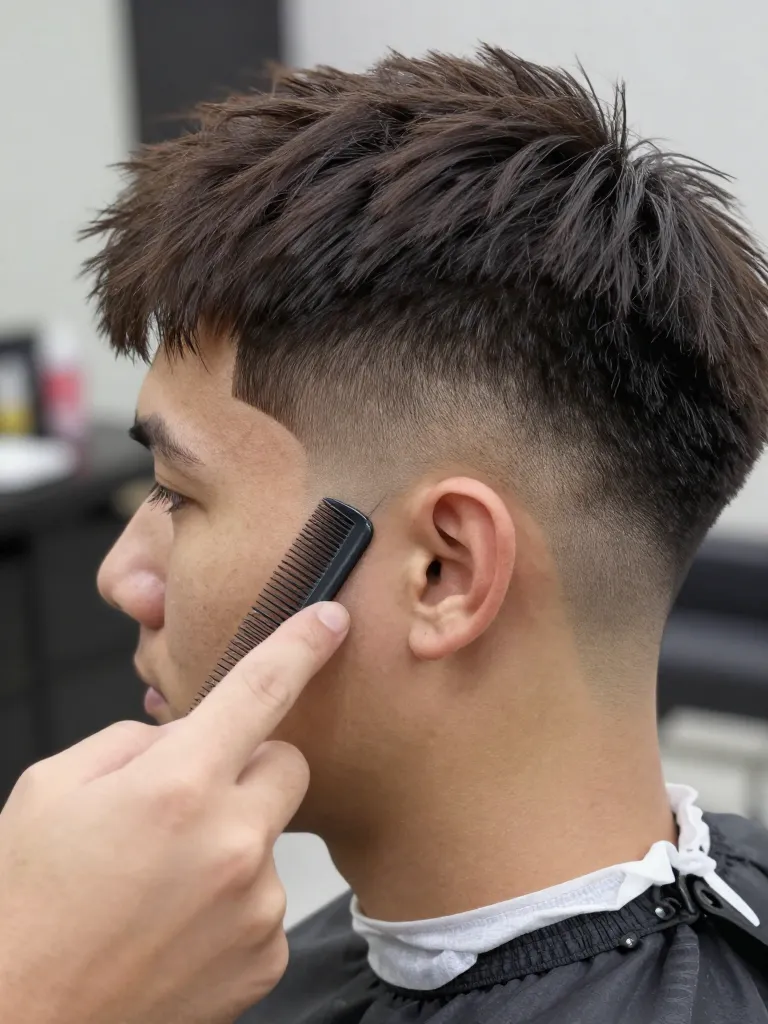
Step 1: Identify the Taper Zones
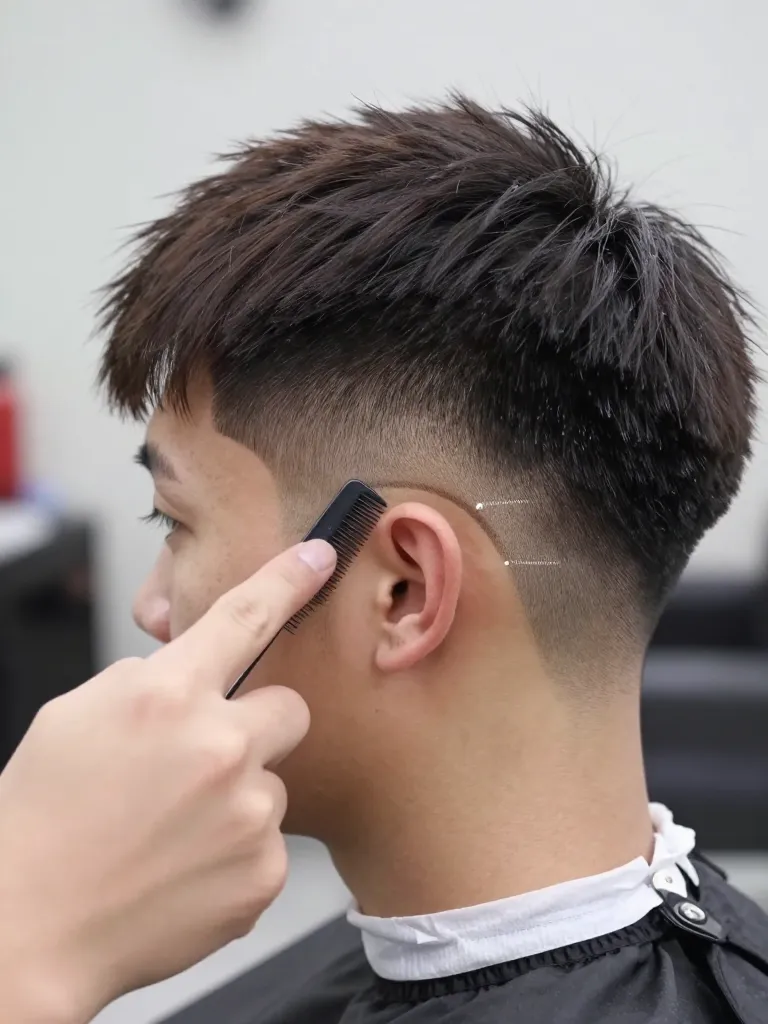
The taper fade only affects three zones: the sideburns, the area around the ears, and the neckline. Unlike a full fade that gradients the entire side, the taper leaves the majority of the side at natural length. The taper zones are where hair grows thickest and most unruly — by shortening these edges, you create a clean, defined silhouette without losing the natural length on the sides. Before you cut, identify each zone: the sideburns (from the ear up to the temple), the ear area (the hair directly above and behind the ear), and the neckline (the hair at the nape and down the back). These three zones will be your focus — everything else stays as is.
Step 2: Taper the Sideburns with Progressive Guards
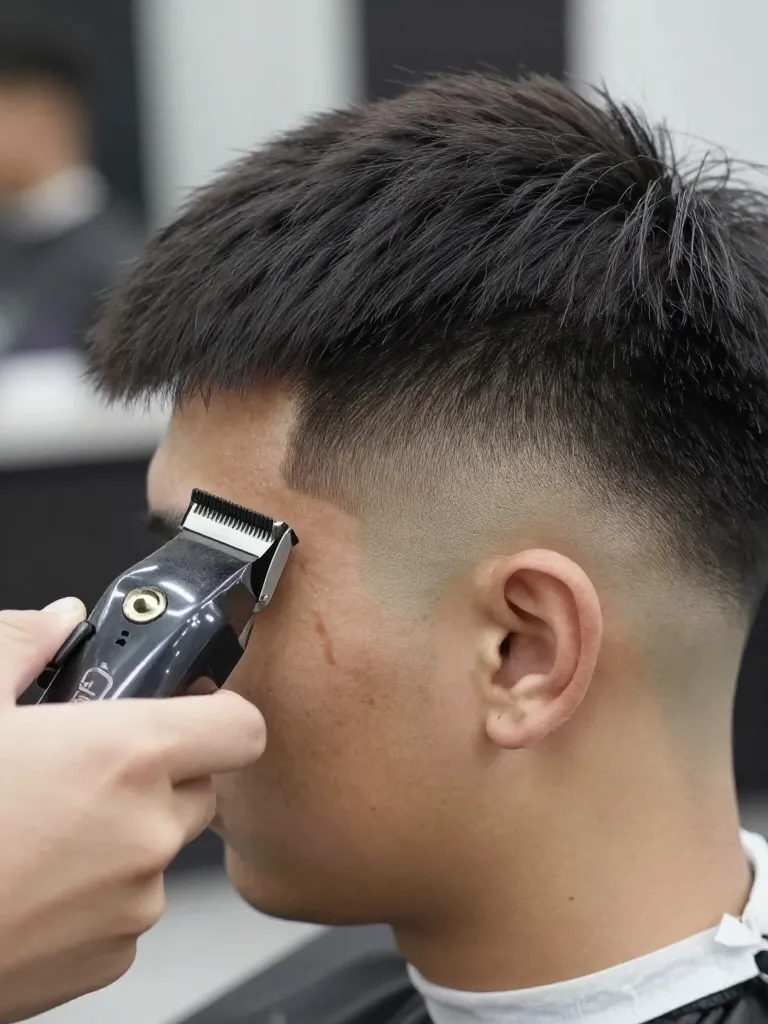
Start with the sideburns — this is the most visible taper zone. Using clippers with a #1 guard, start at the bottom of the sideburn and flick upward. The goal is to create a gradient from short (at the bottom) to natural length (at the top) within a 1-inch zone. Switch to a #2 guard for the area just above the #1 zone, blending into the natural length above. The sideburn should be clean, defined, and symmetrical. Use a trimmer to create a sharp edge at the bottom — the sideburn line should be straight and level with the earlobe. The taper should be subtle — if someone notices your sideburns are faded, you’ve gone too short. The goal is ‘clean’ not ‘dramatic.’
Step 3: Taper Around the Ears
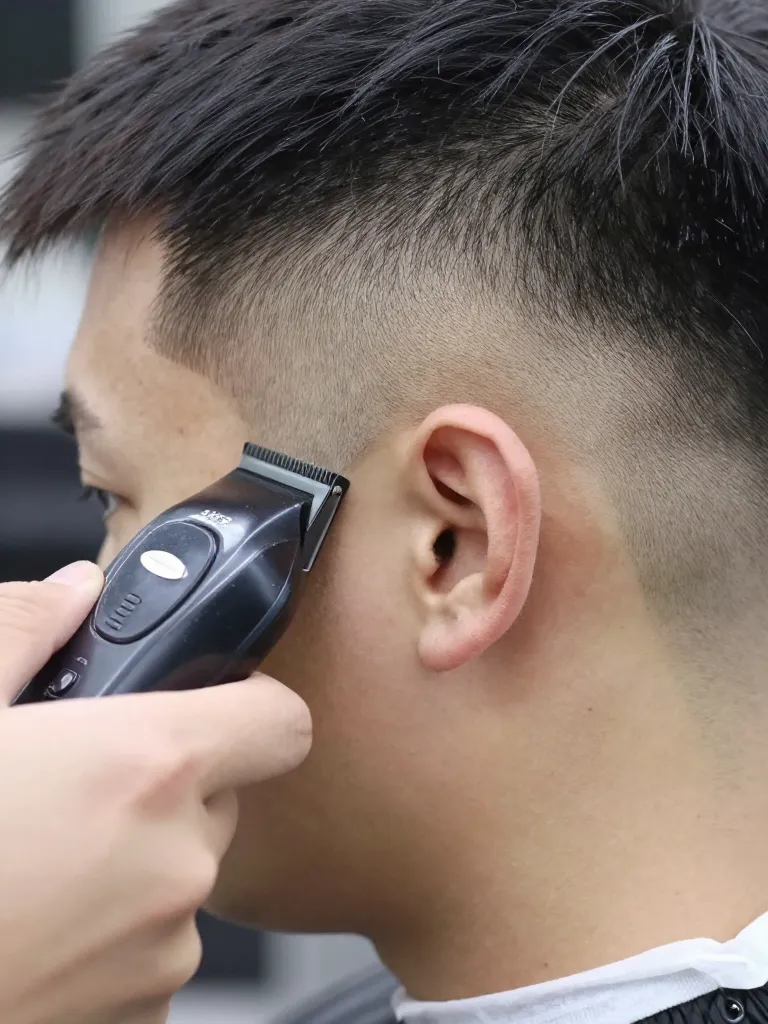
The area around the ears is the second taper zone. Using a #0.5 guard (or lever-closed #1), start at the hair directly above the ear and flick outward. The taper should follow the natural ear shape — a clean arc that shortens the hair in a 0.5-inch zone around the ear. Behind the ear, extend the taper downward toward the neckline zone. The goal is clean edges — the hair around the ears is where most guys look unkempt first, because it grows in multiple directions and sticks out. By tapering this zone, you eliminate the ‘fuzzy ear’ look without losing side length. The taper should be barely visible — someone should look at you and think ‘his hair is neat’ not ‘his hair is faded.’
Step 4: Taper the Neckline
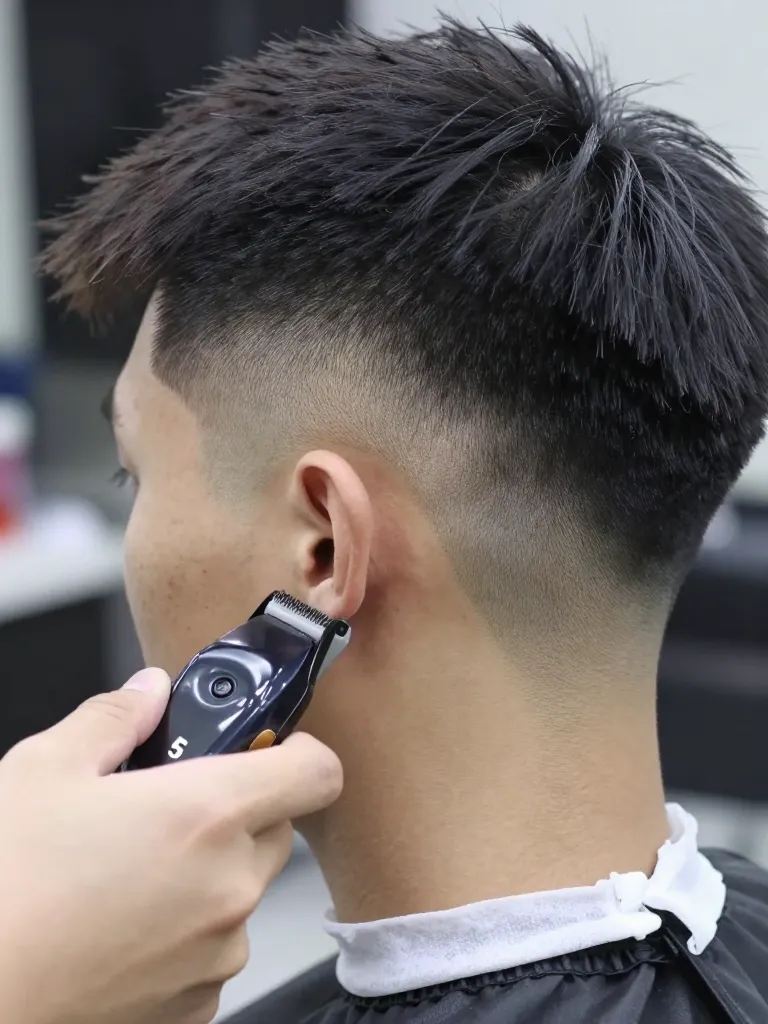
The neckline is the third and final taper zone. Using a #1 guard, start at the bottom of the neckline and flick upward. The taper should extend 1 inch upward from the natural hairline, creating a gradient from short (at the bottom) to natural length (at the top). The neckline can be tapered to a point (V-shape), squared off, or rounded — the shape depends on your preference and head shape. For most guys, a slightly rounded neckline looks most natural. Use trimmers to define the edge at the bottom — the hairline should be clean and intentional. The neckline taper is what keeps you looking neat between barber visits — as the hair grows, the taper softens but doesn’t look unkempt.
Step 5: Blend and Detail
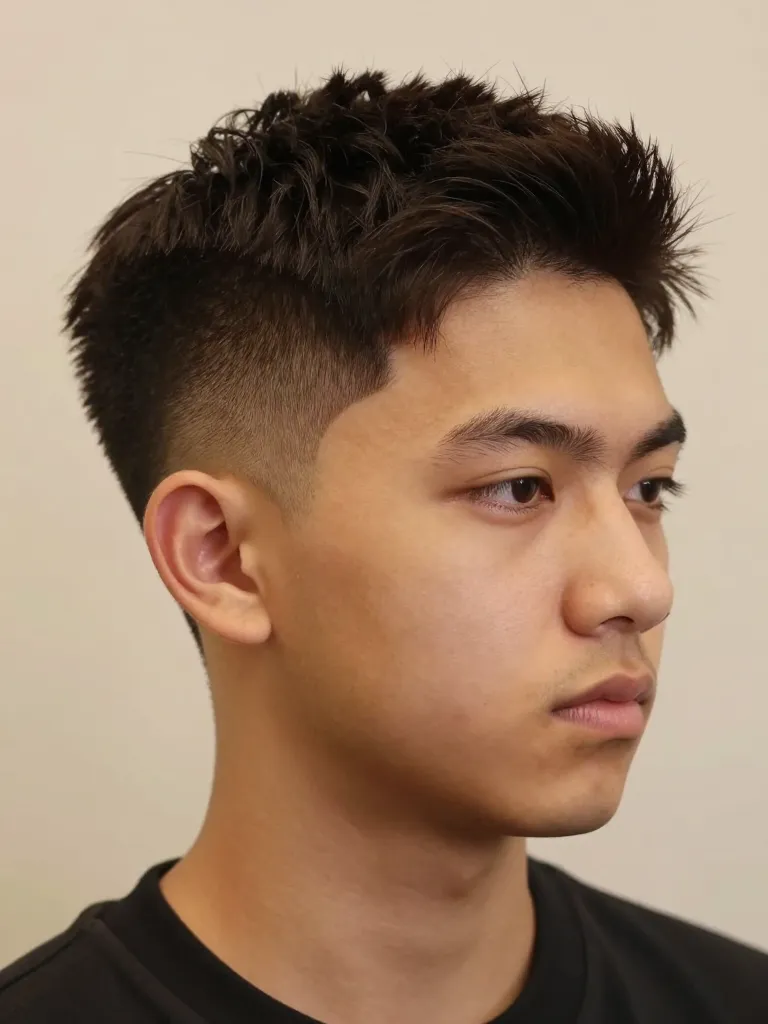
The final step is blending and detailing. Check each taper zone for symmetry — the sideburns should match, the ear tapers should follow the same curve, and the neckline should be level. If any zone looks too short or too aggressive, you can soften it by blending with a #2 guard — flick into the tapered area from the natural-length hair above. Use trimmers to clean up any stray hairs around the ears and neckline. Finally, style the top as desired — the taper fade works with virtually any top style because it only affects the edges. The finished look should be clean, refined, and subtle. Someone should notice you look well-groomed, not notice you have a fade.
⚠️ Safety Warnings
- Never use a foil shaver on irritated or broken skin — it will cause cuts and infection
- Clean your clippers and shaver with disinfectant before every use — barber hygiene prevents skin infections
- If you nick yourself, apply styptic powder immediately — don’t continue cutting over a wound
Why This Works
The taper fade works because of restraint. By only tapering the three natural growth zones (sideburns, ears, neckline), it eliminates the unkempt edges that make hair look messy without losing the natural length on the sides. The gradient technique is identical to a full fade, but the limited zone means the taper reads as ‘grooming’ rather than ‘haircut.’ The result is a style that works in conservative environments, grows out gracefully, and pairs with longer top styles that would look odd with a full fade. It’s the fade for guys who want precision without performance.
Pro Tips
Related Guides
Fade Haircut for Men — Overview of all fade variations
Step-by-step skin fade tutorial — The maximum-contrast fade
Mid fade styling guide — The balanced fade for every environment
The taper fade is the haircut that proves you don’t need a full gradient to look sharp. By only touching the edges — sideburns, ears, neckline — you get the clean lines of a fade without the commitment. It’s the fade for guys who want to look like they care about their hair without looking like they spent an hour in a barber chair. Subtle, refined, and low-maintenance. That’s the taper fade.
Clean edges. Natural length. Zero drama. That’s the taper. ✂️