Haircuts for Men: How to Choose the Right Cut for Your Face Shape
Your face shape determines your haircut. Here’s the matching system.
The most common men’s haircut mistake isn’t choosing the wrong style — it’s choosing a style that doesn’t match their face shape. A haircut that looks amazing on an oval face can look terrible on a round face. A style that flatters a square jaw can make an oblong face look even longer. The haircut itself might be perfect — but if it’s on the wrong face shape, it fails. This guide is the matching system: which haircuts work for which face shapes, why they work, and how to adjust any haircut to flatter your specific geometry.
Step 1: Determine Your Face Shape with the Mirror Test
Timing: 5 minutes
Prerequisites: Mirror, Dry-erase marker (optional)
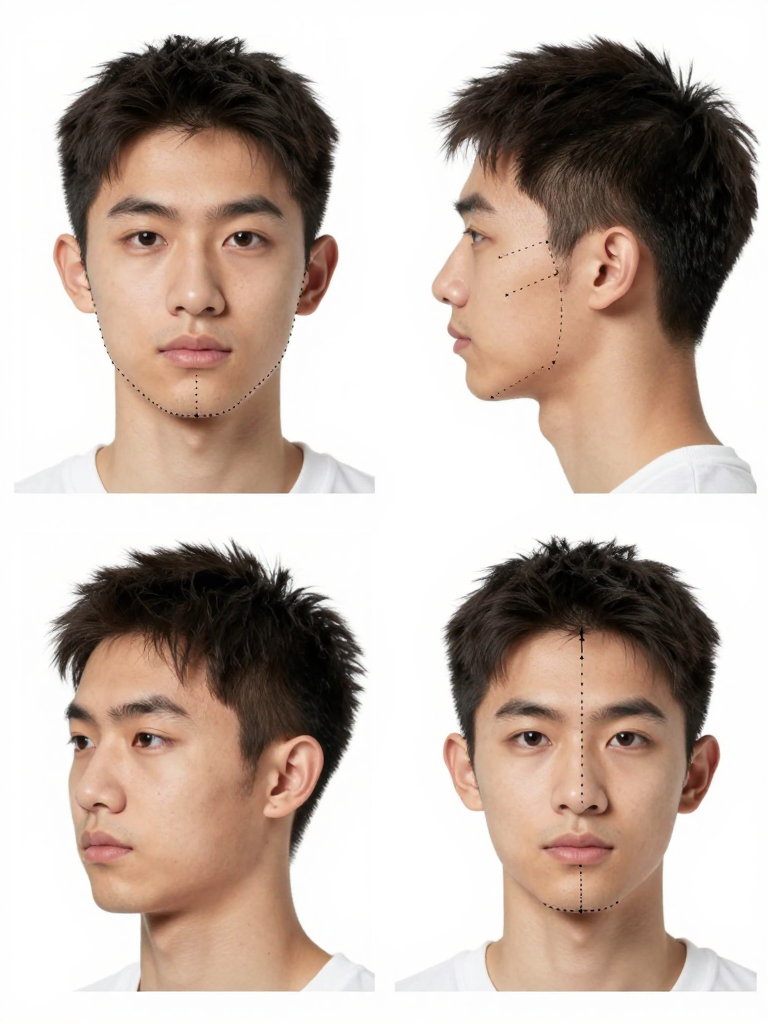
Before you choose a haircut, you need to know your face shape. Stand in front of a mirror with good lighting and trace the outline of your face on the mirror with a dry-erase marker (or just observe carefully). The four primary face shapes are: oval (face is 1.5x longer than wide, balanced proportions), round (face is as wide as it is long, soft jawline), square (face is as wide as it is long, angular jawline), and oblong (face is significantly longer than wide, narrow width). Most men are a combination — oval-round, square-oval, etc. — so identify your dominant shape. The face shape determines which haircuts will flatter your geometry and which will fight it.
Step 2: Match Haircuts to Face Shapes — The System
Timing: N/A — knowledge step
Prerequisites: Understanding of your face shape
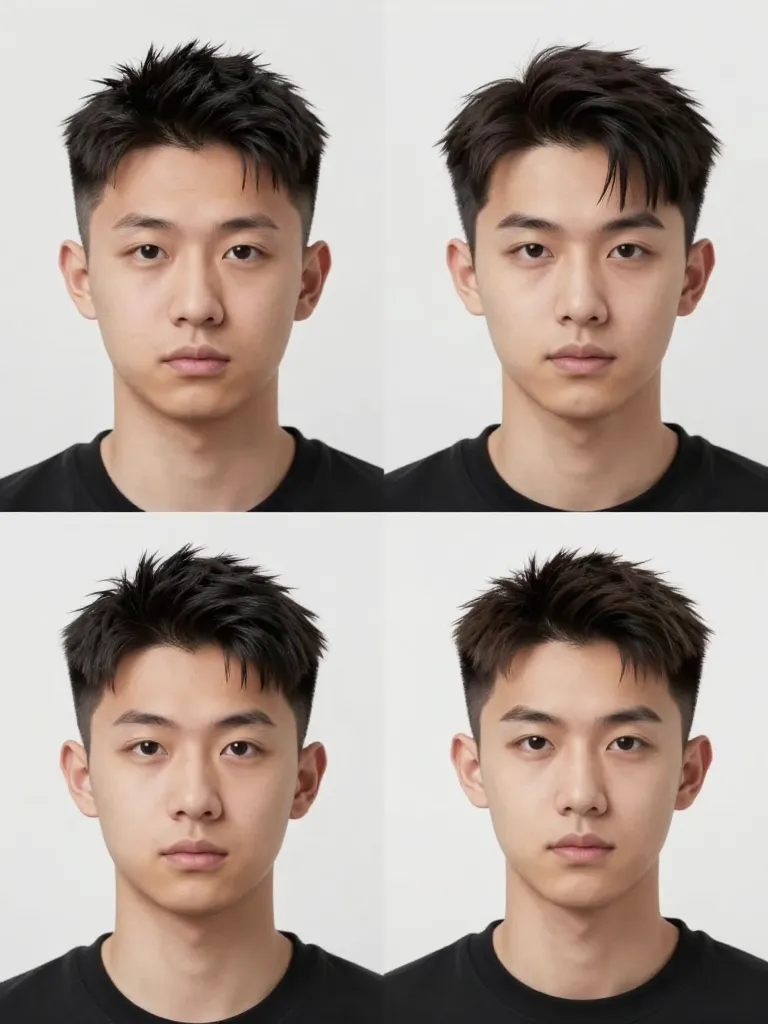
The matching system is based on one principle: balance. If your face is round, add height and reduce width. If your face is square, soften the angles. If your face is oval, maintain the balance. If your face is oblong, reduce height and add width. Specific matches: Round faces get textured crops with height on top (4-5 inches) and faded sides — this elongates the face. Square faces get side-parts or soft fringes that balance the angular jaw — avoid hard lines that emphasize the squareness. Oval faces can handle almost any haircut — this is the most versatile face shape. Oblong faces get low-volume crops with minimal height (2-3 inches) and slightly longer sides — this prevents further elongation. These aren’t rules — they’re engineering guidelines. The goal is visual balance, not conformity.
Step 3: Adjust Existing Haircuts for Your Face Shape
Timing: 5 minutes for adjustment planning
Prerequisites: Understanding of your face shape, Knowledge of the haircut’s standard proportions
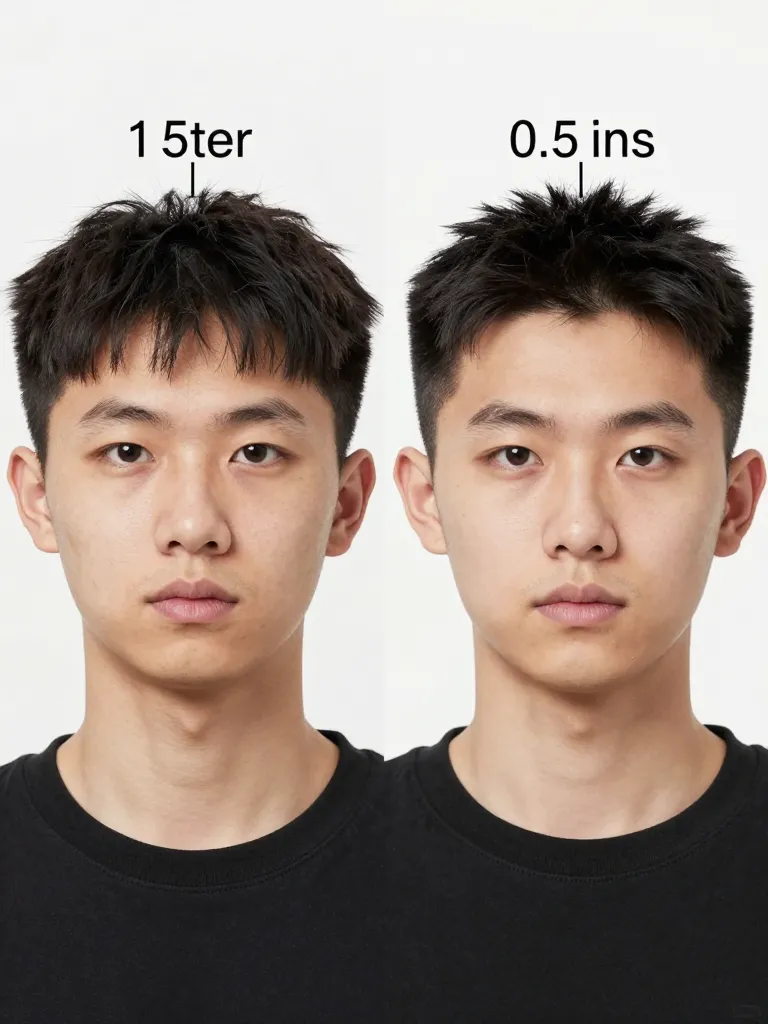
You don’t need a different haircut for your face shape — you need to adjust the proportions of the haircut you want. Every haircut has three variables: top length, side length, and the ratio between them. Adjust these variables based on your face shape. For round faces: increase top length by 1 inch and decrease side length by 0.5 inches — this creates a taller, narrower silhouette. For square faces: soften the fringe angle and reduce hard lines — this balances the angular jaw. For oval faces: maintain standard proportions — this preserves the natural balance. For oblong faces: decrease top length by 0.5 inches and increase side length by 0.5 inches — this creates a wider, shorter silhouette. These adjustments are subtle — 0.5 to 1 inch — but they make a significant visual difference.
Step 4: Communicate Your Face Shape to Your Barber
Timing: 2-3 minutes of conversation
Prerequisites: Knowledge of your face shape, Reference photo of desired haircut
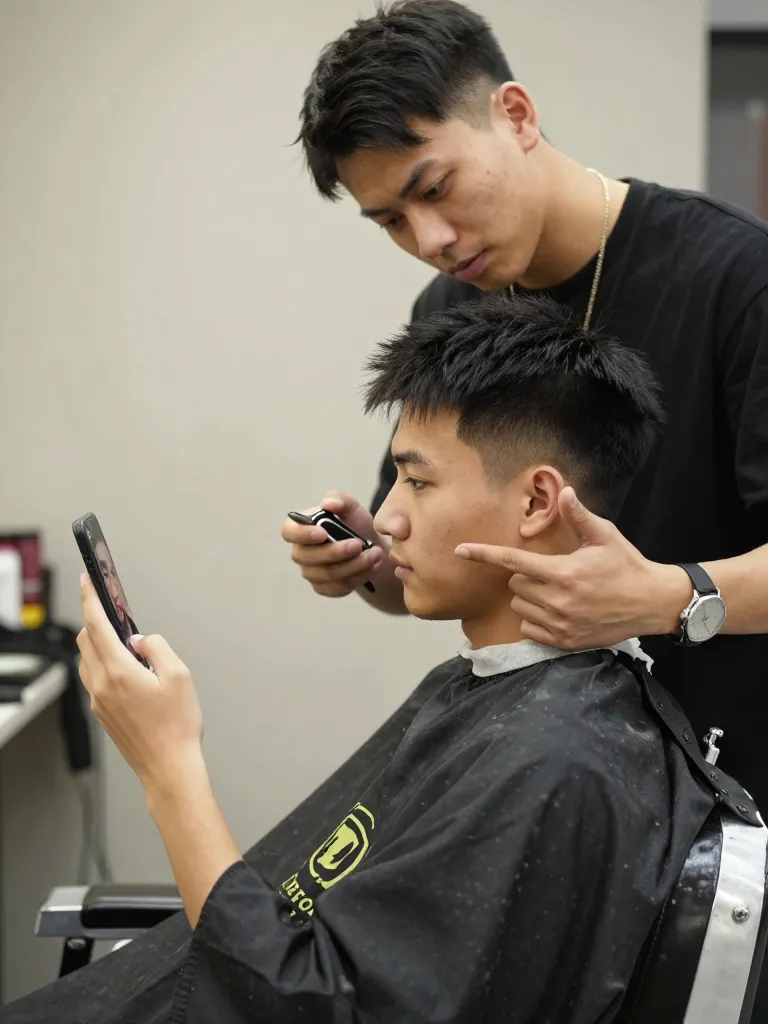
The final step is communication. Most barbers are trained in face shape matching — but they can only help if you tell them your face shape. When you sit in the chair, say: ‘I have a [round/square/oval/oblong] face. I want [haircut name], but adjusted for my face shape.’ Then show a reference photo. A good barber will immediately understand and adjust the proportions accordingly. If your barber doesn’t ask about face shape, find a new barber. Face shape matching is barbering 101 — if they skip it, they’re cutting blind. The best haircuts happen when the client knows their face shape and the barber knows how to adjust for it. This collaboration produces results that neither could achieve alone.
Safety Notes
- Don’t force a haircut that doesn’t match your face shape — the adjustment might not be enough to make it work
- Face shape is just one factor — hair texture, density, and growth patterns also affect which haircuts work
- If you’re between face shapes (oval-round, square-oval), ask your barber which dominant shape to optimize for
Pro Tips
- Oval is the goal: Every face shape adjustment aims to create the illusion of oval proportions — the most balanced shape
- Subtle adjustments, big impact: 0.5 to 1 inch of length adjustment makes a significant visual difference
- Tell your barber your face shape: They can’t adjust for what they don’t know — communicate before the first cut
- Reference photos are essential: A photo plus face shape information gives the barber everything they need
- Hair texture matters too: Face shape is one factor — texture, density, and growth patterns also affect which haircuts work
- Trust the barber’s adjustment: If they change the proportions from your reference photo, it’s probably for your face shape
Your face shape is the blueprint. The haircut is the construction. When the blueprint and the construction match, the result is a haircut that looks like it was made for your head — because it was. The matching system isn’t complicated: determine your face shape, adjust the proportions, communicate to your barber. But the impact is significant. A haircut that matches your face shape looks intentional. A haircut that doesn’t looks like a mistake. The difference is 0.5 to 1 inch. That’s the margin between ‘just right’ and ‘something’s off.’
Your face shape is the blueprint. The haircut follows. ✂️