The Fade Haircut for Men: 4 Precision-Engineered Variations That Own Every Barbershop
Not just shorter sides. This is gradient architecture.
The fade haircut for men is the most executed cut in barbershops worldwide — and the most misunderstood. A fade isn’t just ‘shorter on the sides.’ It’s a gradient: a seamless transition from skin to length that requires mathematical precision, clipper control, and an understanding of head shape that most people never think about. The difference between a $15 fade and a $60 fade isn’t the price — it’s the architecture. A bad fade looks like a helmet. A great fade looks like your skull was designed that way. Here are four fade variations that prove this cut is the most technical, most versatile, and most impactful men’s haircut in existence.
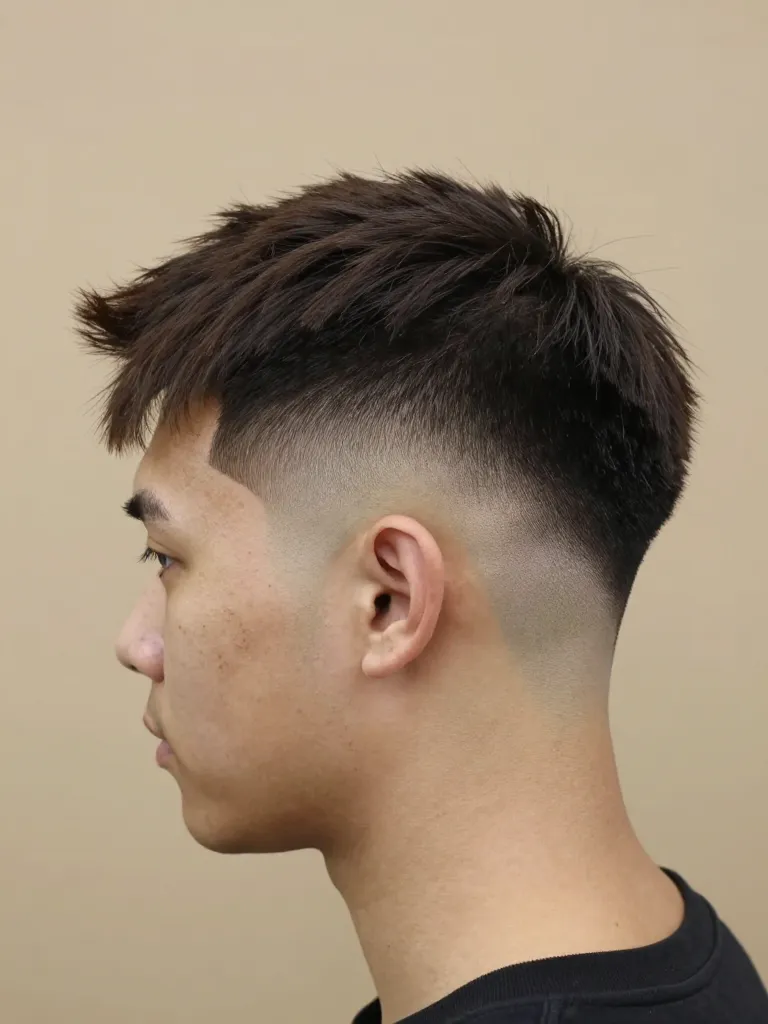
1. The Skin Fade
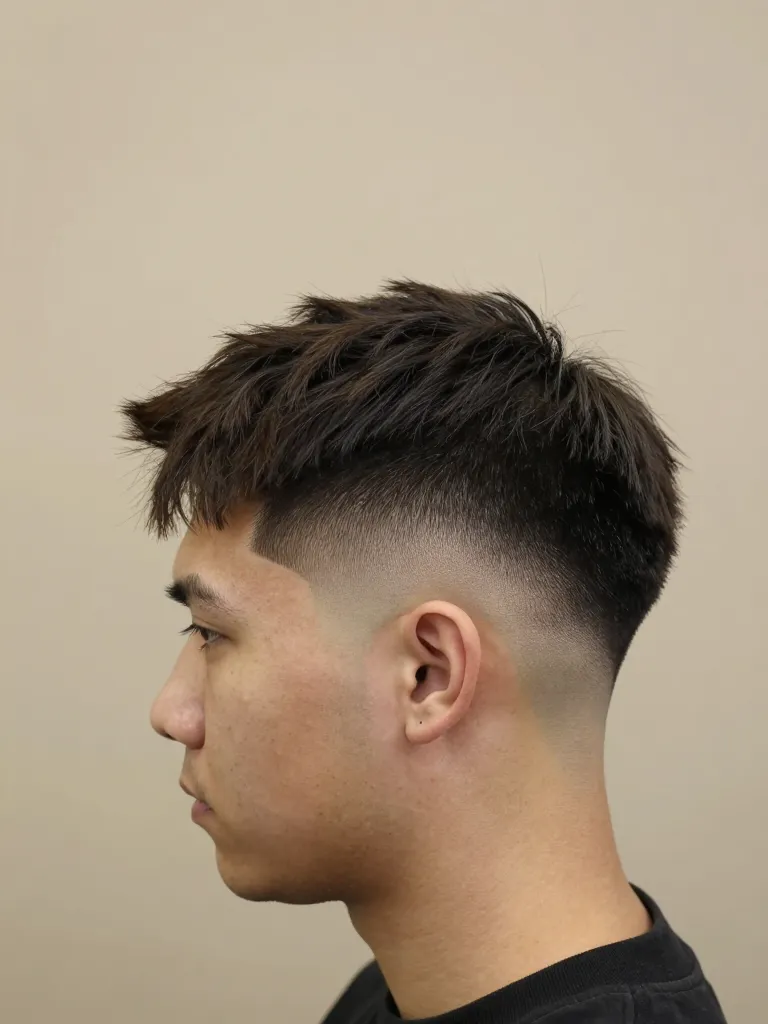
The Skin Fade is the gold standard — the fade that all other fades are measured against. The sides and back start at bare skin (zero guard, blade-to-skin) and gradient upward through progressively longer guard lengths until they blend seamlessly into the top. The transition zone is typically 1-2 inches wide, and within that zone, the hair length increases in micro-increments — a quarter-inch at a time. This is what creates the optical illusion of a seamless gradient rather than a visible line. The skin fade works on virtually every hair type and face shape, but it’s particularly impactful on guys with strong jawlines — the bare skin sides create a frame that makes the jaw look wider and more defined. The maintenance is high: you need re-fading every 2-3 weeks because even a quarter-inch of growth breaks the gradient.
Step-by-step skin fade tutorial →
2. The Mid Fade
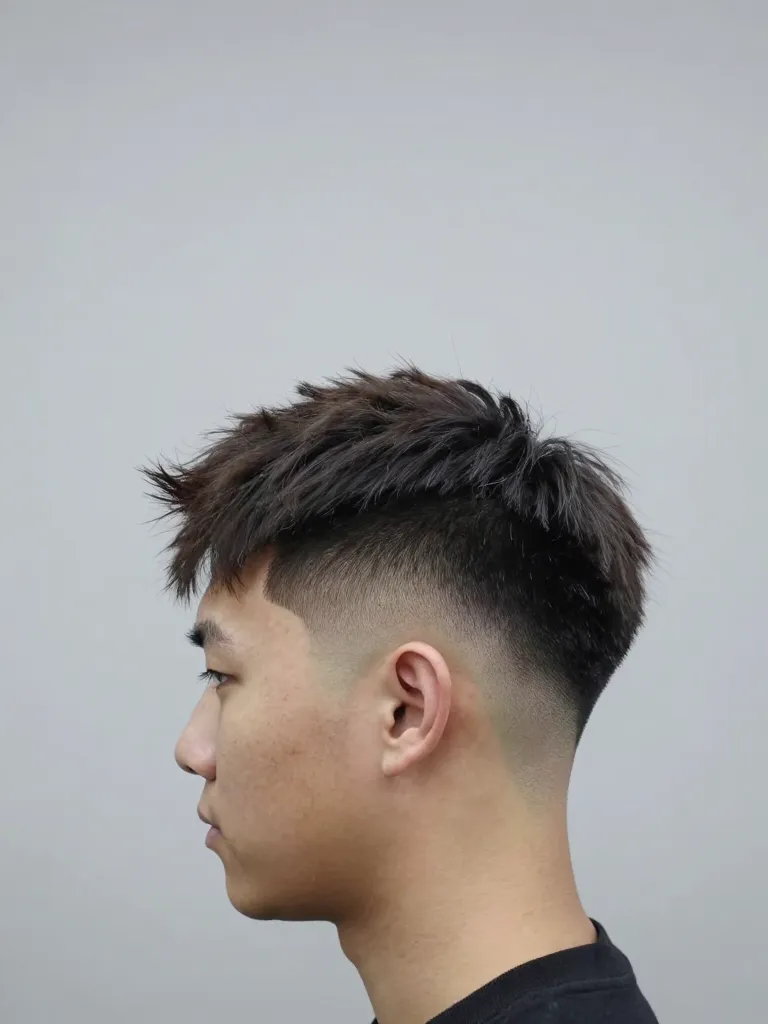
The Mid Fade is the most popular fade in barbershops — and for good reason. It starts at the midpoint of the head, typically at the temple or just above the ear, and gradients downward to skin or near-skin at the sides. The key advantage of the mid fade is balance: it’s high enough to create visual impact and contrast, but low enough to look professional and intentional. Unlike the skin fade (which can read as aggressive in conservative settings) or the low fade (which can look like you just got a normal haircut), the mid fade occupies the sweet spot. It works with virtually every top style — textured crop, quiff, pompadour, slick back, or natural. The mid fade is the fade you get when you want to look like you care about your hair without looking like you care too much.
3. The Taper Fade
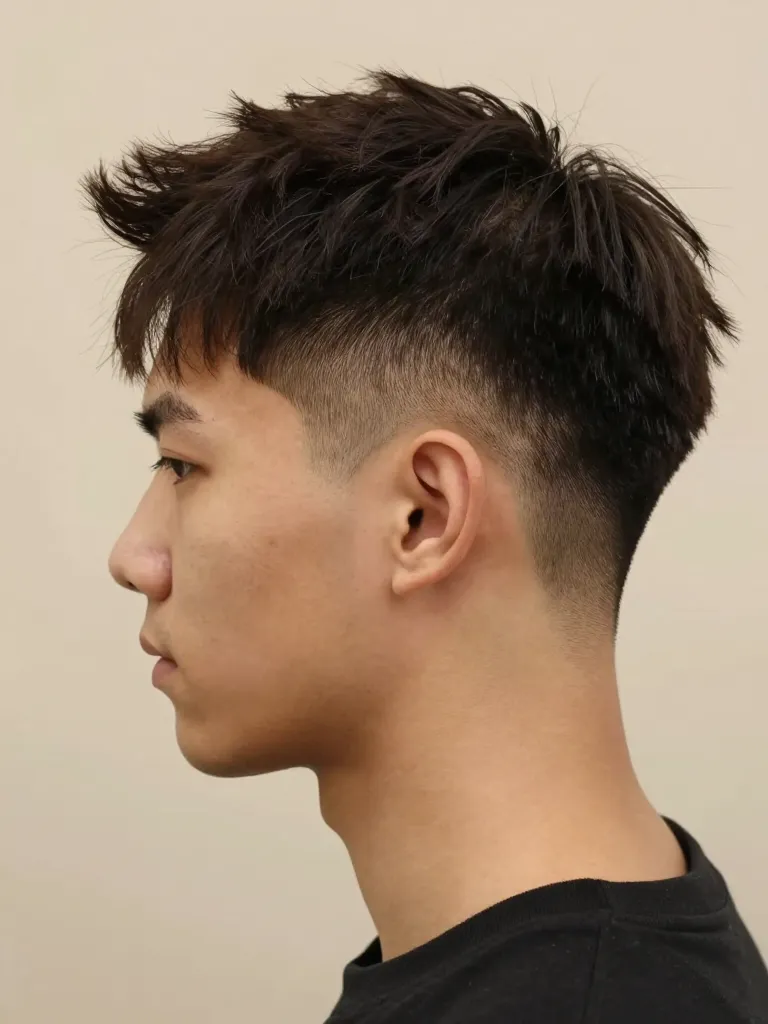
The Taper Fade is the most conservative fade — and that’s its superpower. Unlike full fades that gradient the entire side, the taper fade only shortens the hair at the natural growth edges: the sideburns, around the ears, and the neckline. The rest of the side is left at natural length or slightly trimmed. The result is a clean, refined silhouette that reads as ‘well-groomed’ rather than ‘just left the barber.’ The taper fade is the fade for guys who work in conservative environments, guys who want low maintenance, or guys whose hair doesn’t suit a full fade (thin hair, receding hairline, or round face shapes can all look better with a taper than a full skin fade). It grows out gracefully — you can go 4-6 weeks between barber visits — and it works with longer top styles that need a clean neckline without losing side length.
4. The Burst Fade
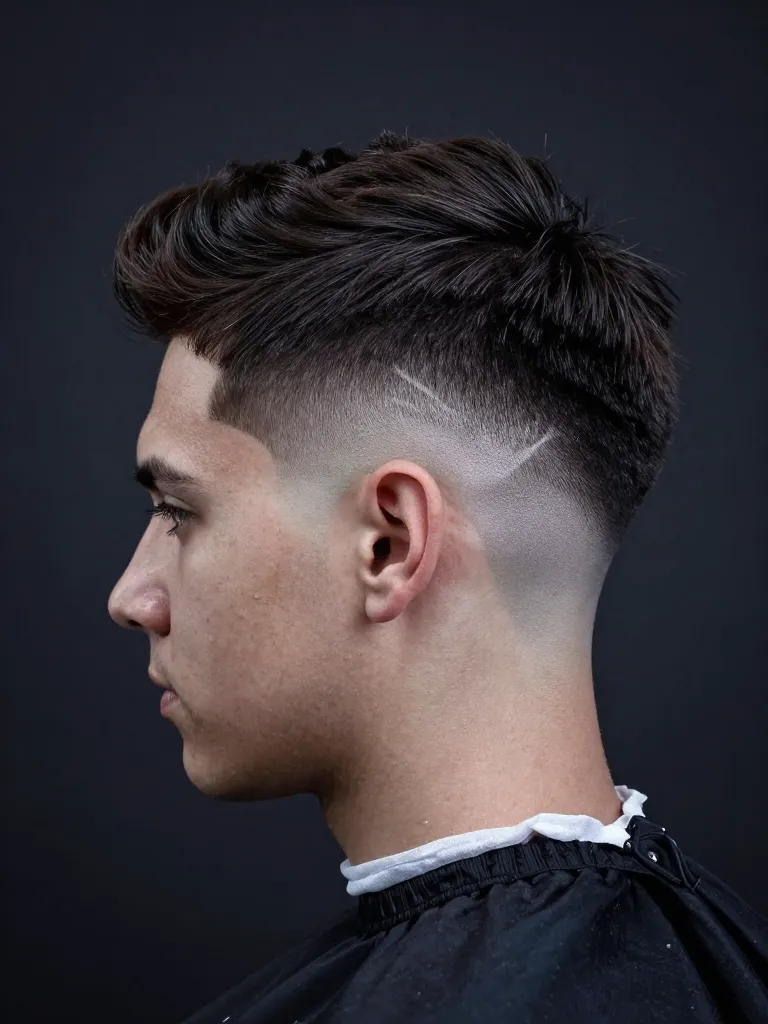
The Burst Fade is the most visually distinctive fade in the game. Instead of fading the entire side in a linear gradient, the burst fade radiates outward from the ear in a circular pattern — like a shockwave or a sunburst. The hair around the ear is faded to skin, and the gradient extends outward in all directions, leaving the back with length. This creates a mohawk-adjacent silhouette without the commitment of an actual mohawk. The burst fade is particularly popular in barber culture and pairs well with mullets, faux hawks, and textured crops. It requires a barber who understands radial fading — most can do linear fades, but the burst pattern is a different skill. Maintenance is high: the circular pattern shows growth faster than linear fades because any break in the gradient is visible from multiple angles.
Tools & Products
| Item | Purpose | Category |
|---|---|---|
| Clipper set with guards | Maintaining fade between barber visits | Cutting Tools |
| Foil shaver | Achieving bare-skin at fade base | Cutting Tools |
| Barber comb | Guiding clipper through gradient lengths | Cutting Tools |
| Matte pomade | Daily styling for textured top | Styling Products |
| Edge trimmer | Cleaning up sideburns and neckline between visits | Cutting Tools |
| Blow dryer | Building volume and direction on top | Styling Tools |
| Flexible-hold spray | Setting fade style without stiffness | Styling Products |
Related Guides
Step-by-step skin fade tutorial — DIY skin fade guide
Mid fade styling guide — How to cut and maintain a mid fade
Taper fade maintenance — Low-maintenance taper fade guide
The fade haircut for men is the only cut that makes your head look like it was sculpted rather than grown. The gradient — from skin to length — is an optical illusion that turns a biological accident (hair growing out of your skull) into deliberate architecture. Whether you go skin, mid, taper, or burst, the fade is the haircut that proves barbershop work is engineering. The clipper is the tool. The head is the canvas. And the gradient is the art.
One gradient. Infinite precision. Zero room for error. ✂️