How to Care for Black Curly Hair: The Moisture-First Routine That Actually Works
Your wash day shouldn’t take four hours and a prayer. Here’s the streamlined routine.
Most black curly hair routines fail because they treat the symptoms — frizz, dryness, breakage — instead of the cause. The cause is always the same: your curl pattern prevents moisture from traveling down the hair shaft. So the entire routine has one job: get water into your hair and keep it there. Everything else is secondary. This routine is built around that principle. It takes about 45 minutes on wash day and 5 minutes of maintenance on non-wash days. No complicated techniques, no 12-step routines, no products that cost more than your phone bill.
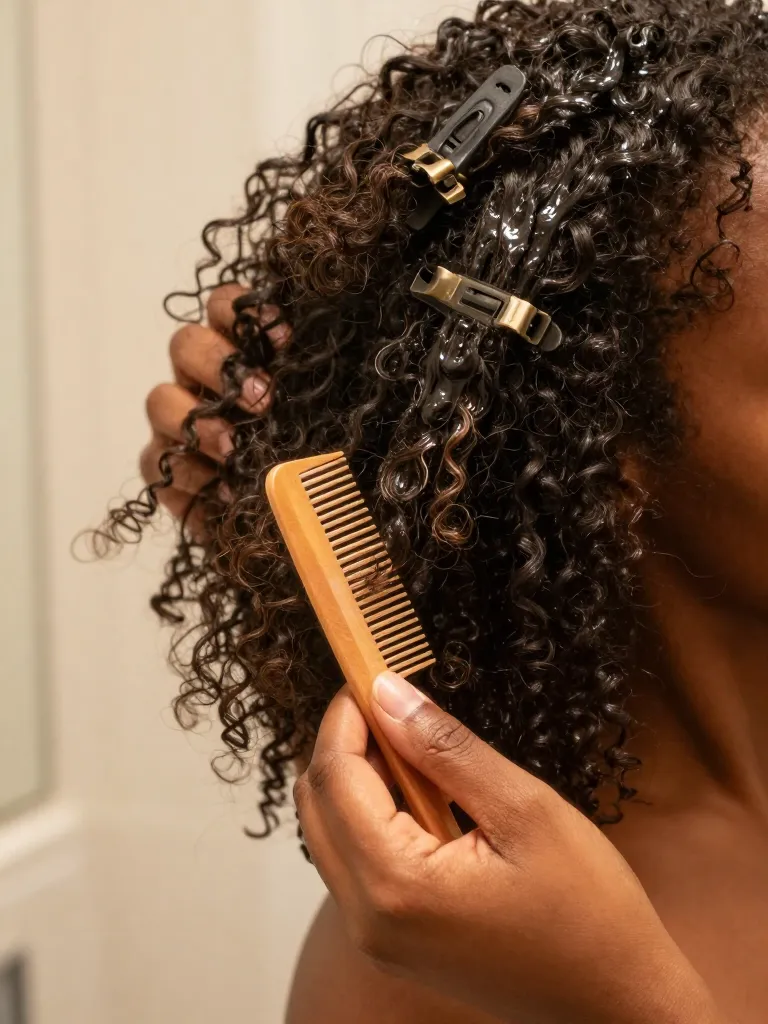
Step 1: Pre-Poo Detangle
Before you even think about shampoo, detangle. Dry detangling on black curly hair is how you end up with a bathroom floor full of broken strands. Apply a cheap conditioner or detangling oil generously to dry hair, section by section. Use a wide-tooth comb or your fingers, starting from the ends and working up to the roots. The goal isn’t to make it neat — it’s to remove shed hairs and knots before water hits the hair. Wet hair is more elastic and more prone to snapping, so getting the tangles out while the hair is still dry and coated in slip reduces breakage significantly. Work in 4-6 sections depending on your density. Once each section is detangled, twist or clip it up and move to the next.
Step 2: Sulfate-Free Shampoo
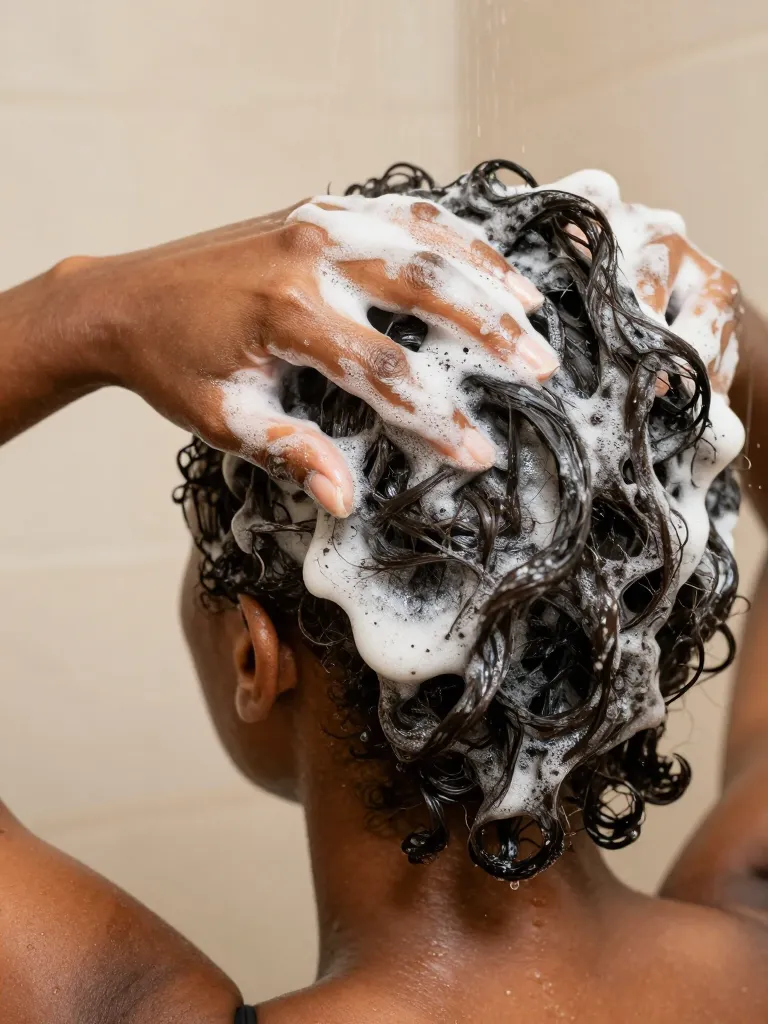
Shampoo your scalp, not your hair. Sulfate-free shampoo cleans without stripping the natural oils your curls desperately need. Apply to the scalp directly — part your hair in sections and massage the shampoo into the scalp with your fingertips (not nails). The suds will run down the hair shaft as you rinse, which is enough to clean the lengths without over-stripping. One wash is usually enough. If you use heavy products or have significant buildup, do a second wash with a clarifying shampoo once a month. Rinse thoroughly — shampoo residue causes itching and flaking that people mistake for dandruff.
Step 3: Deep Condition
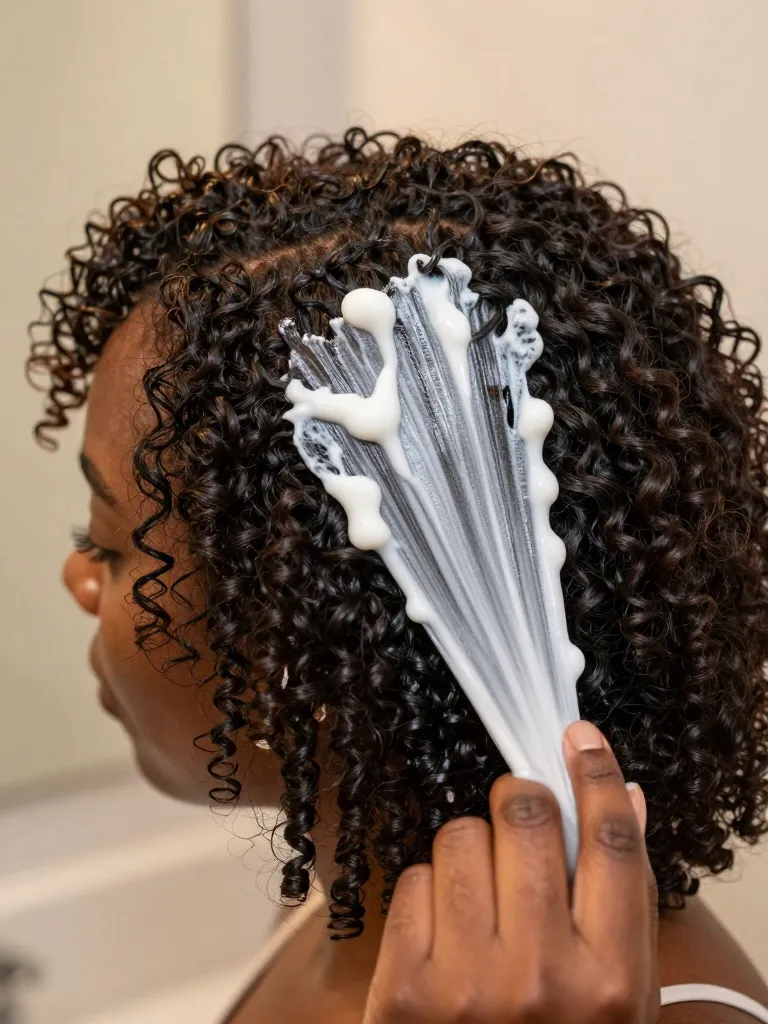
This is the step most people rush, and it’s the one that matters most. Apply a deep conditioner to freshly washed hair in sections. Use a generous amount — more than you think you need. Focus on the mid-lengths and ends, which are the oldest and driest parts of your hair. Put on a plastic cap and let it sit for 15-30 minutes. The cap traps body heat, which opens the hair cuticle and lets the conditioner penetrate deeper. If you have a hooded dryer, sit under it for 15 minutes with the cap on — the heat makes a massive difference in how much moisture your hair absorbs. Rinse with cool water to seal the cuticle back down.
Step 4: LCO Method Styling
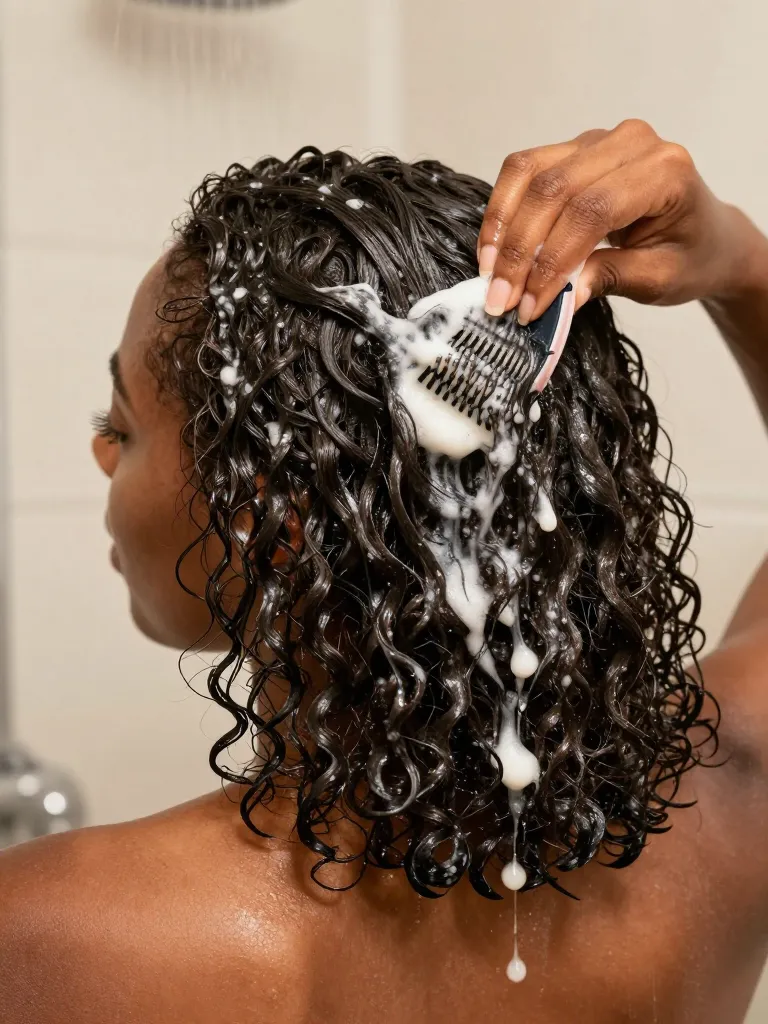
While your hair is still dripping wet — not towel-dried, not squeezed out, actually dripping — apply your styling products using the LCO method. L = Liquid (water or water-based leave-in), C = Cream (curl cream for definition), O = Oil (light oil to seal everything in). Rake each product through section by section, making sure every strand is coated. The water is doing most of the work — the products just help your hair hold onto it. Once styled, use a microfiber towel or cotton t-shirt to gently scrunch out excess water. Don’t use a regular towel — the loops catch and rip curly hair. Then either air dry or diffuse on low heat. Don’t touch your hair while it dries. This is the hardest part, but touching it introduces frizz that undoes all your work.
Step 5: Nightly Protection
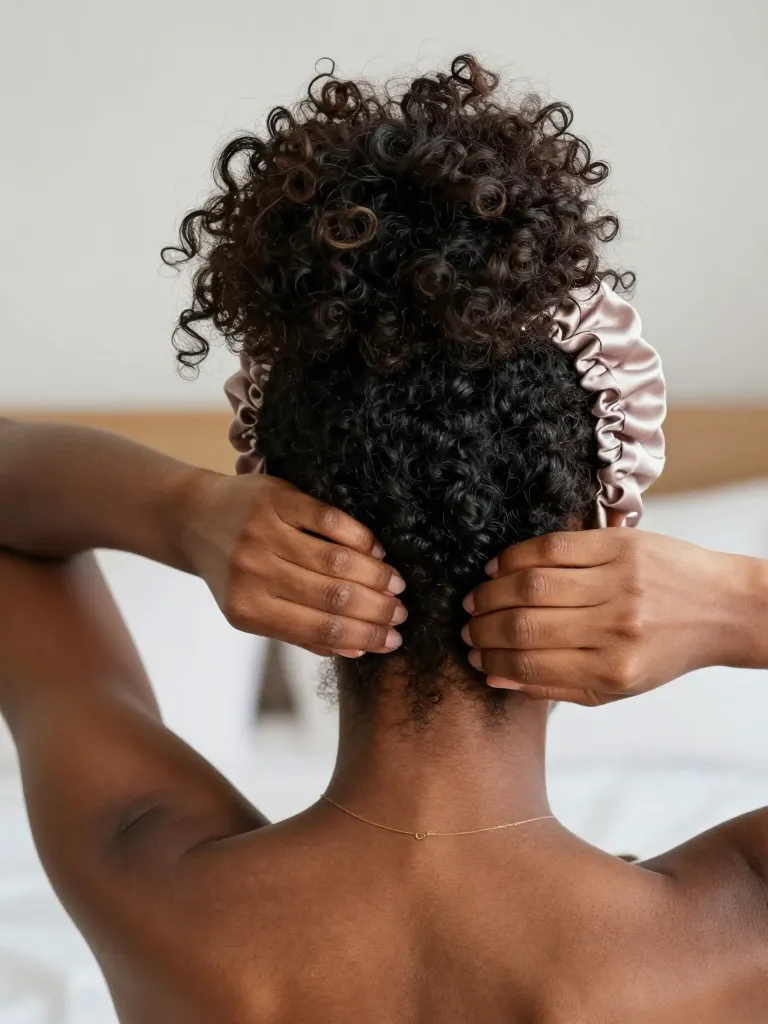
What you do at night determines whether your style lasts three days or one. Before bed, gather your hair into a loose pineapple — a high, loose ponytail at the very top of your head. Use a satin scrunchie, not a regular elastic (elastics cause breakage at the ponytail point). Then cover with a satin bonnet or sleep on a satin pillowcase. Cotton absorbs moisture from your hair while you sleep — satin doesn’t. This one change alone will double the life of your wash-and-go or twist-out. In the morning, remove the bonnet, shake your hair out gently, and use a water spray bottle to reactivate any curls that got crushed overnight.
Safety Notes
- Never detangle dry curly hair without product — you will snap strands and create breakage.
- Avoid heat tools above 350°F — black curly hair is more susceptible to heat damage than straight hair, and the damage is permanent (you have to grow it out).
- Don’t use products with silicones unless you’re using a sulfate shampoo to remove them — silicone buildup blocks moisture.
Why This Works
Black curly hair has a unique structure — the strand is flat and ribbon-like rather than round, which creates the curl pattern but also prevents natural oils from coating the full length of the hair. This routine works because it replaces those natural oils with applied products, uses water as the primary styling agent (not heat or tension), and creates a protective barrier (oil + satin) that keeps moisture locked in between wash days. The LCO method specifically works because it applies products in order of molecular weight — water first (smallest), cream second (medium), oil last (largest) — so each layer seals in the one before it.
Tips
Caring for black curly hair isn’t complicated — it’s just different from what mainstream hair advice teaches. Your hair needs more water, more moisture, and less manipulation than straight hair. Once you stop treating it like straight hair and start working with its natural structure, everything changes. The dryness, the breakage, the frizz — most of that is caused by the wrong routine, not the wrong hair.
Start with moisture. Protect at night. Let your curls breathe. That’s it.