The Korean Gentleman Haircut: How to Get the CEO-Level Side Part
Not a fade. Not a taper. A scissor-only precision cut that reads as expensive.
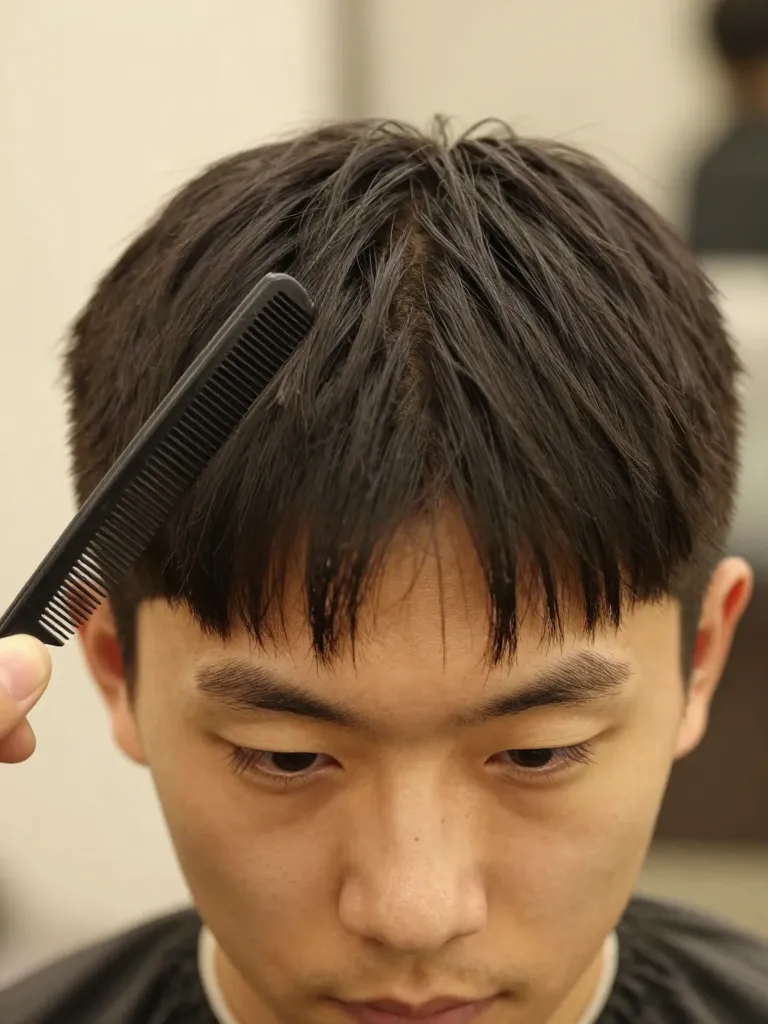
The gentleman haircut is what happens when Korean barbers look at the Western side-part and say: ‘We can make this better.’ The result is a cut that replaces clippers with scissor-over-comb technique, trades hard fades for gradual tapers, and builds a pompadour lift at the front that says ‘I have opinions about espresso.’ This isn’t a barbershop cut — it’s a salon cut. The technique is more complex, the tools are different, and the result is a level of polish that clipper-based cuts can’t match. Here’s how to build it from scratch.
Step 1: Create the Part Line
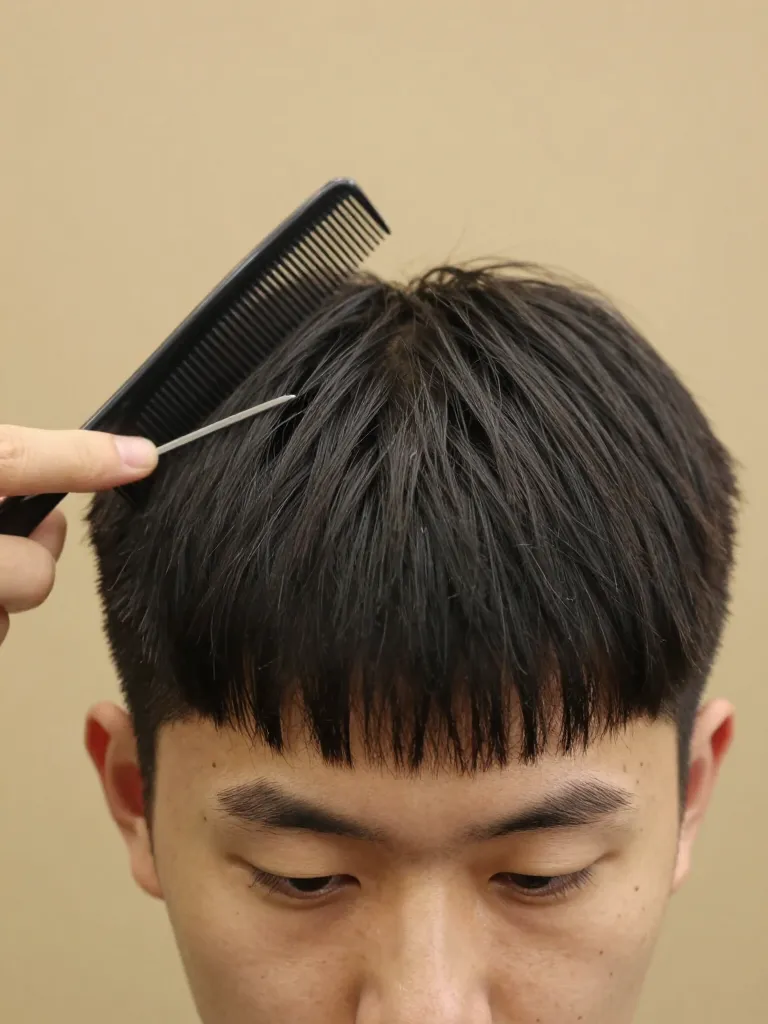
The gentleman haircut starts with one line: the part. Unlike the two-block, which has a horizontal division, the gentleman cut has a diagonal side part that runs from the temple back toward the crown. The standard placement follows the natural growth direction — most men have a cowlick or growth spiral near the crown, and the part should follow that natural line. Use the tail end of a rat-tail comb to create a sharp, defined part. The part should start 1-1.5 inches from the left temple (for right-side-dominant styling; reverse for left-dominant) and angle diagonally back. Everything forward of the part is the top section. Everything behind and below is the sides and back. This part line is the structural foundation — every other cut decision flows from it.
Step 2: Taper the Sides with Scissor-Over-Comb
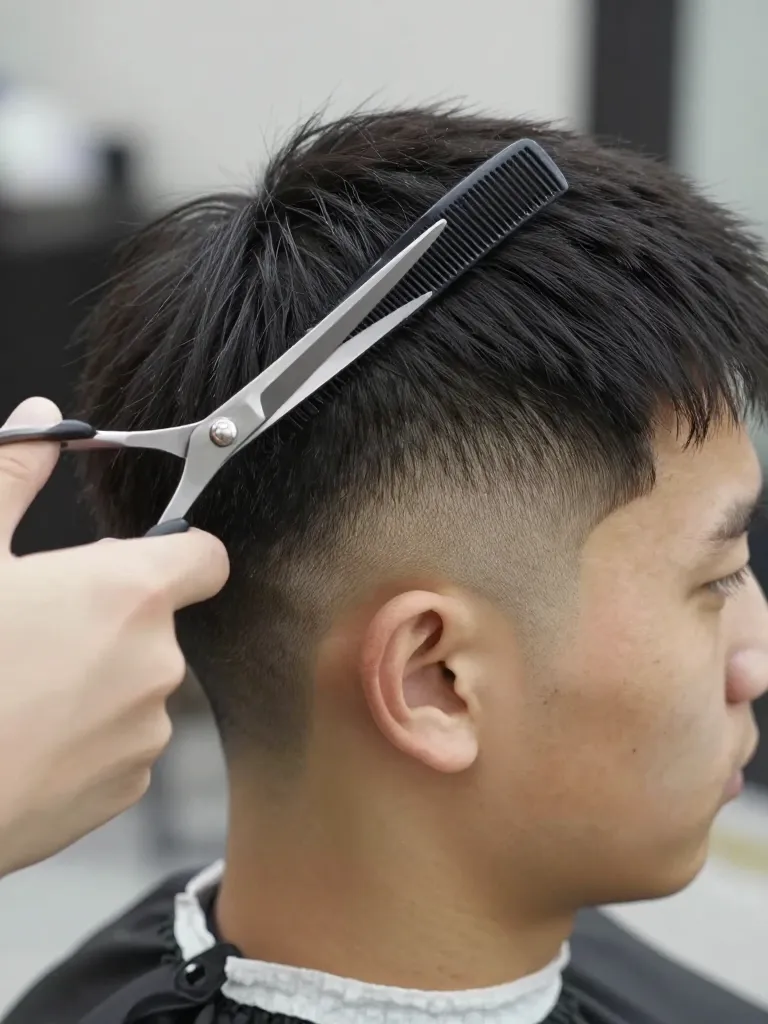
This is what makes the gentleman cut different from every clipper-based fade: the sides are tapered using scissor-over-comb technique, not clippers. Hold the comb at a 45-degree angle against the head, starting at the part line. Lift the hair away from the head with the comb, then cut along the comb’s edge with shears. The comb acts as a guide — hair at the part line stays full length, hair near the ear is cut short. Work from the part line down to the ear in overlapping strokes, gradually decreasing the comb angle as you move lower. The result is a seamless gradient from the full-length top to the short sideburns — no hard lines, no clipper marks, just pure scissor precision. This technique takes longer than clippers but creates a taper that reads as expensive rather than barbershop.
Step 3: Build the Pompadour Lift
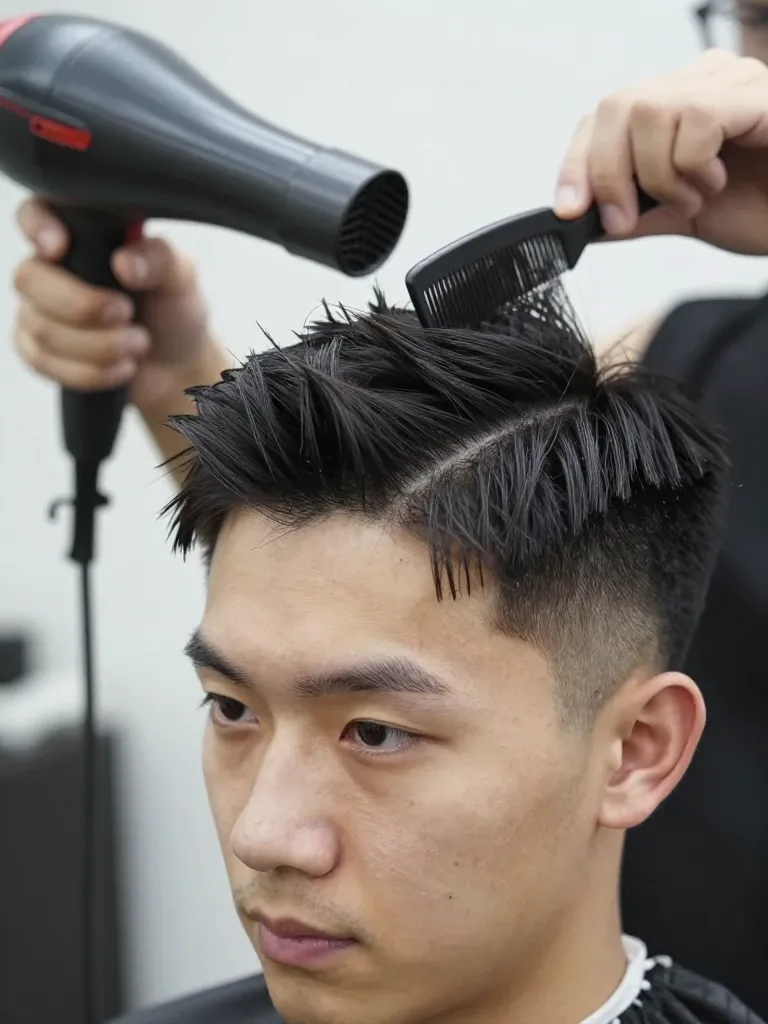
The gentleman haircut’s signature move is the pompadour lift at the front — 2-3 inches of height that says ‘I have a corner office and I’m not afraid to use it.’ Release the front/top section. Using a blow dryer on medium heat, direct the airflow upward at the roots while combing the hair back and slightly to the side. The heat lifts the root away from the skull, creating natural volume. Once the lift is established, apply a water-based pomade — work it through the mid-lengths and ends, using the comb to shape the pompadour into a smooth, swept-back curve. The pompadour should have height at the front and gradually decrease toward the crown. The side part should remain visible and defined — the pompadour flows from the part, not over it.
Step 4: Refine the Back and Neckline
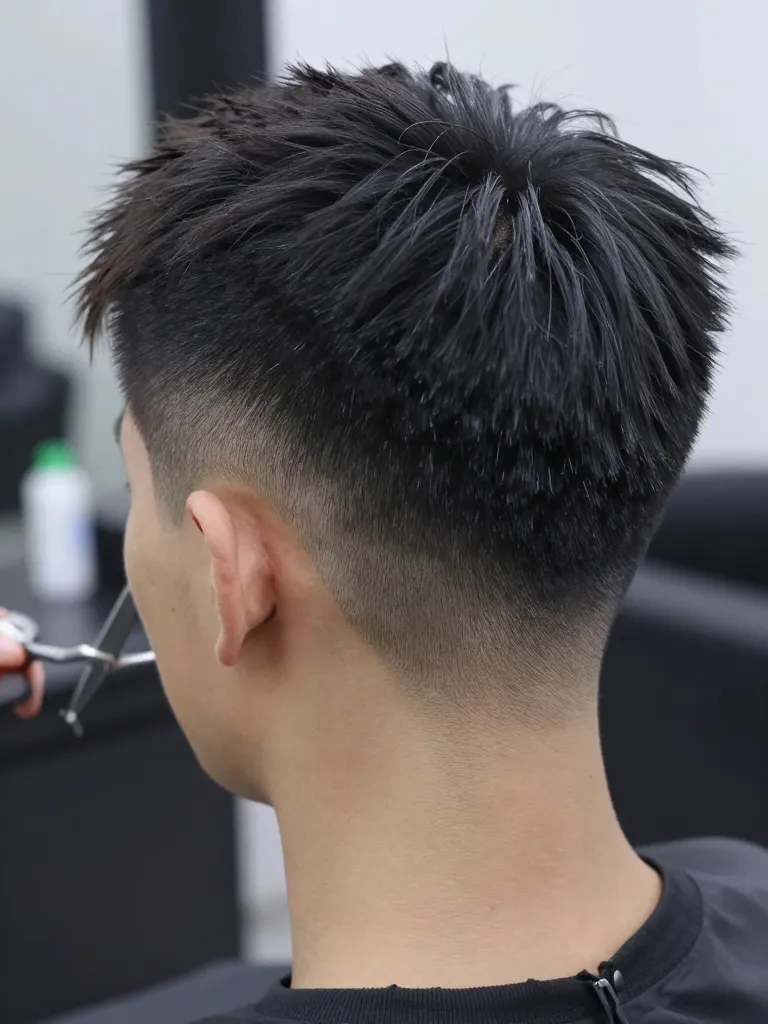
The back of the gentleman haircut follows the same scissor-over-comb technique as the sides. Starting from the crown, work downward toward the nape in overlapping strokes, gradually decreasing the comb angle. The nape should be tapered to about 0.5 inches — short enough to look clean, long enough to avoid the ‘just got drafted’ look. The neckline should be squared off, not rounded — a squared neckline reads as structured and intentional, while a rounded neckline reads as unfinished. Use the natural hairline as your guide and cut a clean, straight line across the bottom. For the sideburns, taper to about 0.25 inches at the very edge, keeping them trimmed and defined.
Step 5: Final Styling and Hold
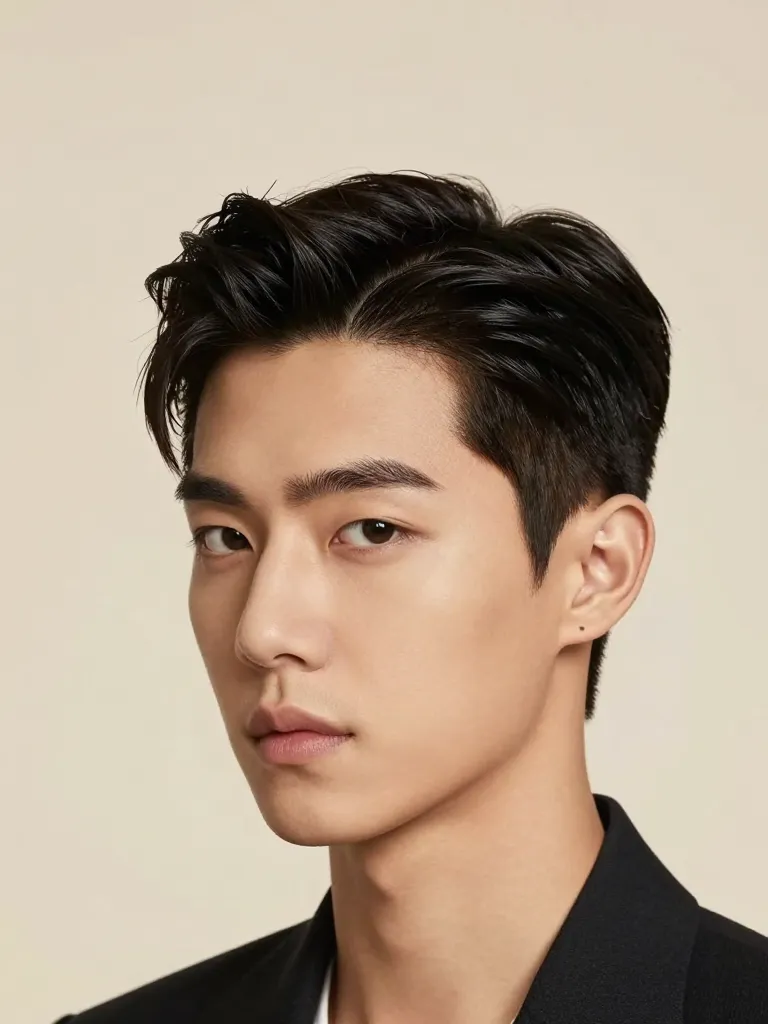
The final styling is what separates the gentleman haircut from a regular side part. Start with towel-dried hair. Apply a water-based pomade — work it through the top section, focusing on the mid-lengths and ends. Use a fine-tooth comb to create the side part, combing the hair to one side in smooth, defined strokes. Build the pompadour lift at the front by combing upward and back while directing the blow dryer at the roots. Finish with a light mist of flexible-hold hairspray to lock the shape without making it crunchy. The final look should have: a visible, defined part line; a smooth pompadour with 2-3 inches of lift at the front; tapered sides with no hard lines; and a polished, structured silhouette that reads as corporate precision.
Safety Warnings
- Scissor-over-comb technique requires practice — if you’re new to it, start with a longer guide and go shorter in passes
- Never cut the pompadour section to your target length while wet — wet straight hair is deceptively long and will shrink 0.5-1 inch when dry
- Keep shears sharp — dull shears crush straight Asian hair cuticles and create split ends that show immediately
Why This Works
The gentleman haircut works because scissor-over-comb technique creates a fundamentally different taper than clippers. Clipper fades have a hard transition line where the guard length changes — this reads as ‘barbershop.’ Scissor tapers have a seamless gradient with no visible transition points — this reads as ‘salon.’ The pompadour lift adds vertical height that elongates the face and creates a focal point at the front, while the side part adds a structural line that makes the haircut look intentional from every angle. The combination — scissor taper, pompadour lift, defined part — creates a silhouette that’s impossible to achieve with clipper-based techniques. This is why Korean barbers spend years mastering scissor-over-comb: the technique itself is the product.
Pro Tips
Related Articles
The gentleman haircut is proof that precision beats power. Clippers are fast, but they can’t create the seamless gradient that scissor-over-comb produces. The pompadour adds drama. The side part adds structure. The scissor taper adds polish. Together, they create a haircut that reads as ‘I have a driver and strong opinions about single-origin coffee’ — even if you’re riding the subway in yesterday’s hoodie. Korean barbers figured this out first. Now you can too.
Scissor precision. Pompadour drama. CEO energy. ✂️