Not haircuts. Structural interventions.
Most men get the same haircut they’ve had since they were fifteen. They walk into a barbershop, say ‘just the usual,’ and walk out looking exactly like every other guy in their zip code. But your head is not a parking lot — it’s an architectural site. The bones, the planes, the proportions of your face are a blueprint that most haircuts ignore entirely. Hairstyles for men aren’t about following trends or copying celebrities. They’re about reading the structural engineering of your skull and choosing a system that works with it, not against it. Here are four architectural hair systems — each one a different approach to the same question: what does this specific head need?
1. The Structured Crop System

The Structured Crop System is the foundational architectural haircut for men. The sides are scissor-cut — not clippered, not faded — with a precise graduation from 0.5 inches at the temples to 2 inches at the crown. This creates a three-dimensional frame that follows the natural contour of the skull. The top is 2.5-3 inches, textured with point-cutting to create piece-y separation. The hairline is deliberately sculpted: clean temple points, a defined fringe line, and a natural-looking but actually engineered hairline. This system works because it respects the skull’s natural architecture instead of fighting it. The graduated sides create the illusion of a narrower, more angular face. The textured top adds height without volume. The whole thing looks effortless — which is the hardest kind of effort.
2. The Disconnected Fade System
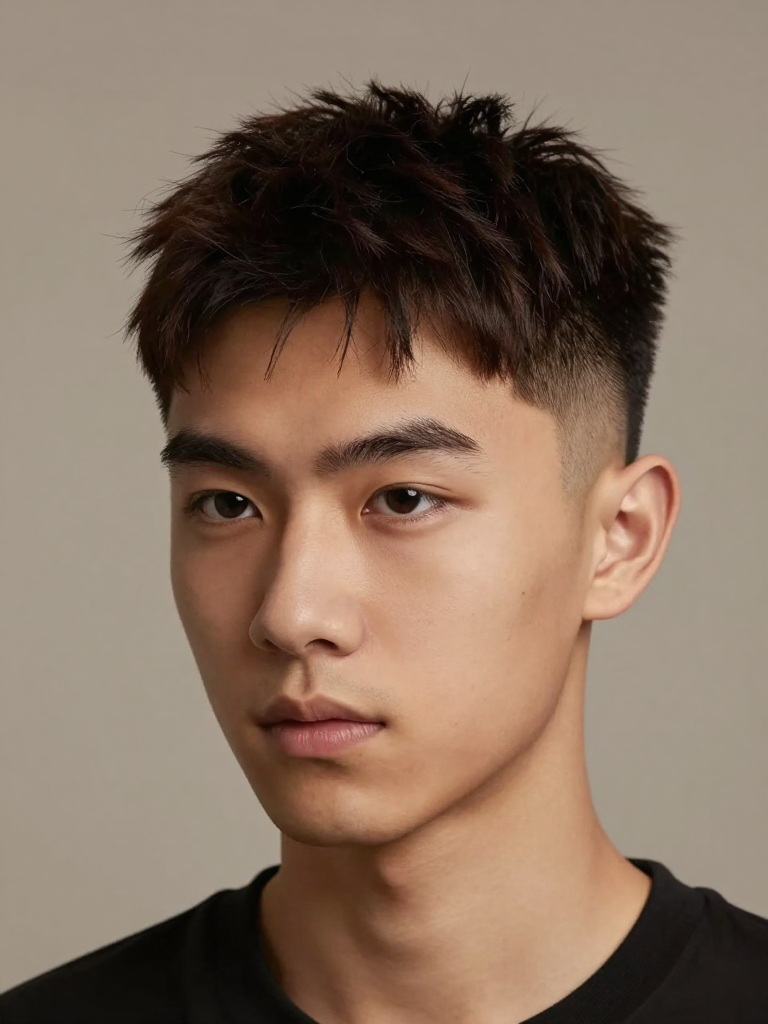
The Disconnected Fade System is the most dramatic architectural haircut for men. The sides are faded — skin fade, mid fade, or low fade — creating a gradient from bare skin to full length. The top is left at 3-5 inches, textured and styled with volume. The ‘disconnection’ is the key: there’s no gradual transition between the sides and the top. The fade stops, and the top begins. This hard line creates maximum visual contrast, making the top look even fuller and the sides look even cleaner. This system requires a skilled barber — the fade must be seamless, with no visible lines or patches. The daily styling is more involved: you need a blow dryer, product, and 5-7 minutes. But the payoff is a haircut that looks like it belongs in a barbershop magazine.
3. The Flow System
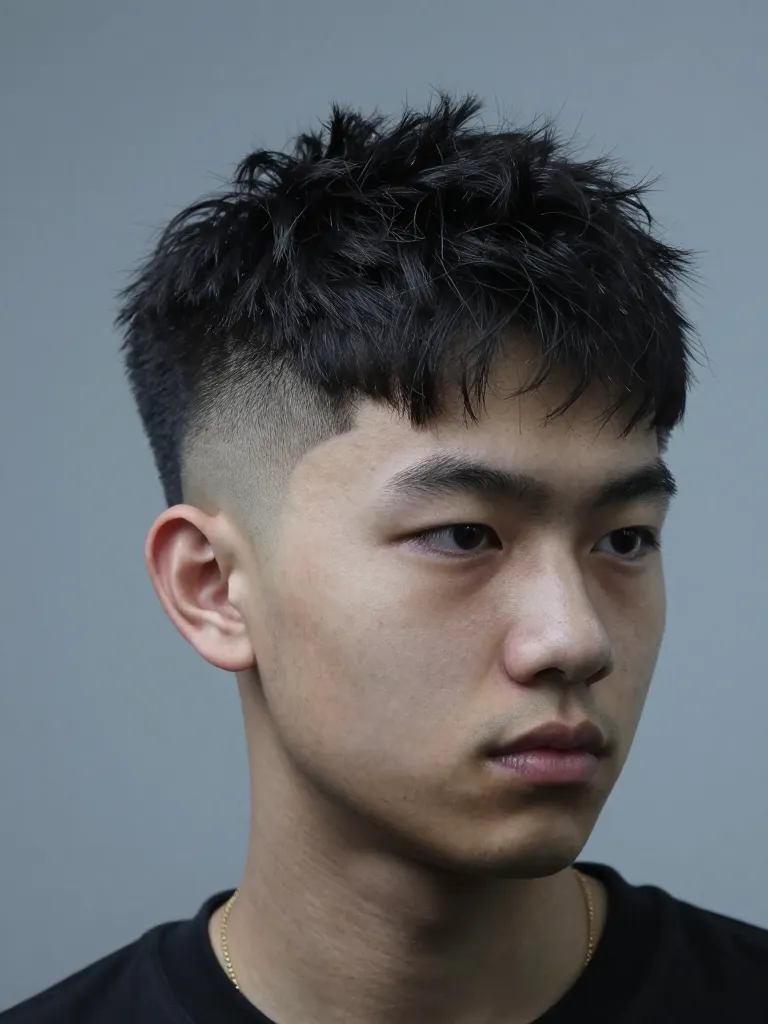
The Flow System is the anti-barber architectural haircut. There’s no fade, no hard lines, no geometric precision. The entire system is about movement and texture. The hair is medium-length (3-5 inches on top, 2-3 inches on the sides) with natural wave, left to flow backward rather than styled forward. The sides are left at natural length — not clippered, not tapered — blending seamlessly into the back. The back extends past the collar with loose, tousled layers that move when you move. This system works because it leans into your natural texture instead of fighting it. It looks best when it looks like you didn’t try — air-dried, tousled with fingers, maybe a dab of sea salt spray. The Flow System is the haircut equivalent of a leather jacket: it looks cooler the less you care about it.
4. The Textured Quiff System

The Textured Quiff System is the volume-forward architectural haircut for men. The front is 4-5 inches, swept up and back with deliberate volume and piece-y texture. The sides are clean — 1-2 inches with a soft taper — but not severe. The quiff is the star: it creates a strong vertical line that elongates the face and draws the eye upward. This system works because it uses volume as an architectural element. The height at the front creates a visual anchor that makes the rest of the face look more defined. The textured finish keeps it from looking like a helmet — each strand has its own direction and movement. Daily styling requires a blow dryer and product (matte clay or paste), but the result is a haircut that looks like you mean business.
Tools & Products
| Item | Purpose | Category |
|---|---|---|
| Matte clay or paste | Daily styling for textured crops and quiffs | Styling Products |
| Sea salt spray | Enhancing natural wave in flow hairstyles | Styling Products |
| High-shine pomade | Sleek quiff styling and hold | Styling Products |
| Blow dryer with concentrator | Building quiff volume and direction | Styling Tools |
| Wide-tooth comb | Detangling without disrupting wave pattern | Styling Tools |
| Razor comb | DIY texturing between barber visits | Cutting Tools |
| Clippers with guards | Maintaining fades between barber visits | Cutting Tools |
Related Guides
step-by-step guide to cutting your own textured crop
fade haircut maintenance and re-fading technique
Your head is not a blank canvas — it’s an architectural site with its own geometry, proportions, and structural logic. The right hairstyle doesn’t impose a shape on your head. It reveals the shape that was already there. These four systems — structured crop, disconnected fade, flow, and textured quiff — are four different approaches to the same question: what does this specific skull want to look like? The answer is different for every head. But the principle is the same: work with the architecture, not against it.
Your skull is the blueprint. The haircut is just the construction. ✂️