Men’s Braids Hairstyles: 4 Architectural Braid Systems That Redefine Male Hair
Not decoration. Not ‘festival hair.’ These are structural engineering systems built on your skull.
Men’s braids hairstyles have been reduced to a punchline — something guys do at music festivals or when they’re ‘trying something different.’ That’s garbage. Braiding is the oldest structural hair technique in human history. Vikings wore them. Samurai wore them. West African warriors built entire identity systems into their braids. The braid isn’t a trend — it’s a technology. A single braid is a column. Multiple braids are a load-bearing framework. Cornrows are a foundation. And when you understand braiding as architecture instead of decoration, the entire conversation changes. Here are four men’s braid systems that treat your hair like a building material — because that’s exactly what it is.
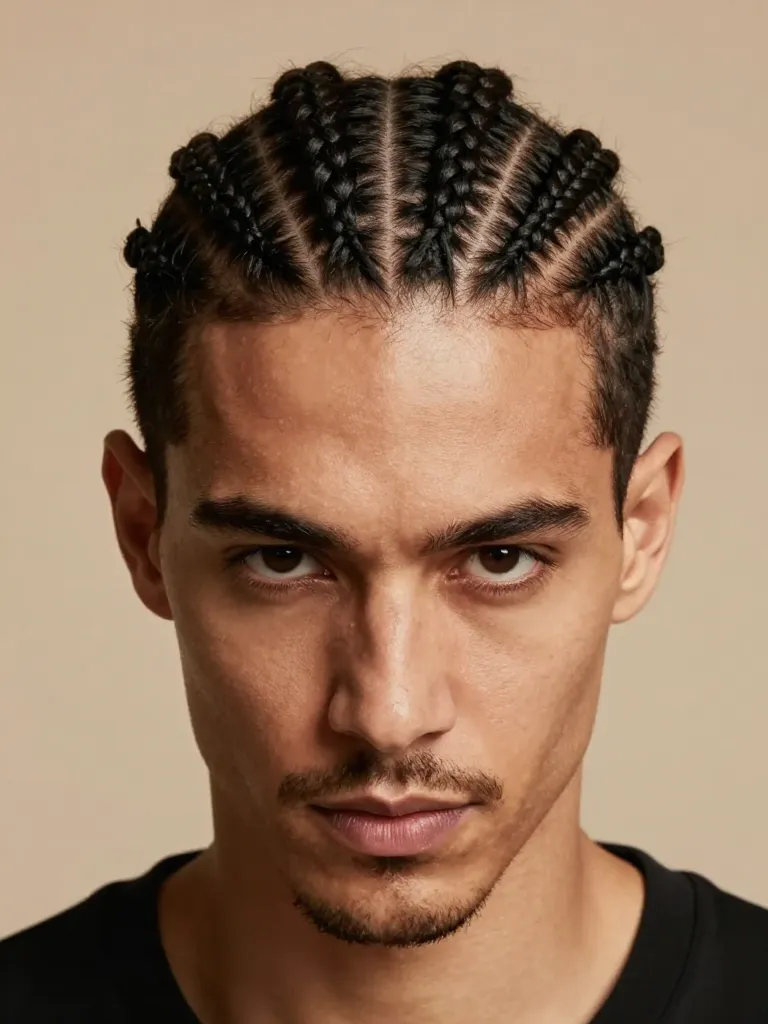
1. The Precision Cornrow Grid
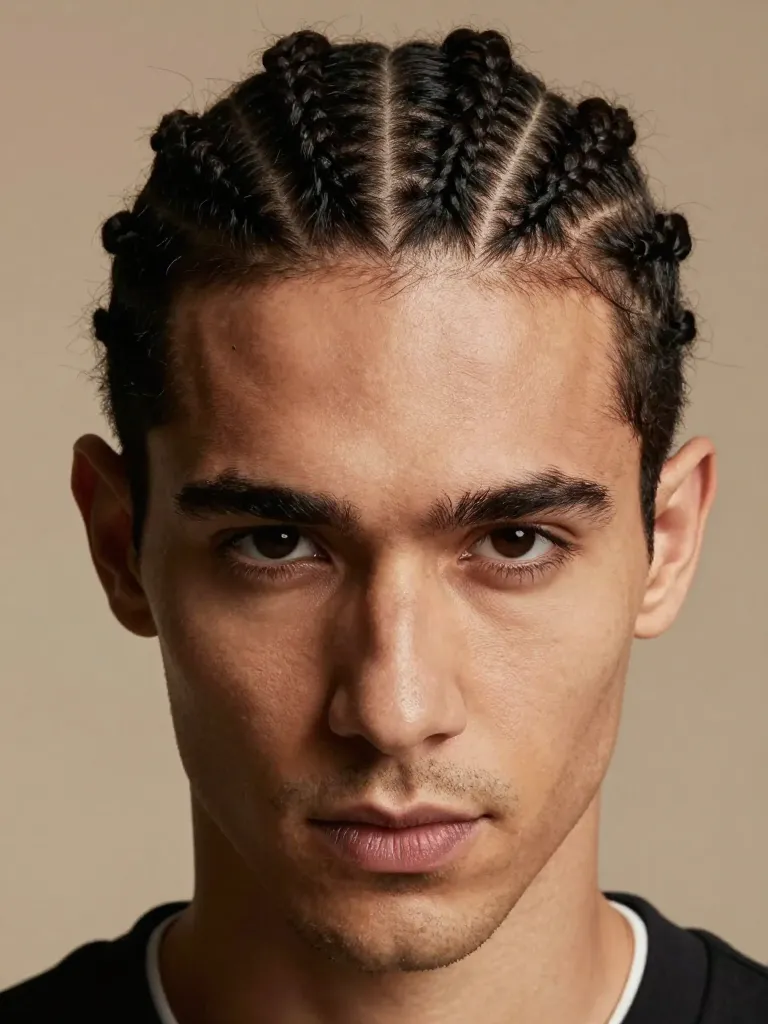
The Precision Cornrow Grid is the foundation of men’s braids. Straight-back cornrows running from hairline to nape in perfectly parallel rows, each braid uniform in thickness and tension. This isn’t the loose, wavy cornrow style — this is military-grade geometry. The grid works because it reads as intentional. Every line is deliberate. Every row is equidistant. The scalp between braids is part of the design — the contrast between the clean skin and the structured braids creates a visual tension that says ‘I spent time on this and I’m not apologizing.’ Best on hair that’s at least 3 inches long. Maintenance: re-braid every 2-3 weeks.
2. The Stitch Braid Architecture
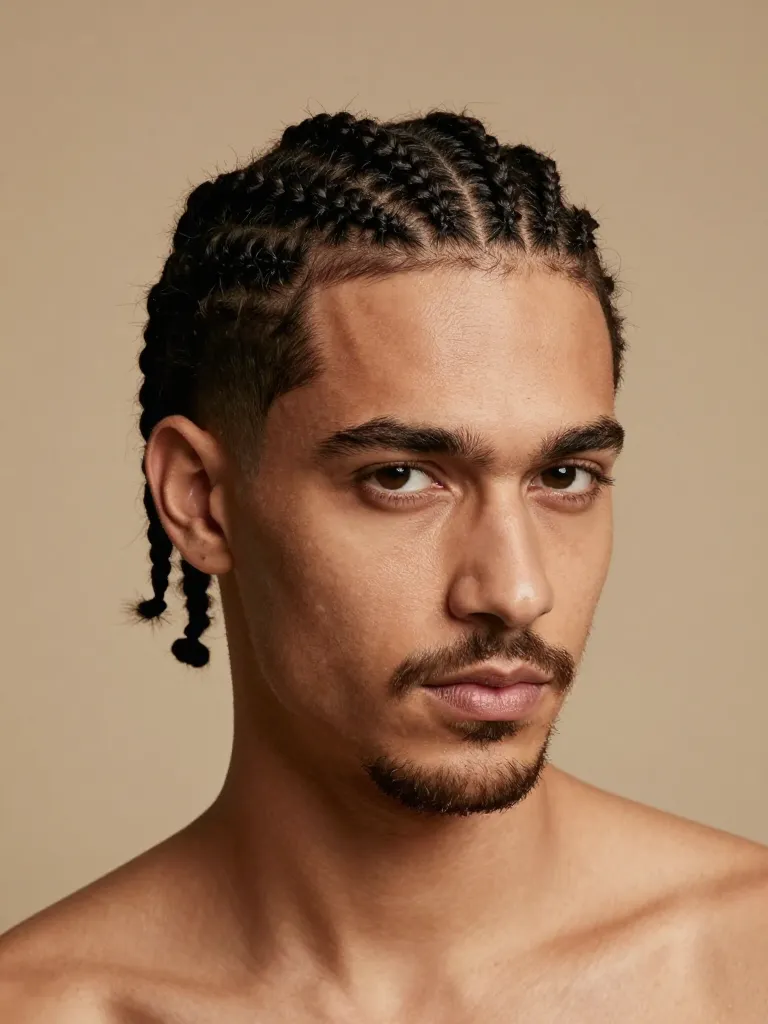
Stitch braids are the evolution of traditional cornrows. Instead of starting each braid at full thickness, the stitch braid uses the feed-in technique: the braid starts with just your natural hair at the hairline, and synthetic or natural hair is gradually fed in as the braid progresses toward the nape. The result is a braid that starts paper-thin and gradually reaches full thickness — creating a tapered, natural-looking line that appears to grow directly from the scalp. This technique eliminates the bulky, lumpy start that traditional cornrows often have. The feed-in method also puts less tension on the hairline, which means less breakage and fewer receding edges. Maintenance: 2-3 weeks.
3. The Freestyle Cornrow Map
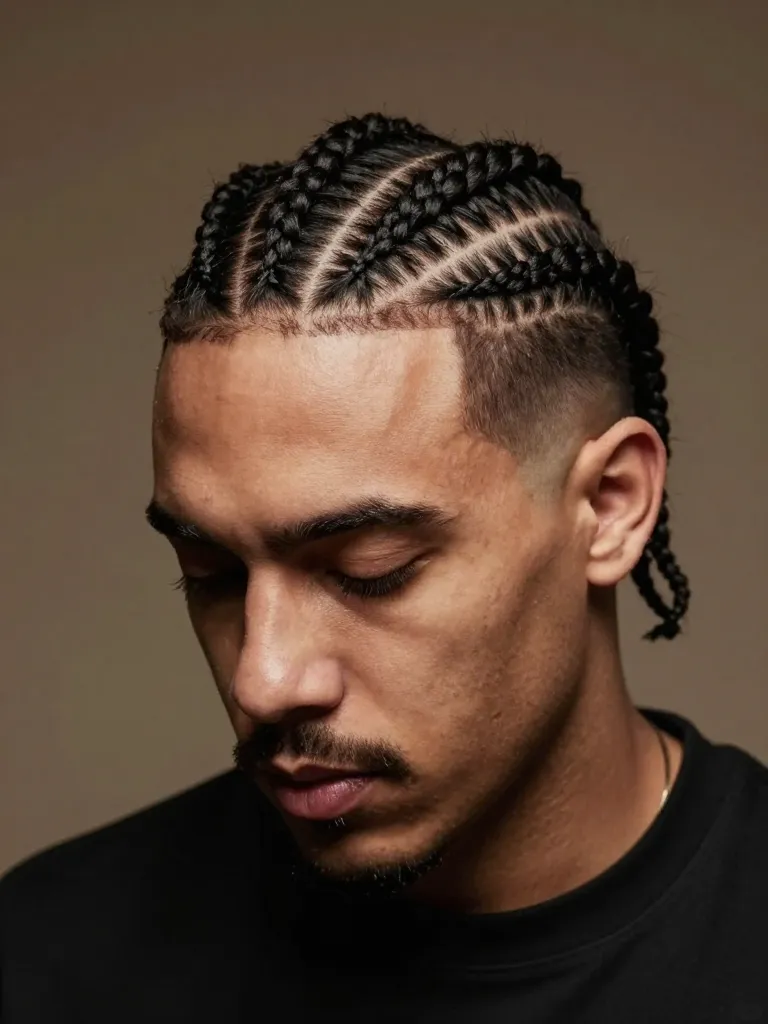
Freestyle cornrows break every rule the grid follows. Instead of parallel straight lines, freestyle cornrows use curved, angled, and intersecting braid patterns to create geometric designs on the scalp. Think of it as topographic mapping — the braids follow the natural contours of your skull while creating patterns that didn’t exist before. Curved cornrows, zigzag parts, spiral patterns, asymmetric layouts — the freestyle approach treats the head as a 3D canvas. This style requires a braider who can visualize patterns in real-time and execute them with consistent tension. The result is a one-of-a-kind design that can’t be replicated exactly on anyone else’s head. Maintenance: 2-3 weeks.
4. The Two-Strand Twist Matrix
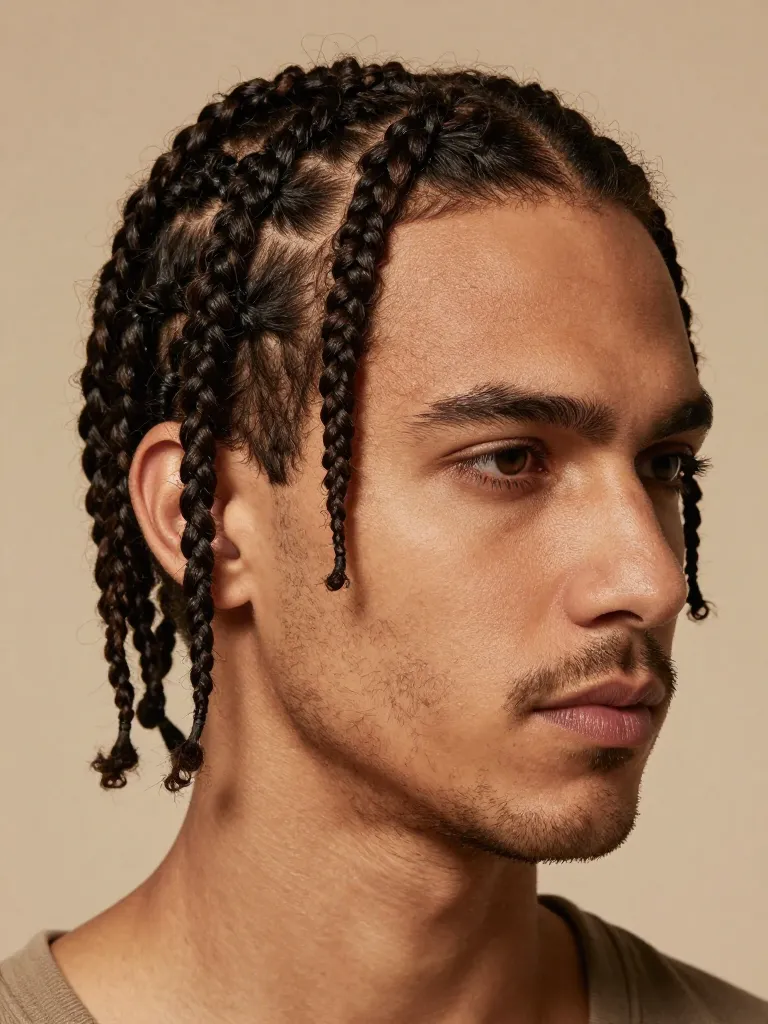
Two-strand twists are the braid’s laid-back cousin. Instead of interlocking three strands, you split each section into two and twist them around each other — creating a rope-like structure that’s faster to install and easier to maintain than traditional braids. The twists can be done as individual twists, flat twists (which lie against the scalp like cornrows), or as a combination. The texture is more organic than braids — you can see the individual strands wrapping around each other, which creates a visual depth that braids don’t have. Two-strand twists are also more forgiving: they don’t require the same tension as cornrows, which makes them better for guys with thinner hair or sensitive scalps. The tradeoff is durability — twists unravel faster than braids, typically lasting 1-2 weeks.
Tools & Products
| Item | Purpose | Category |
|---|---|---|
| Rat-tail comb | Parting and sectioning | Cutting Tools |
| Edge control gel | Smoothing hairline before braiding | Styling Products |
| Braiding hair (Kanekalon) | Adding length and thickness | Extensions |
| Hair clips | Sectioning hair during braiding | Cutting Tools |
| Moisturizing spray | Keeping braids hydrated between sessions | Styling Products |
| Silk bonnet | Protecting braids while sleeping | Accessories |
Related Guides
Mohawk braid styles tutorial — How to build a braided mohawk from cornrows
Braids for men: the complete guide — Step-by-step braiding guide for beginners
Men’s braids hairstyles aren’t a trend. They’re a technology — one of the oldest structural hair systems in human history. The cornrow grid is a foundation. The stitch braid is an evolution. The freestyle map is art. And the two-strand twist is organic architecture. Your hair isn’t decorative. It’s a building material. Start treating it like one.
Three strands. Infinite geometry. Zero apologies.