Short Wolf Cut: How to Get the Shaggiest Short Haircut of the Decade
All the attitude of a wolf cut, compressed into a frame that actually fits your life.
The short wolf cut is the wolf cut for people who don’t want to deal with long hair. It keeps the choppy layers, the face-framing bangs, and the deliberately messy silhouette — but the length stays above the shoulders. The result is a haircut that’s lower maintenance, faster to style, and arguably more striking than the classic version. Here’s how to get it, style it, and make it yours.

Step 1: Get the Cut Right

The short wolf cut starts with the layering pattern. Ask your stylist for: short layers on top (3-4 inches), medium layers at the sides (ear to jaw length), and the back hitting at the nape or just below. The bangs should be cut above the eyebrows — blunt or slightly choppy, not wispy. The key difference between a short wolf cut and a regular short shag is the disconnect: the top layers should be noticeably shorter than the bottom layers, creating that stacked, voluminous crown. Point-cut the ends for texture — don’t let anyone cut them straight across, or you’ll lose the messy character entirely.
Prerequisites:
- Hair at least 3 inches long on top
- Reference photos of short wolf cuts
Step 2: Style the Texture
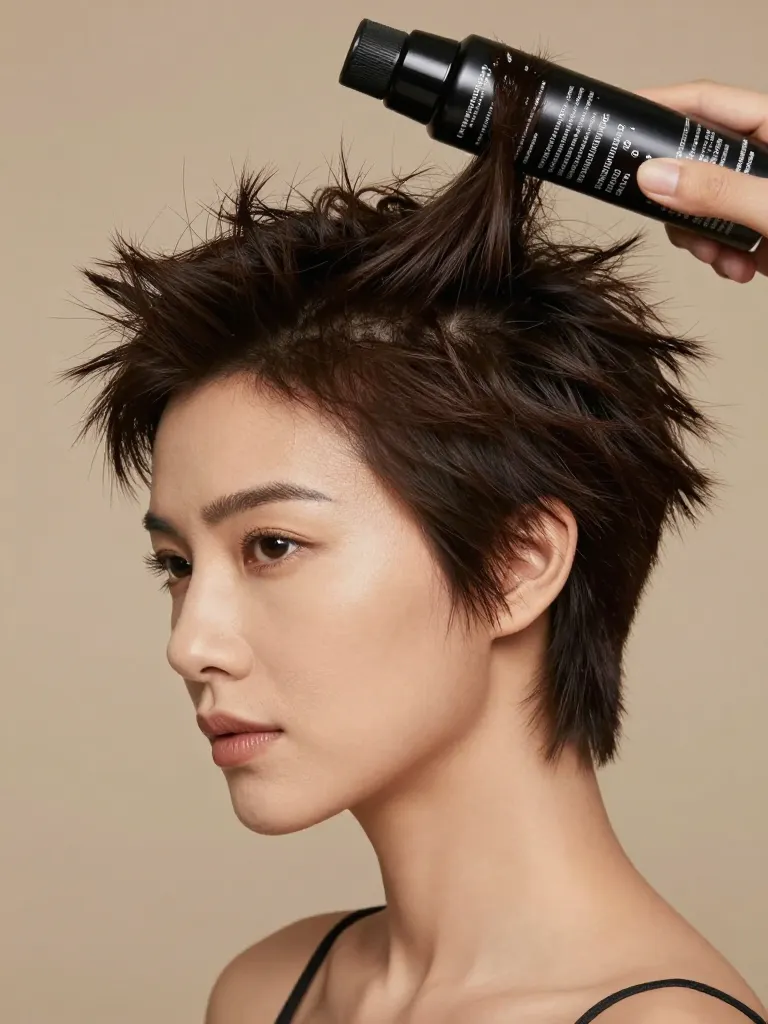
The short wolf cut lives and dies by its texture. Start with damp hair and apply sea salt spray generously — 5-6 sprays through the mid-lengths and ends. Scrunch with your hands, lifting upward toward the crown. For extra volume, flip your head upside down and diffuse on low heat. For a more undone look, air-dry and scrunch periodically as it dries. The goal is piece-y, separated texture — not smooth, not curly, but that in-between state where each section has its own personality.
Prerequisites:
- Sea salt spray
- Diffuser (optional)
Step 3: Define the Bangs

The bangs are the signature element of the short wolf cut. They should sit above the eyebrows — not curtain bangs, not side-swept, but straight-across micro bangs with texture. Use a flat iron to create slight bends in the bangs — not curls, just gentle S-waves that break up the blunt line. Pull out a few face-framing pieces on each side that are longer than the bangs — these blend the bangs into the rest of the cut. If your bangs are too perfect, mess them up with your fingers. The wolf cut bangs should look like you cut them yourself (even though you definitely didn’t).
Prerequisites:
- Flat iron (optional)
- Fingers
Step 4: Maintain the Shape
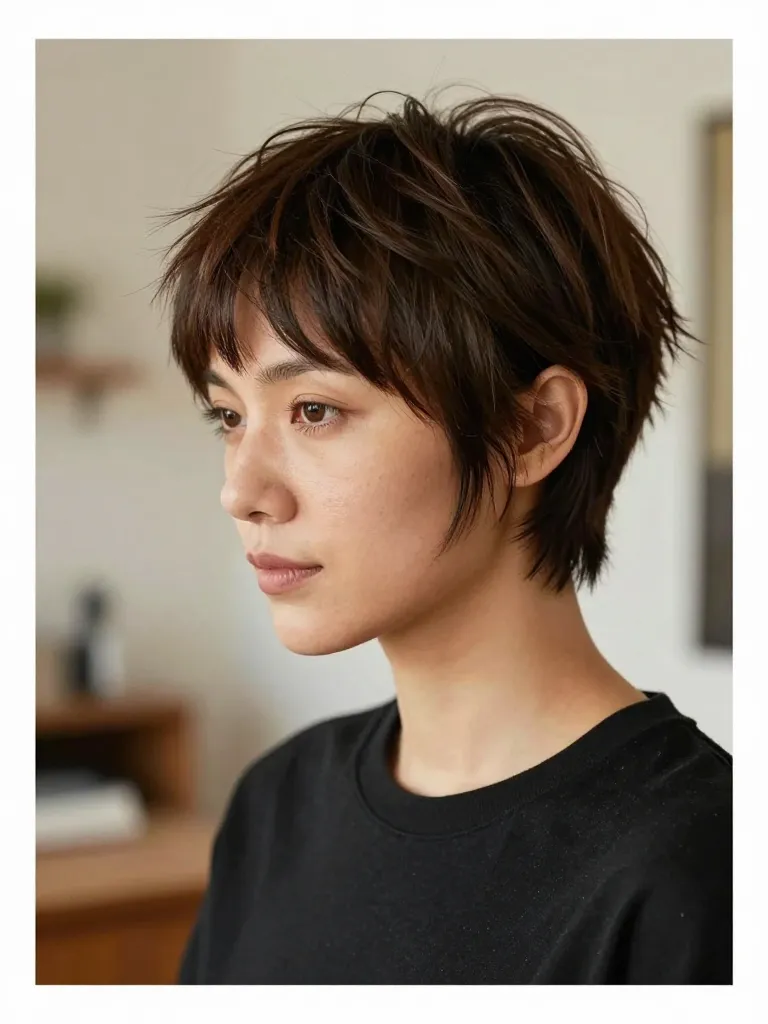
The short wolf cut grows out faster than you think — the layers that define the silhouette lose their shape in 4-6 weeks. Between salon visits, you can maintain the texture at home with point-cutting: take the ends of each layer between your fingers and cut into them at an angle (not straight across). This preserves the choppy, piece-y texture without changing the length. Focus on the top layers and the bangs — these are the first to lose their shape. The sides and back can wait for the salon.
Prerequisites:
- Hair shears (not kitchen scissors — they’re too dull and cause split ends)
Step 5: Refresh Between Washes

Day-two and day-three wolf cuts often look better than freshly washed ones — the natural oil adds grip and separation that enhances the choppy texture. But by day three, the roots need refreshing. Spray dry shampoo at the roots, massage in, and scrunch the lengths with your hands. The texture comes back instantly. If the bangs have gone flat, blast them with a blow dryer while lifting with your fingers. The short wolf cut is the rare hairstyle that genuinely improves with age — up to a point.
Prerequisites:
- Dry shampoo
Safety Warnings
- Don’t use regular scissors for at-home maintenance — invest in hair shears to prevent split ends and uneven cuts
Pro Tips
- The wolf cut grows into itself: Unlike most haircuts that grow out awkwardly, the wolf cut’s layered structure means it transitions gracefully into a shaggy lob as it grows. You get 3-4 months of good hair from one cut.
- Product is everything: Without texture product, the wolf cut is just a bad layered bob. Sea salt spray, texturizing powder, or matte clay are non-negotiable for maintaining the piece-y character.
- Let it air-dry sometimes: Diffusing gives you more volume, but air-drying gives you more natural movement. Alternate between the two to keep the texture from becoming too uniform.
The short wolf cut is the haircut for people who want to look like they don’t care about their hair — while obviously caring a lot. It’s low maintenance in practice but high impact in results, and it works on every hair texture from pin-straight to tightly coiled. Get the cut, learn the texture, and let the wolf cut do its thing.
Short, shaggy, and absolutely feral. That’s the wolf cut way.