Bangs for Square Face: How to Cut and Style Fringe That Softens Your Angles
Not all bangs work on square faces. Here’s the exact technique for cutting fringe that flatters your geometry — not fights it.
You have a square face. You want bangs. But every time you’ve tried, they look like a shelf sitting on your forehead — flat, blunt, and doing nothing for your jawline. The problem isn’t bangs themselves. It’s the technique. Square faces need bangs with texture, movement, and diagonal lines — not heavy, horizontal curtains. Here’s how to cut and style bangs that actually work on your face shape.
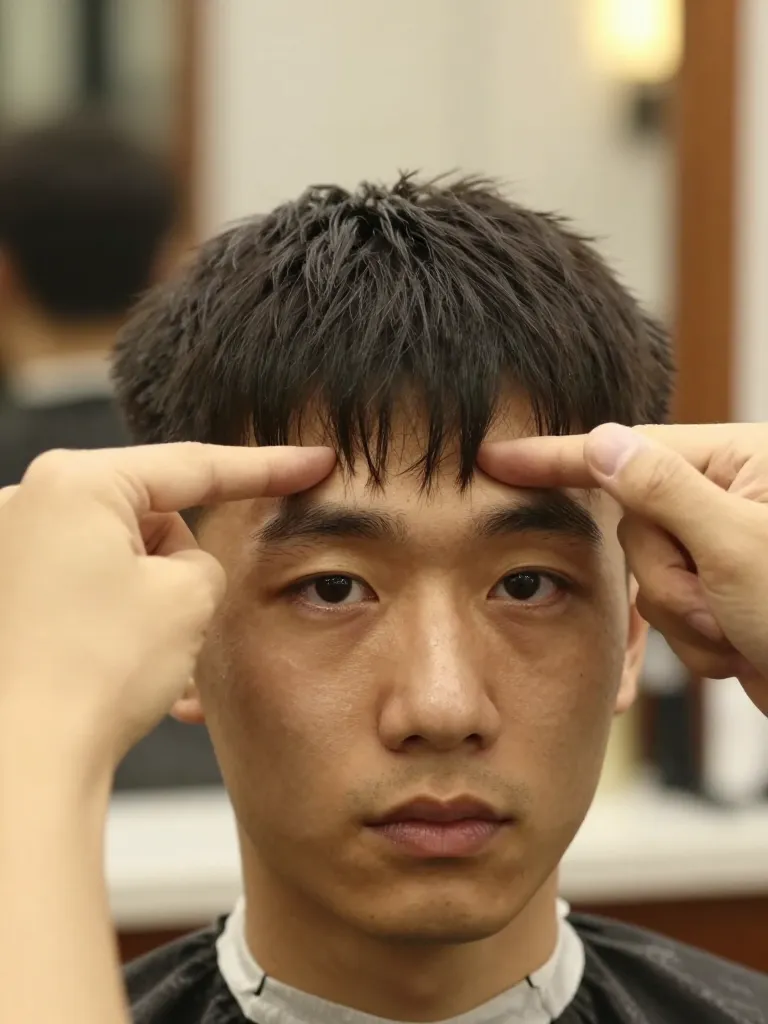
Step 1: Determine Your Bang Length
Before you cut anything, you need to decide how long your bangs should be. For square faces, the sweet spot is between the eyebrow and the mid-forehead — roughly 2-3 inches from the hairline. Too short (above the eyebrows) and the bangs will create a horizontal line that makes the face look wider. Too long (past the eyes) and the bangs will hide your forehead without softening the jaw. The ideal length is where the bangs naturally fall when you push them forward — usually just touching the eyebrows or slightly above. Use your fingers to mark this point before you pick up the scissors.
Timing: 2 minutes
Prerequisites: Comb, Mirror, Good lighting
Step 2: Section the Bang Area
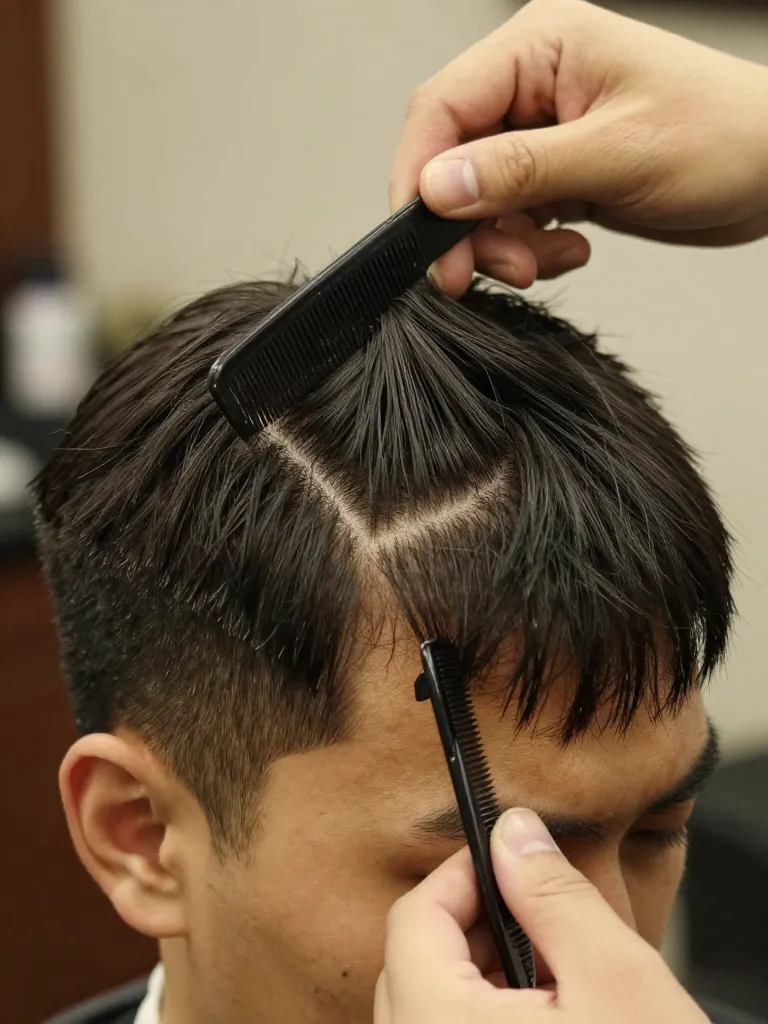
The bang section should be a triangle — starting at the parting point (about 2 inches back from the hairline) and widening to the temples. The wider the triangle, the thicker the bangs. For square faces, a moderate width works best — about 3-4 inches at the widest point. Too narrow and the bangs will look like a curtain. Too wide and they’ll overwhelm your face. Use a comb to create a clean triangle section, and clip the rest of the hair back so it doesn’t interfere. The triangle should be symmetrical — use the center of your forehead as the reference point.
Timing: 3 minutes
Prerequisites: Sectioning clips, Rat-tail comb
Step 3: Cut at an Angle
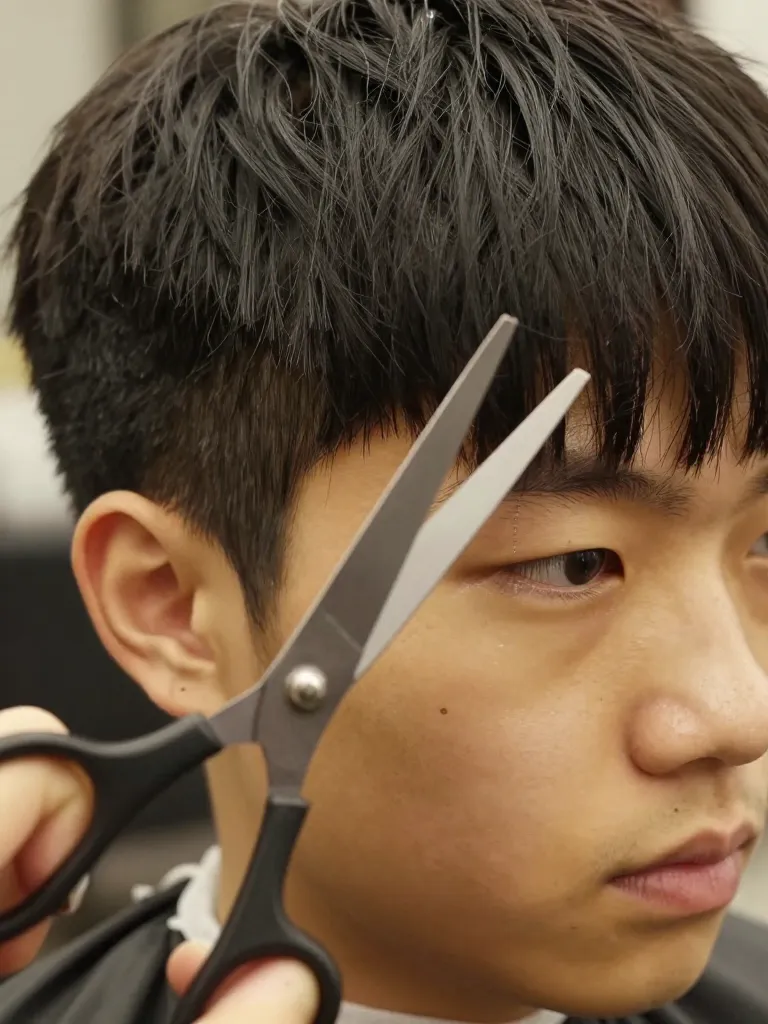
This is where most people go wrong. They cut straight across — and end up with blunt, horizontal bangs that make square faces look like picture frames. Instead, cut at a diagonal angle. Start at the longer side (usually the left if you part on the right) and cut diagonally to the shorter side. The angle should be about 15-20 degrees — enough to create a visible diagonal line, but not so extreme that the bangs look uneven. Use the point-cutting technique: instead of cutting straight across with the scissors, open the scissors slightly and cut into the ends at an angle. This creates texture and prevents the blunt, shelf-like look that kills square faces.
Timing: 5 minutes
Prerequisites: Sharp hair-cutting scissors, Comb
Step 4: Texturize the Ends
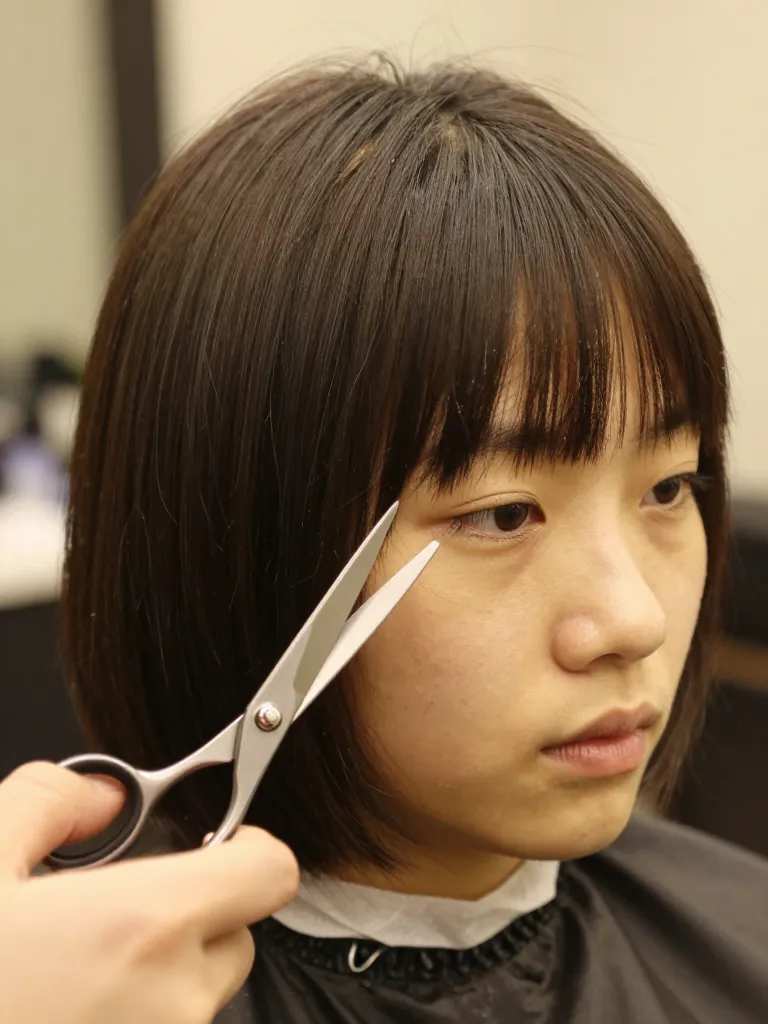
Texturizing is the step that separates good bangs from great bangs. Use thinning shears (or regular scissors with the point-cutting technique) to remove bulk from the ends. Hold the shears vertically and cut into the ends at random intervals — this creates the piece-y, separated texture that makes bangs look natural on square faces. Don’t overdo it — you want to remove about 20-30% of the bulk, not thin them out completely. The goal is movement, not sparseness. After texturizing, the bangs should fall naturally and separate when you run your fingers through them.
Timing: 3 minutes
Prerequisites: Thinning shears or regular scissors
Step 5: Style with Product
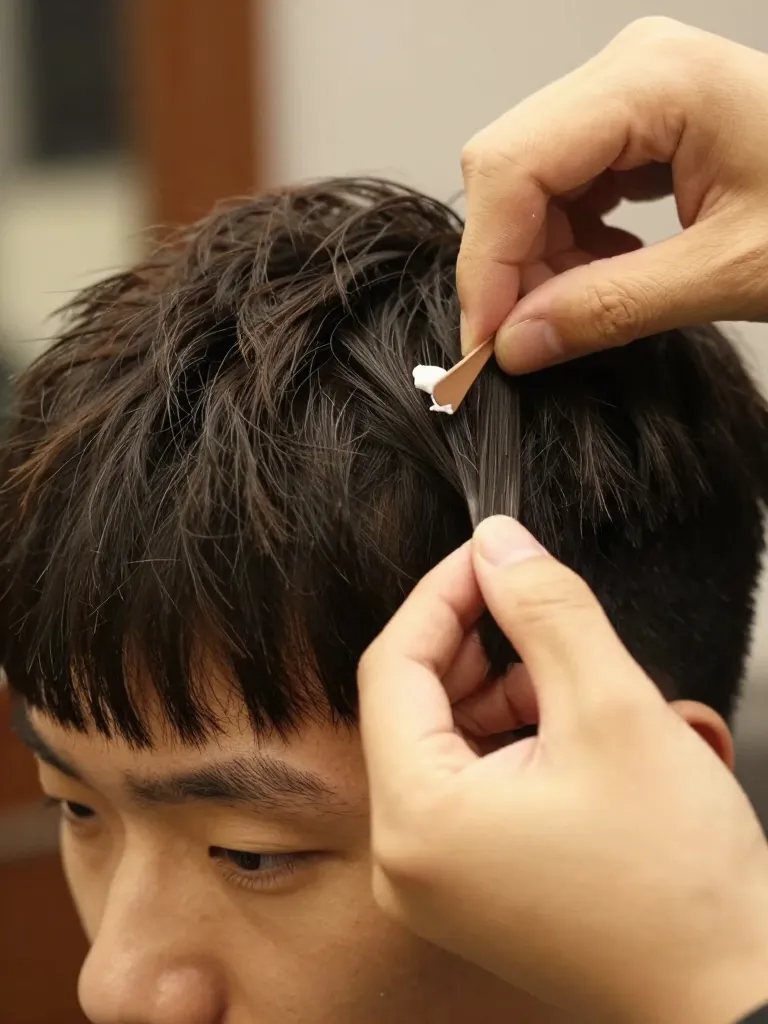
The final step is styling — and this is where you make the bangs work for your square face. Use a matte paste or clay (not pomade — too shiny, not wax — too stiff). Take a pea-sized amount, rub it between your palms, and work it through the bangs with your fingers. Focus on separating and defining individual pieces — you want the bangs to look piece-y and textured, not solid and heavy. Push the bangs slightly to one side to create the diagonal line that flatters square faces. Don’t push them straight down — that creates the horizontal line you’re trying to avoid. The finished look should be natural, textured, and slightly asymmetrical.
Timing: 2 minutes
Prerequisites: Matte paste or clay, Mirror
Safety Warnings
⚠️ If you’re not confident cutting your own bangs, go to a barber for the first cut and maintain them at home.
Why This Works
Square faces need diagonal lines and texture to soften the angular jawline. Blunt, horizontal bangs do the opposite — they create a strong horizontal line that makes the face look wider and more boxy. By cutting at an angle and texturizing the ends, you create the movement and asymmetry that flatters square geometry. The diagonal line of the bangs breaks up the horizontal and vertical lines of the face, creating a more balanced, dynamic silhouette.
Tips
- Maintenance schedule: Trim your bangs every 2-3 weeks to maintain the length and texture. They grow fast and will lose their shape quickly.
- Growing out: If you want to grow your bangs out, trim the sides shorter and let the center grow — this creates a curtain bang that’s still flattering on square faces.
- Product choice: Matte paste or clay is essential for square faces — shiny products make the bangs look heavy and solid, which emphasizes the square shape.
Bangs on a square face aren’t about hiding your jawline — they’re about framing it. The diagonal line and textured movement of well-cut bangs draw the eye upward and create the visual contrast that makes your bone structure look intentional, not accidental. Cut them right, style them well, and your square face becomes your best feature.
Your jawline is the sharpest thing in the room. The bangs just make sure everyone notices.