Bob Haircut for Round Face: 5 Variations That Slim Instead of Widen
The bob gets a bad reputation for round faces. It shouldn’t. The right bob is the strongest face-slimming cut in the game.
Everyone says ‘don’t get a bob if you have a round face.’ That’s wrong. A blunt, chin-length bob with no layers will widen a round face — that’s true. But a bob with the right length, layers, and angle is one of the most powerful face-slimming haircuts available. The difference is architecture.
Step 1: Choose Your Bob Length

The single most important decision for a round-face bob is length. Chin-length is the danger zone — it hits at the widest point of a round face and creates a horizontal line that reinforces the circular outline. The sweet spots are: just below the chin (1-2 inches below the jawline), collarbone length (the most universally flattering bob length for round faces), or a long bob that hits the shoulders. The further below the chin the bob falls, the more vertical line it creates — which elongates the face. For round faces, the minimum bob length should be 1 inch below the chin. If you’re committed to chin-length, you MUST add layers that break the horizontal line (more on that in Step 3).
Timing: 5 minutes measuring from your chin to your preferred length
Prerequisites:
- Soft tape measure
- Understanding of your face shape
Step 2: Decide on the Angle
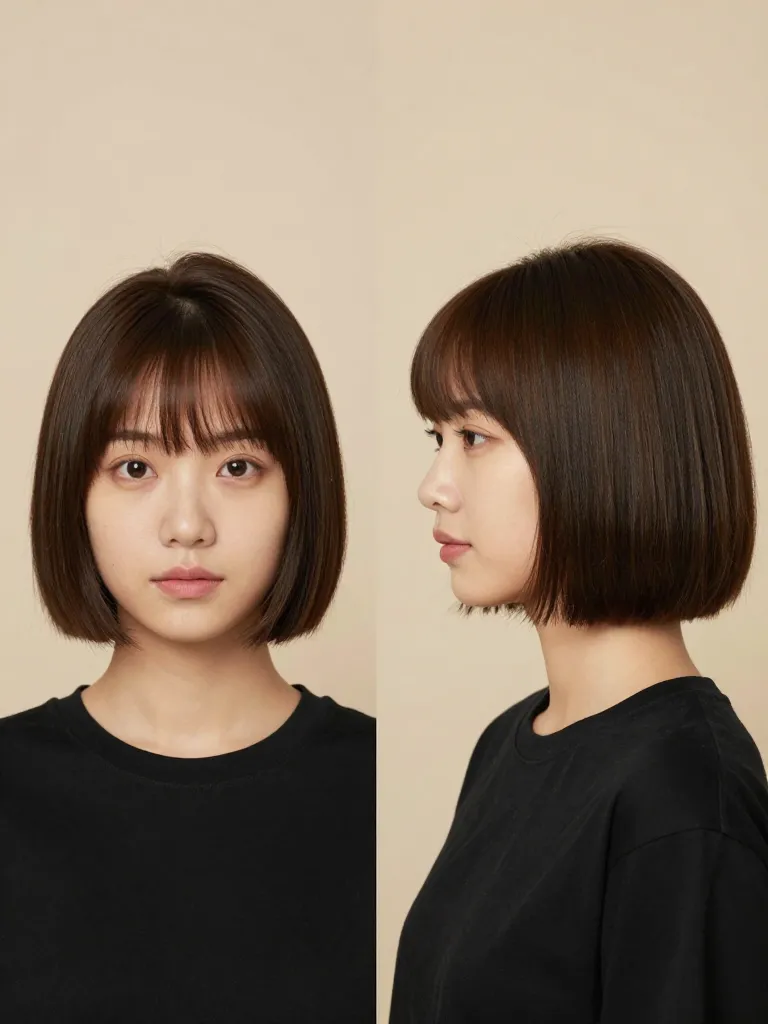
A blunt bob (same length all around) creates a horizontal line that mirrors the round face’s outline. An A-line bob (longer in front, shorter in back) creates a diagonal line from back to front — which is the most powerful face-slimming line in hairstyling. The ideal angle for a round face is: the front should be 2-3 inches longer than the back. This creates two diagonal panels of hair that frame the face and draw the eye downward, elongating the visual line from cheekbone to collarbone. The back can be stacked (layered at the nape for volume) or blunt — the key is the front-to-back length difference. A graduated bob (where the back is stacked with short layers and the front is long) works even better because the stacked back adds height at the crown, which further elongates the face.
Timing: 10 minutes deciding on the angle with your stylist
Prerequisites:
- Reference photos of A-line and graduated bobs
- Understanding of your face width
Step 3: Add Strategic Layers

Layers break horizontal lines. On a bob for a round face, layers should start at or below the jawline — never above. Layers that hit above the jaw create volume at the cheeks, which widens the face. Layers that hit below the jaw create movement that draws the eye downward. The ideal layering for a round-face bob: the shortest layer hits 1 inch below the jawline, the longest layer hits at the collarbone, and the transition is blended (not choppy). Face-framing layers — where the front pieces are slightly shorter than the back — are essential. They create two vertical panels on either side of the face that visually narrow the cheeks. If your hair is fine, skip the layers and use an A-line angle instead — layers on fine hair can look sparse.
Timing: 5 minutes discussing layer placement with your stylist
Prerequisites:
- Knowledge of your hair density (fine, medium, thick)
Step 4: Style for Maximum Slimming

The styling makes or breaks a round-face bob. The goal is to direct the hair inward (toward the face) at the ends, not outward. Outward-flipped ends create horizontal width at the jaw — which widens the face. Inward-bent ends create a narrowing frame around the face. Use a round brush during blowout: roll the ends under (toward the neck) as you dry. For the face-framing pieces, blow-dry them forward (toward the chin) so they create two vertical panels on either side of the face. Avoid curling the ends outward — it’s the fastest way to turn a face-slimming bob into a face-widening one. If you want texture, use a flat iron to create loose waves that bend inward, not bouncy curls that puff outward.
Timing: 15-20 minutes for blowout styling
Prerequisites:
- Round brush
- Blow dryer
- Heat protectant
Step 5: Maintain the Shape
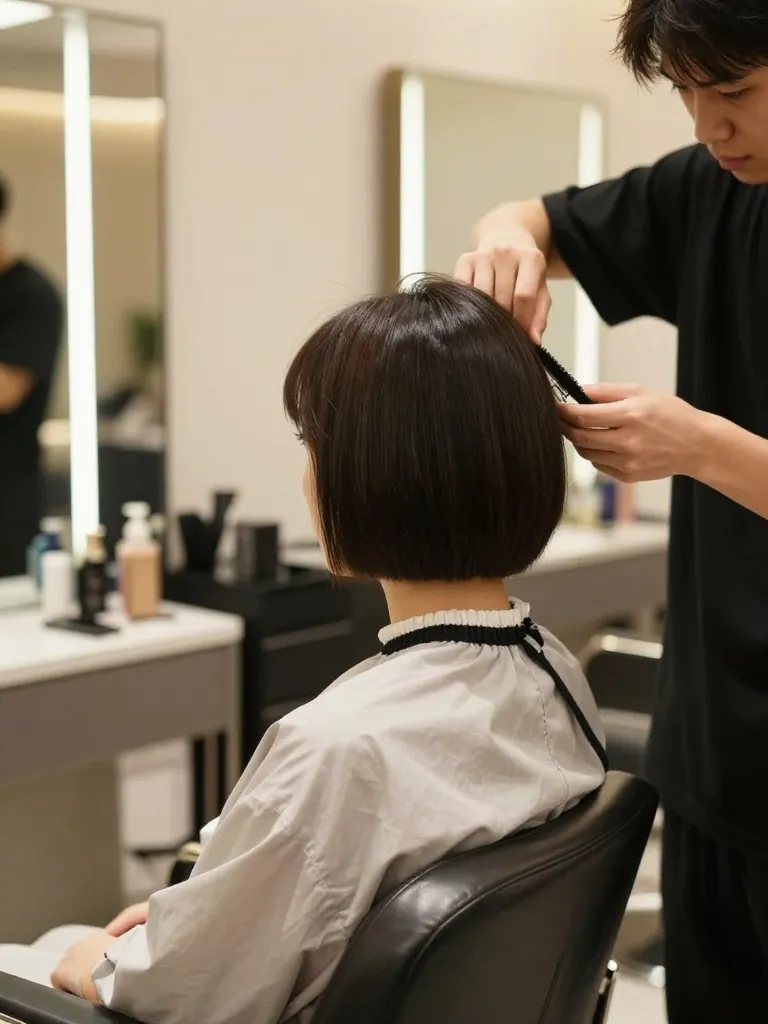
Bobs are precision cuts — they lose their shape faster than long hair because the lines are visible. A round-face bob needs reshaping every 6-8 weeks. The A-line angle grows out quickly; after 4 weeks, the front pieces will be noticeably longer than intended, and the diagonal line becomes less pronounced. The layers also need maintenance — as they grow, they lose their face-framing effect and start to hang flat. Between salon visits, you can maintain the shape by: trimming the face-framing pieces yourself (just the very ends, 1/4 inch at a time), using a flat iron to re-bend the ends inward, and dry-shampooing the roots to maintain volume at the crown. Don’t try to reshape the angle yourself — that’s a salon job.
Timing: Salon visit every 6-8 weeks, 5 minutes daily styling
Prerequisites:
- Salon appointment booked
- Flat iron for daily touch-ups
Why This Works
The bob haircut for round faces works because it combines three geometric countermeasures: length below the chin (vertical line), A-line angle (diagonal line), and face-framing layers (narrowing panels). When all three are present, the bob actively slims the face instead of widening it. The common advice to ‘avoid bobs on round faces’ only applies to blunt, chin-length bobs with no layers — the worst possible combination.
Pro Tips
- The collarbone rule: If you’re unsure about bob length, go collarbone. It’s long enough to elongate, short enough to be a real bob.
- Side part > center part: A deep side part on a bob creates a diagonal across the forehead that slims the face. A center part mirrors the roundness.
- Tuck one side: Tucking one side behind the ear on a bob creates asymmetry — which is the most powerful face-slimming tool.
- Volume at the crown: Use dry shampoo or root lifter at the crown. Height on top elongates the face. Flat roots make the bob look wider.
The bob isn’t off-limits for round faces — it’s one of the strongest face-slimming cuts when done right. The key is architecture: the right length, the right angle, and the right layers. Get those three elements right, and the bob will make your round face look narrower than any long haircut.
A great bob on a round face isn’t luck. It’s geometry — and now you have the blueprint.