Round Face Haircuts Short: How to Choose a Pixie That Actually Flatters
Round faces and short hair are not enemies. You’ve just been cutting it wrong.
Every round-faced woman has heard the same lie: ‘You shouldn’t cut your hair short — it’ll make your face look wider.’ This is wrong. Catastrophically wrong. The reason short hair ‘doesn’t work’ on round faces isn’t the length — it’s the cut. A bad short haircut on a round face adds width at the cheeks and removes all vertical structure. A good short haircut on a round face does the opposite: it adds height at the crown, creates vertical lines at the sides, and draws the eye up instead of out. The pixie cut is actually one of the most flattering short haircuts for round faces — when it’s engineered correctly. This guide covers the structural rules that make a pixie cut work on a round face, including exact measurements, styling techniques, and the one mistake that ruins everything.
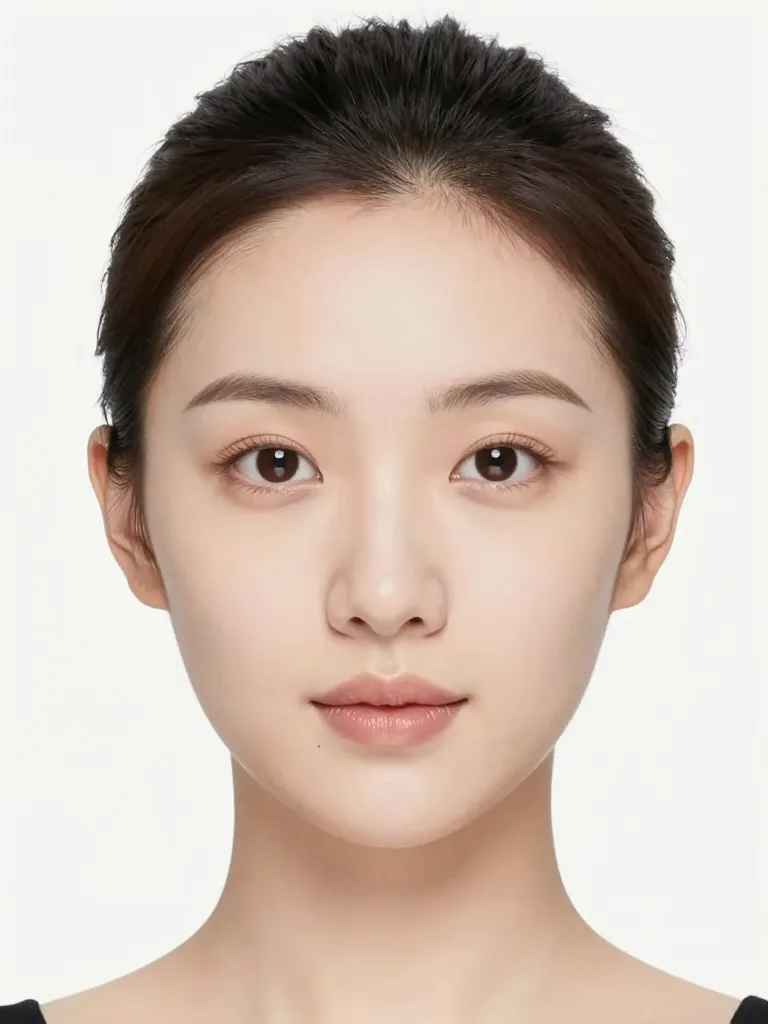
Step 1: Understand the Geometry of a Round Face
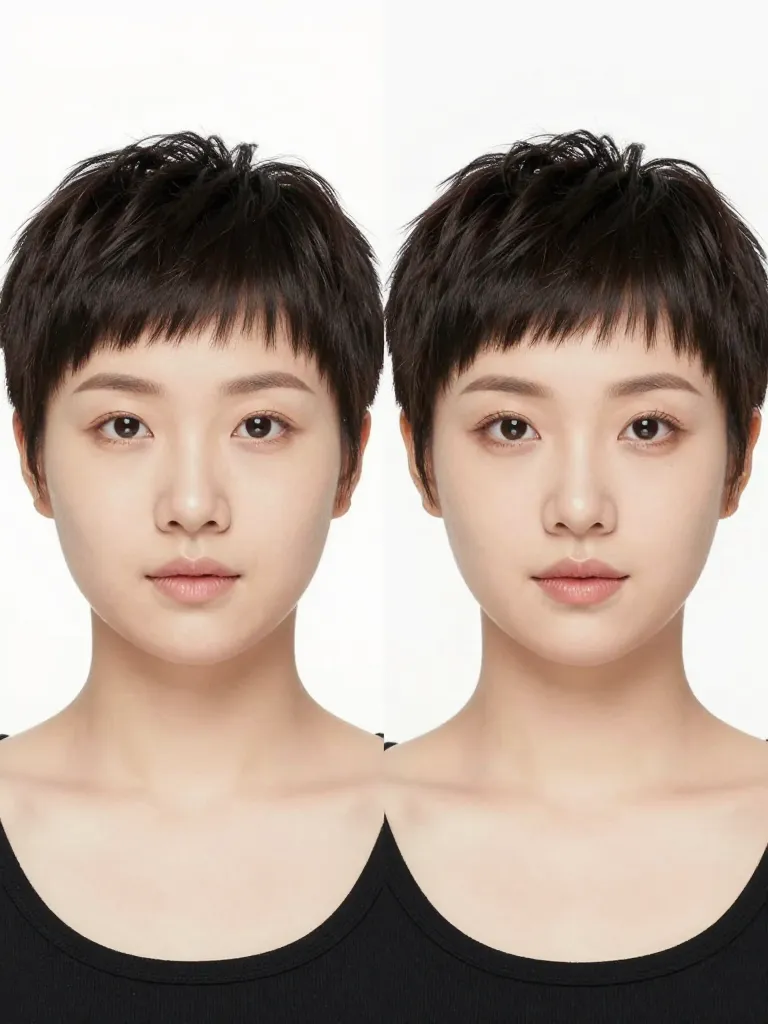
Before you choose a pixie cut, you need to understand what ’round face’ actually means geometrically. A round face has a width-to-length ratio of approximately 1:1 — the width at the cheekbones is roughly equal to the length from hairline to chin. The widest point is at the cheekbones. The forehead and jawline are approximately the same width. There are no sharp angles — everything is curved. This geometry means that any hairstyle that adds width at the cheeks (ear-level volume, side-swept bangs that stop at the cheekbones, horizontal lines at mid-face) will make the face look wider. The goal of a round-face pixie is to break the 1:1 ratio — to create the illusion of vertical length. Every decision from here forward serves that goal: height at the crown, vertical lines at the sides, volume UP not OUT.
Step 2: Choose the Right Pixie Architecture
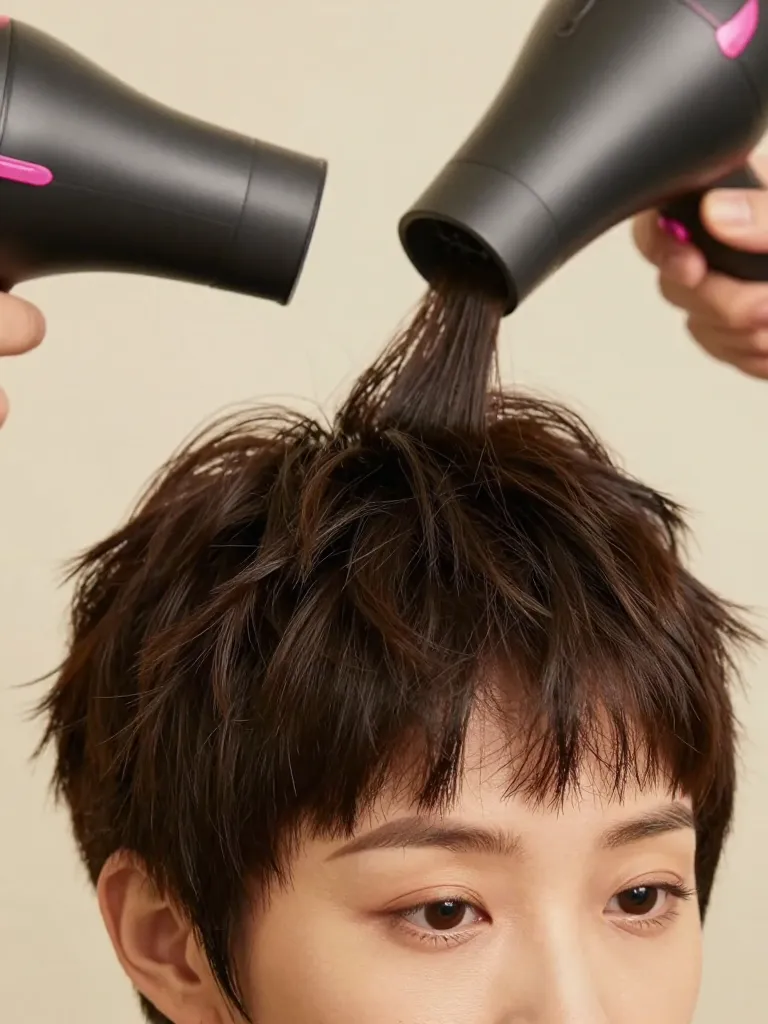
The right pixie for a round face has three non-negotiable structural elements. First: crown height. The top must be left with 3-4 inches of length, styled upward or forward-and-up. This adds vertical height that elongates the face. Second: tight sides. The sides should be clippered or tightly tapered — 0.5 inch or less. This removes width at the cheeks. Third: angular bangs. The bangs should be cut on a diagonal (side-swept) or kept very short (micro-bang). Horizontal bangs that stop at the cheekbones add width — avoid them. The combination of height on top, tight sides, and angular bangs creates a visual triangle that points UP, breaking the round geometry. The worst pixie for a round face is the ‘mushroom’ variation: rounded top, blunt horizontal bangs, and soft sides. This adds width everywhere and eliminates all vertical structure.
Step 3: Build Volume in the Right Place
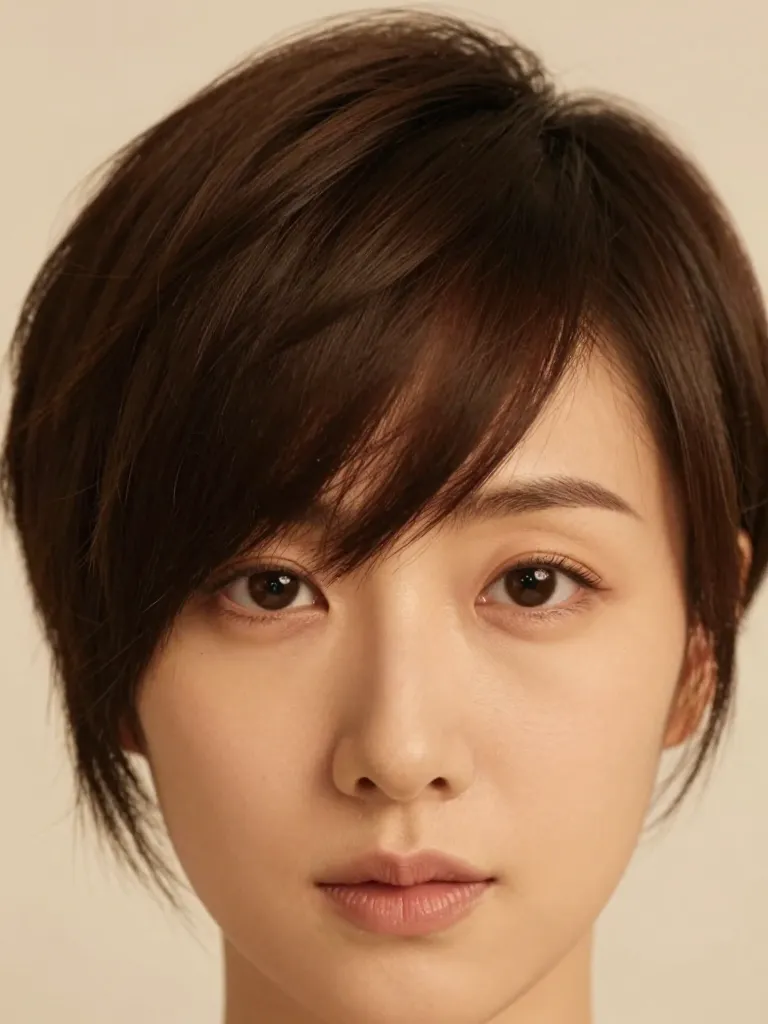
Volume placement is what separates a flattering round-face pixie from an unflattering one. On a round face, volume must go UP — at the crown, directly above the top of the head. Volume at the sides (ear level) adds width and makes the face look wider. Start with damp hair. Apply a volumizing mousse to the roots at the crown only — not the sides. Blow-dry the crown section upward using a round brush, lifting the roots away from the scalp. The goal is 2-3 inches of vertical lift at the highest point of the crown. The sides should be blow-dried flat — smooth, close to the head, no volume. The contrast between the voluminous crown and the flat sides creates the vertical elongation that a round face needs. Finish with a light-hold hairspray to maintain the height without stiffness.
Step 4: Style the Bangs for Face-Lengthening
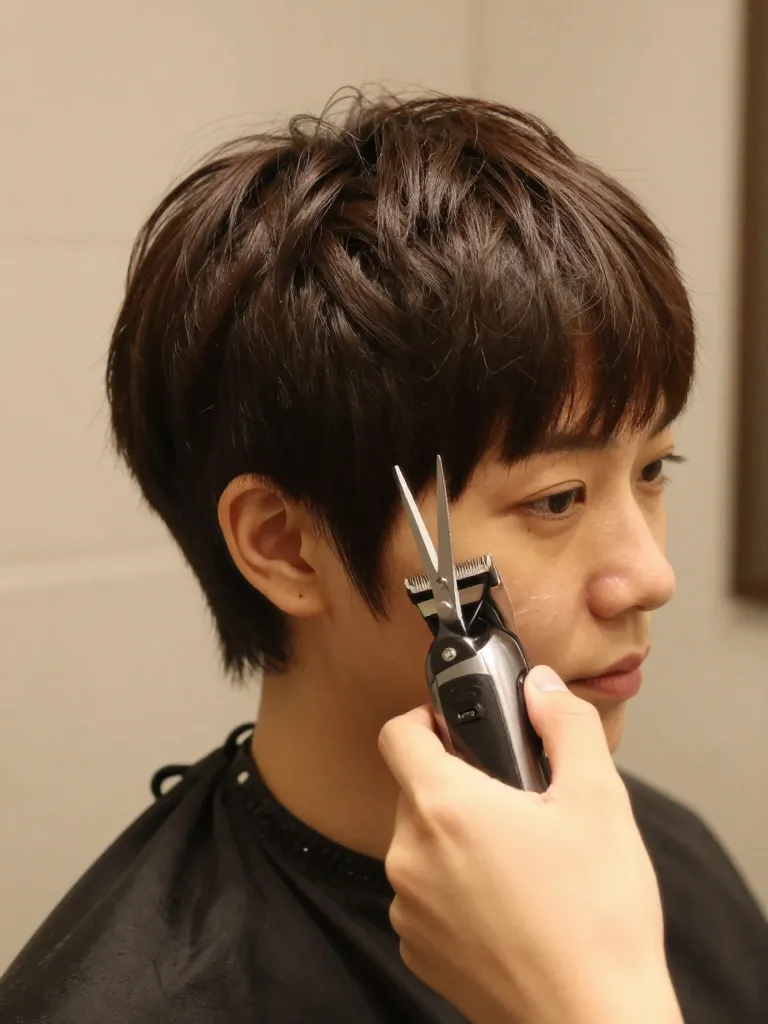
The bangs on a round-face pixie must create a diagonal or vertical line — never a horizontal one. Side-swept bangs are the gold standard: they create a diagonal across the forehead that visually breaks the round geometry. Style them by blow-drying from the shorter side toward the longer side, using a flat brush to maintain the diagonal direction. If you prefer a shorter fringe, go micro-bang (1 inch above the eyebrows) — this puts the horizontal line high enough on the forehead that it doesn’t add cheek width. The one style to avoid: bangs that hit at cheekbone level. This creates a horizontal line at the widest point of a round face, which is geometrically the worst possible placement. Whether you go side-swept or micro, the bangs should never add width at the mid-face.
Step 5: Maintain the Shape Between Cuts
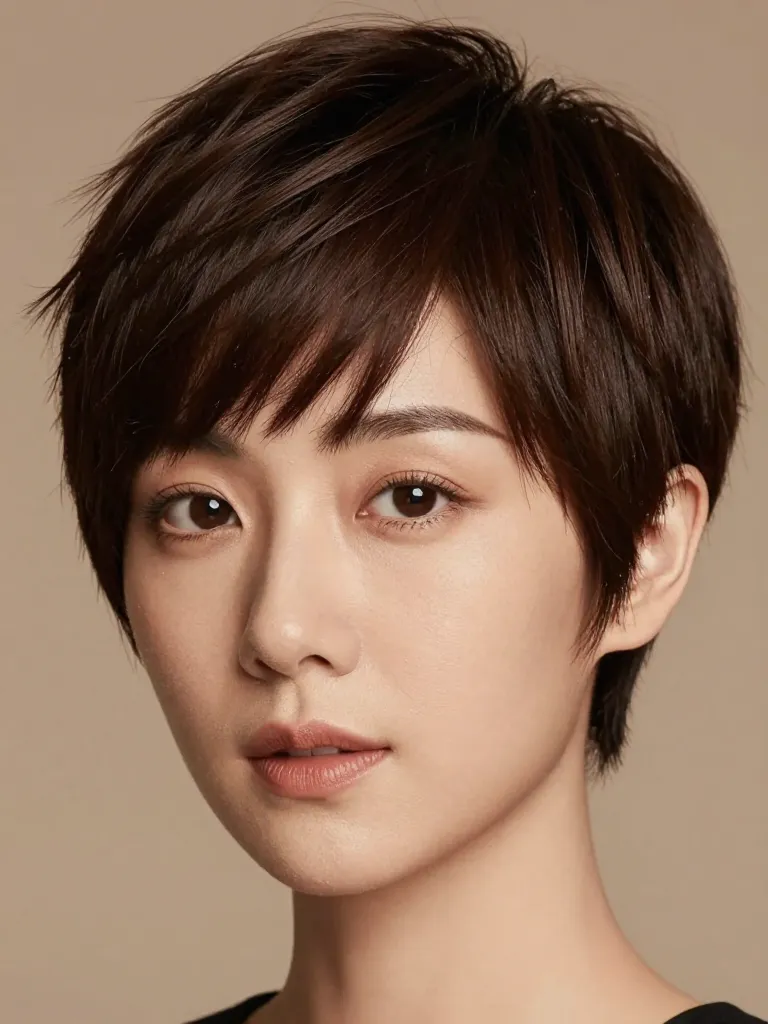
A round-face pixie needs more frequent maintenance than other pixie variations because the structural elements — tight sides, voluminous crown, angular bangs — lose their geometry as hair grows. The sides grow out first and fastest, adding width exactly where you removed it. Plan for a barber or salon visit every 3-4 weeks for the sides, every 4-6 weeks for the overall shape. Between visits, you can maintain the sides at home with a clipper (#2 guard on the shortest section, blending up). The bangs can be trimmed with sharp shears — cut at a diagonal, not straight across. The crown doesn’t need home maintenance — it should be left to grow until your next appointment. The key is catching the sides early: once they hit 1 inch, they start adding cheek width and the face-rounding effect begins.
- Never cut pixie bangs with dull scissors — blunt cuts on short hair create visible horizontal lines that add width
- If using clippers at home, start with a longer guard (#3) and work down — you can always cut shorter, never longer
- Don’t attempt to layer the crown at home — crown layering requires professional blending to avoid a choppy result
Why This Works
Round faces and short hair work together when the cut follows one rule: vertical over horizontal. A round face is a 1:1 width-to-length ratio — the goal of the pixie cut is to create a 1:1.3 or 1:1.5 visual ratio by adding height and removing width. Crown volume adds vertical length. Tight sides remove horizontal width. Angular bangs create diagonal lines that break the circular geometry. The combination tricks the eye into reading the face as oval rather than round. The science is simple: the human eye follows the longest visible line. When the longest line on your head is vertical (crown height), the eye moves up and down. When the longest line is horizontal (ear-level volume), the eye moves side to side and reads ‘wider.’ Every structural decision in this guide — height placement, side length, bang angle — is engineered to make the vertical line dominant.
Pro Tips
Related Guides
Round faces and pixie cuts are not a contradiction — they’re an engineering challenge. The face shape is the constraint. The pixie cut is the solution. Crown height, tight sides, angular bangs — these are the structural elements that turn a round face into a canvas for the best short haircut of your life. The people who told you not to cut your hair short were giving you advice for bad haircuts. A good pixie cut doesn’t fight your face shape — it works with it, redirects it, and makes it the focal point instead of the problem.
Round face. Sharp pixie. Geometry wins.