Fulani Braids Natural Hair: 4 Styles That Honor the Tradition
West African heritage meets modern styling. These braids carry centuries of culture and look incredible doing it.
Fulani braids aren’t just a hairstyle. They’re a cultural fingerprint. The Fulani people of West Africa have worn these braids for generations — the signature pattern of cornrows flowing from front to back, often decorated with beads, cowrie shells, and metallic cuffs. What makes them different from regular cornrows is the layout: Fulani braids typically feature a central braid or parting line with braids sweeping to the sides, creating a frame that flatters virtually every face shape. On natural hair, they’re protective, low-manipulation, and can last 4-6 weeks with proper care. The styles below range from traditional to modern, but all of them respect the roots.
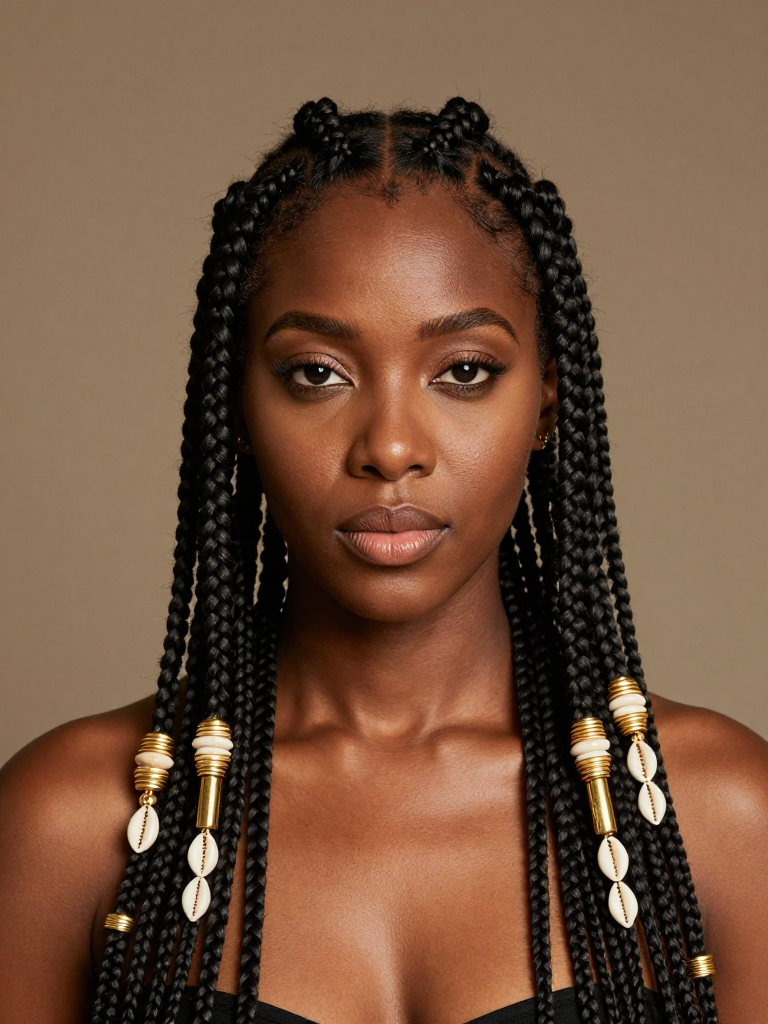
1. Classic Fulani with Center Part
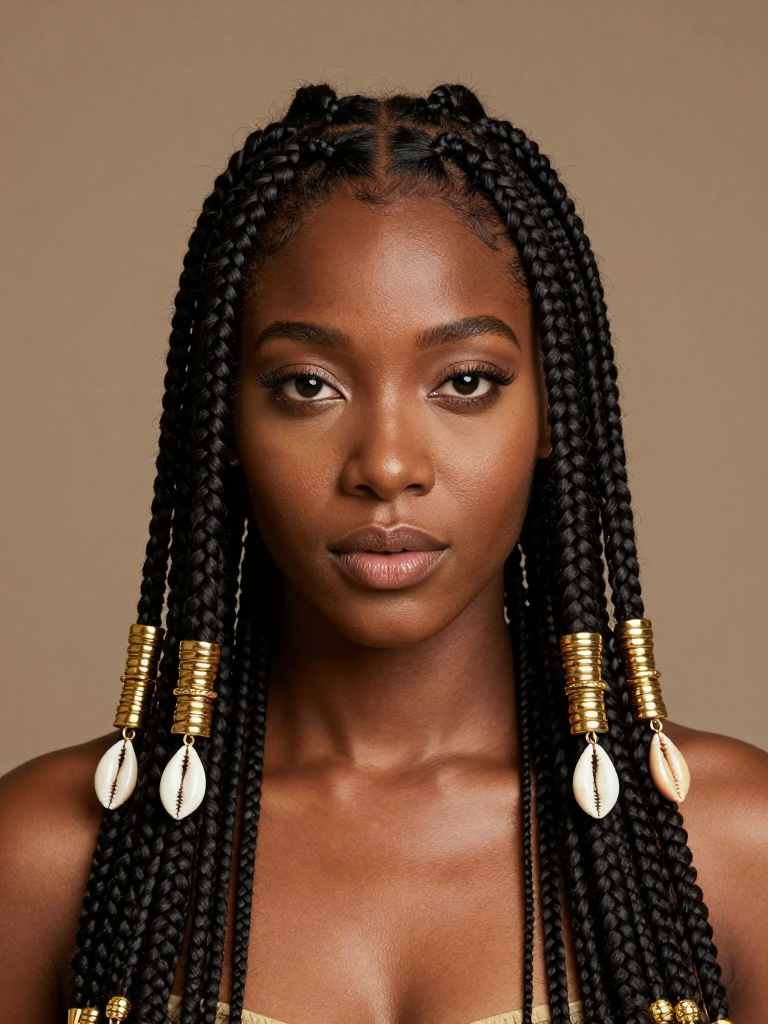
The classic Fulani starts with a clean center part — use a rat-tail comb to draw a straight line from your hairline to the nape. From there, cornrows are braided on each side, flowing backward toward the ends. The braids closest to the face are typically thinner (for detail), while the ones further back can be thicker. The key detail is the adornment: gold or silver cuffs slid onto individual braids, cowrie shells threaded in, or both. This style works on all hair lengths past 4 inches, though longer hair gives more dramatic flow. It’s the most versatile version — you can wear it to a wedding, a festival, or just to the grocery store and get compliments everywhere.
2. Fulani Braids with Side-Swept Cornrows
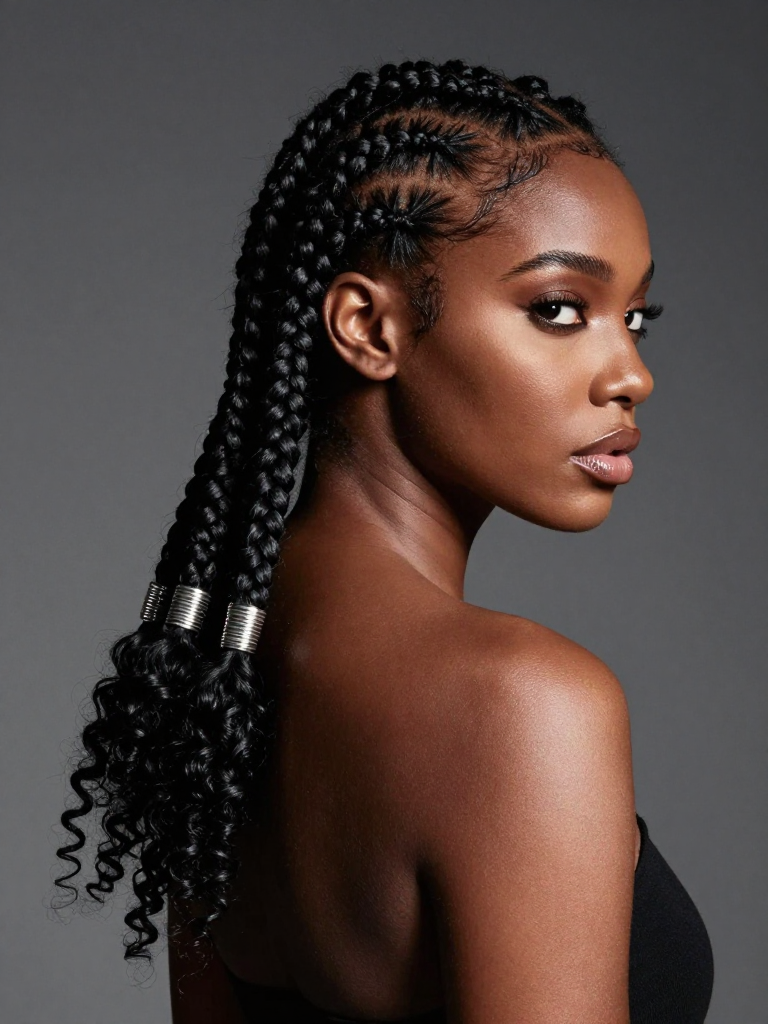
The side-swept Fulani takes the traditional pattern and tilts it. Instead of cornrows going straight back, they angle from one side of the hairline to the opposite side of the nape. This creates diagonal lines that add visual interest and movement. Start by parting your hair slightly off-center — about an inch to one side. Braid the cornrows from the fuller side sweeping across, while the thinner side gets smaller accent braids or is left as a swooped section. This version is particularly flattering on round and square faces because the diagonal lines break up symmetry. Add cuffs to the sweeping braids for extra impact.
3. Fulani Braids with Loose Back Braids
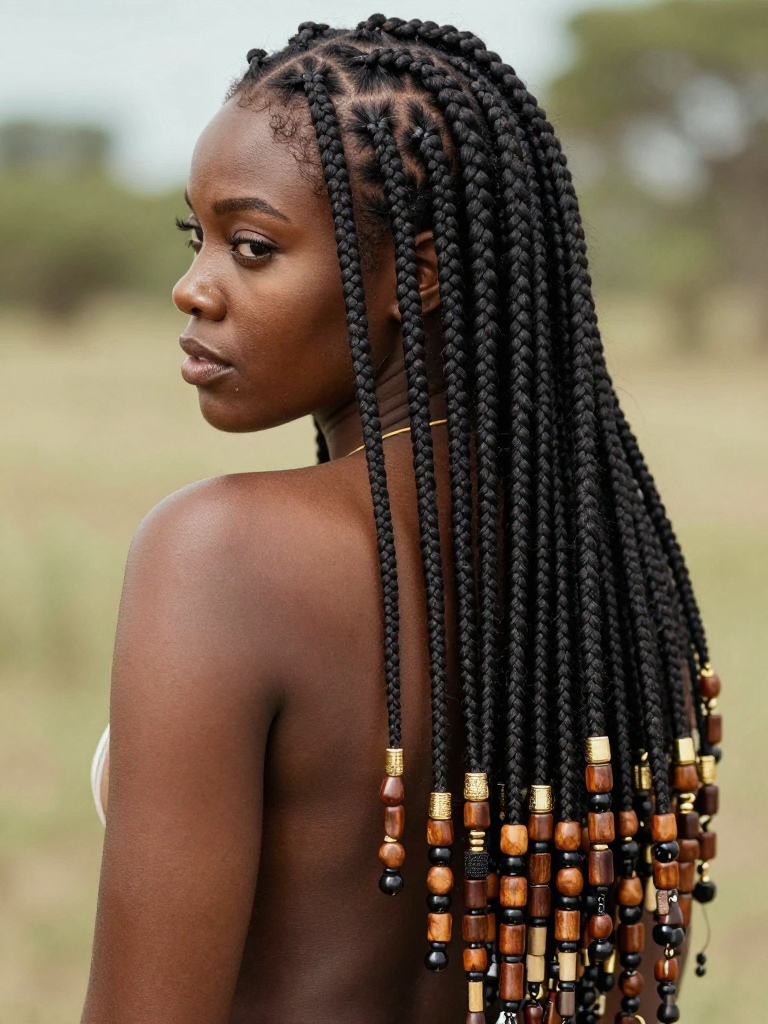
This hybrid style keeps the Fulani cornrow pattern at the front and sides — typically 4-6 cornrows braided back — but transitions to loose, individual braids from the mid-head or crown. The cornrows ‘feed into’ the loose braids, creating a seamless transition. The loose braids can be any length and are often decorated with beads at the ends for weight and swing. This style gives you the best of both worlds: the structured, cultural look of Fulani cornrows at the front, with the movement and versatility of loose braids in the back. It’s especially popular for festivals and vacations because you can pull the loose braids up, leave them down, or create half-up styles.
4. Fulani Braids with Zigzag Parting
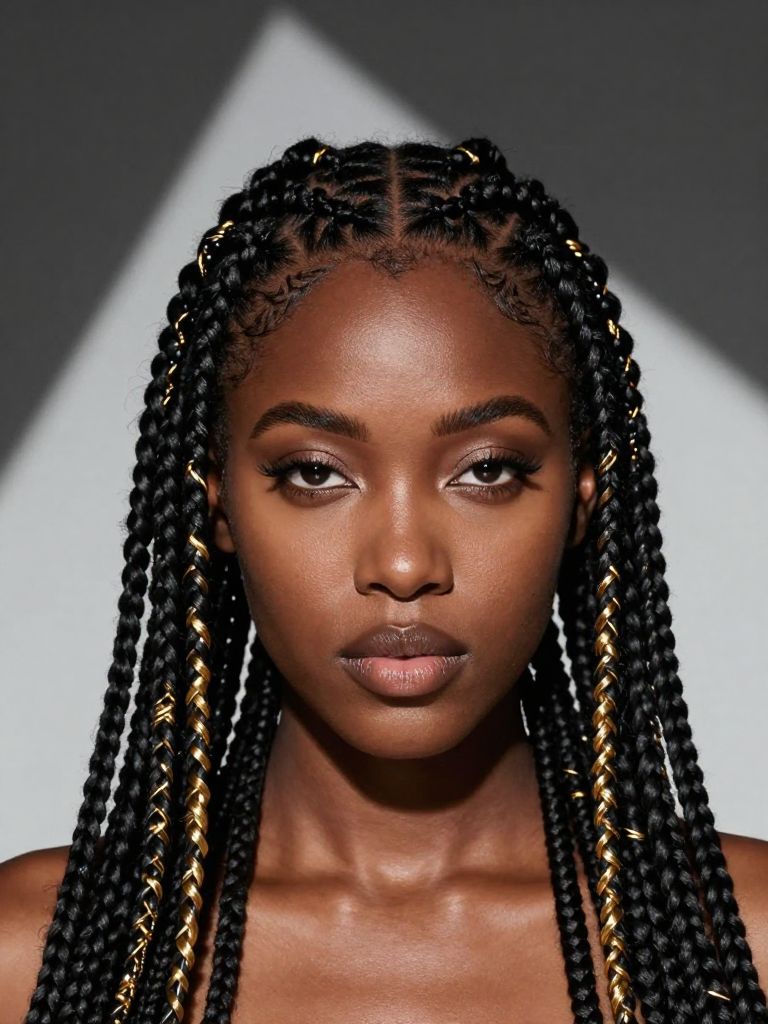
Zigzag Fulani braids swap the straight center part for geometric patterns. The cornrows follow curved, zigzag, or wave-shaped parting lines, creating visual texture on the scalp itself. This is harder to execute — you need a skilled braider who can maintain consistent part tension — but the result is worth it. The zigzag pattern adds a modern, artistic element to the traditional Fulani layout. Best paired with simple adornment (a few cuffs, not overloaded) so the parting pattern remains the focal point. This style is for the person who wants to wear their hair as art. It’s a conversation starter.
Tools & Products
| Item | Purpose | Category |
|---|---|---|
| Rat-tail comb | Creating precise parting lines for cornrow patterns | tools |
| Edge control gel | Smoothing edges and baby hairs around the hairline | styling |
| Braid cuffs and rings | Sliding onto braids for the traditional Fulani adornment | accessories |
| Cowrie shells | Threading onto braids for cultural authenticity | accessories |
| Beads (wood, metal, or glass) | Adding weight and decoration to braid ends | accessories |
| Lightweight oil (jojoba or argan) | Scalp moisturizing between washes | haircare |
Related Guides
Knotless braids — the gentler alternative to traditional braids — If you want the braided look without the tension of traditional braiding, knotless braids start with your natural hair and feed in extensions gradually.
How to do Fulani braids on natural hair — step by step tutorial — Ready to try Fulani braids yourself? This tutorial walks you through the entire process from prep to finish.
Fulani braids are one of the few styles that carry genuine cultural weight while being completely wearable in modern life. They’re protective, they’re beautiful, and they tell a story. Whether you go traditional with cowrie shells and a center part or modern with zigzag parting and side-swept cornrows, you’re wearing a style that connects you to generations of West African women who braided their hair as art, identity, and community.
Choose your pattern. Gather your cuffs. Let the braiding begin.