The Long Mullet for Women: How to Build Maximum-Length Hair Architecture
8-12 inches of deliberate length differential. This is architecture, not a haircut.
The long mullet isn’t a shag with extra length. It’s a structural statement that uses extreme length differential (8-12 inches between front and back) to create a silhouette that’s unmistakable from every angle. The front is shoulder-length — sleek, controlled, face-framing. The back is mid-back or beyond — flowing, layered, dramatic. The engineering challenge is keeping the back from becoming a heavy, shapeless curtain while maintaining the length that makes this variation so striking.

Step 1: Establish the Extreme Length Differential
- Rat-tail comb
- Sectioning clips
- Mirror
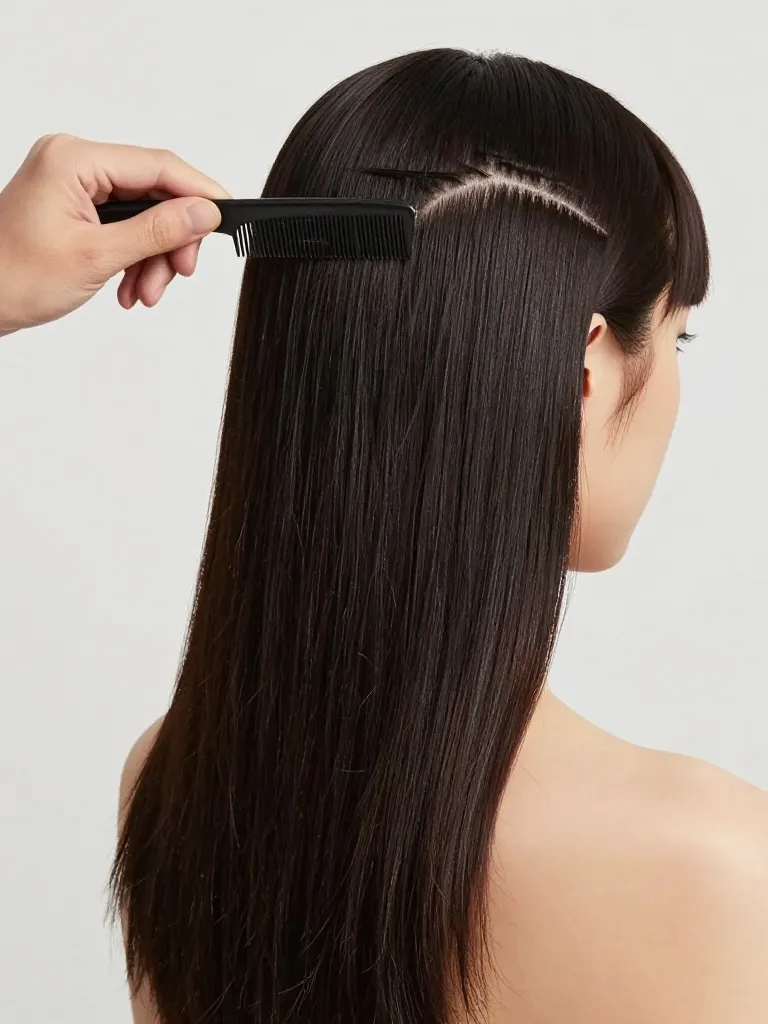
The long mullet’s signature is its extreme length differential — 8-12 inches between front and back. This isn’t a subtle gradient; it’s a deliberate architectural choice that reads as ‘mullet’ from across the room. Part your hair from ear to ear at the crown apex. Clip the front/top up. The back should be left at its current length or cut to mid-back (wherever your target is). The front will be cut to shoulder length. That 8-12 inch gap is what makes this a ‘long mullet’ and not just a ‘long shag.’
Step 2: Layer the Back for Movement (Not Weight Loss)
- Sharp shears
- Comb
- Sectioning clips
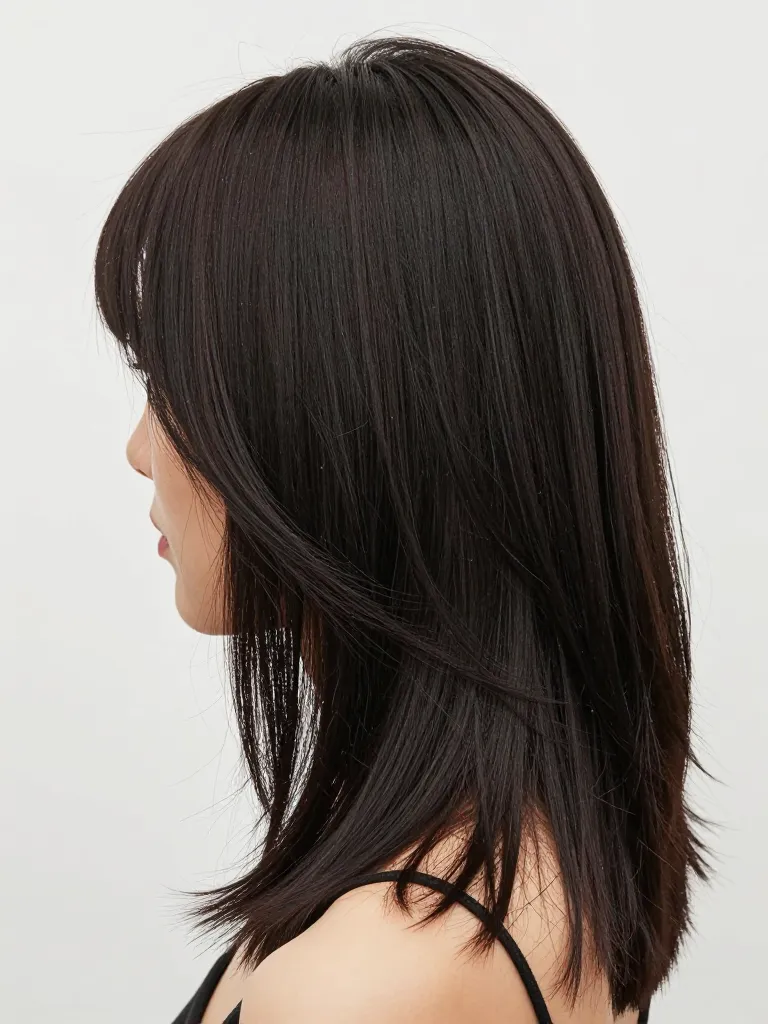
The back of a long mullet needs layering for movement — but the goal is movement, not weight loss. Unlike shorter mullets where you aggressively thin the interior, the long mullet needs its weight to maintain the flowing cascade. Cut long internal layers: the outer layer stays at full length (mid-back), the first interior layer is 2 inches shorter, the second interior layer is 3 inches shorter.
Step 3: Cut the Front to Shoulder Length
- Sharp shears
- Comb
- Mirror
The front of a long mullet should be shoulder-length — long enough to frame the face, short enough to create the dramatic differential with the back. Cut the face-framing layers to your jawline or shoulder, depending on your face shape. For round faces: jawline length creates elongation. For oval faces: shoulder length is universally flattering. For heart faces: chin-to-shoulder balances the forehead.

Step 4: Texturize the Transition Zone
- Razor comb
- Regular shears for refinement
- Mirror
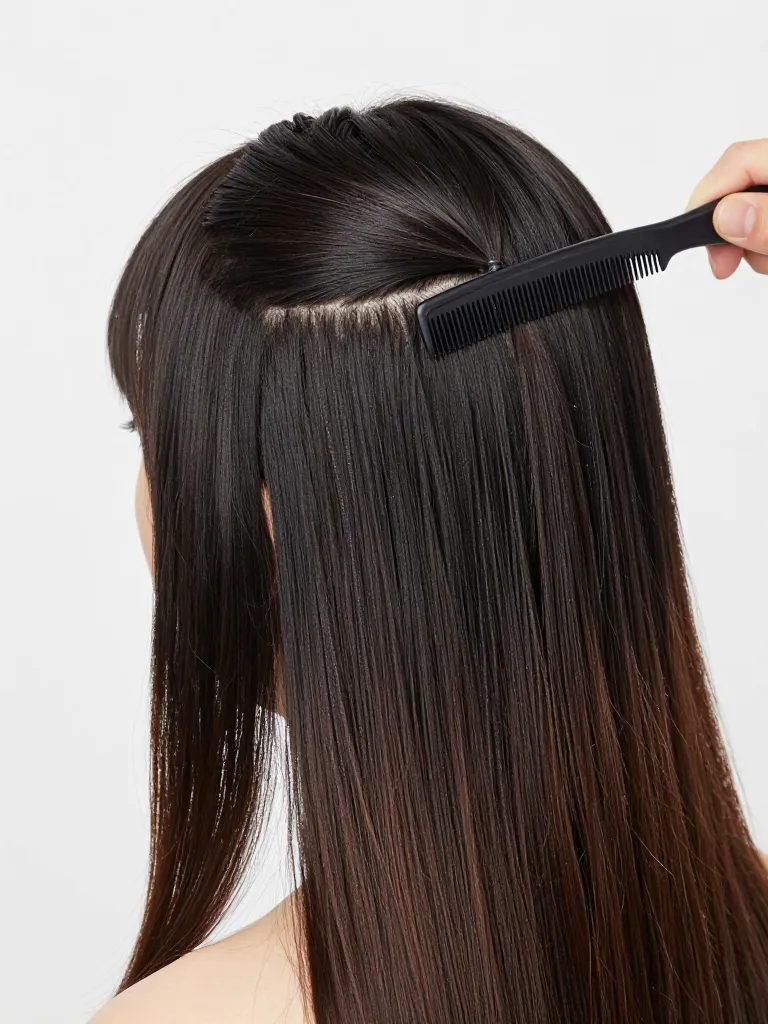
The transition zone is where the long mullet lives or dies. A hard, blunt transition from shoulder-length front to mid-back back looks like two different haircuts. A soft, textured transition reads as intentional architecture. Using a razor comb, work through the transition zone (the 2-3 inches where short meets long) with gentle, downward strokes.
Step 5: Style for the Cascade Effect
- Heat protectant
- Smoothing serum
- Blow dryer with concentrator
- Round brush
- Shine spray
The long mullet’s styling is about health and flow. The back is the star — it needs to look healthy, shiny, and full of movement. Start with damp hair. Apply a heat protectant and smoothing serum to the back lengths — long hair is more prone to dryness and damage, so protection is critical. Blow-dry the front with a round brush for smoothness and volume. For the back, blow-dry with a concentrator nozzle, directing the airflow downward to create a smooth, flowing cascade.

Why This Works
The long mullet works because it exploits the physics of hair length. Long hair has weight, and weight creates movement — but only if the weight is distributed correctly. Long internal layers create channels for airflow and motion, preventing the ‘curtain’ effect where heavy hair hangs flat. The extreme length differential (8-12 inches) creates the mullet silhouette through pure length contrast — no texture tricks or curl patterns needed. The front’s shoulder length is functional: it frames the face and creates a clean, controlled boundary. The back’s mid-back length is dramatic: it flows, moves, and turns every room into a runway.
Safety Warnings:
- Long hair is more prone to split ends — trim the back ends every 8-10 weeks to prevent breakage traveling up the shaft
- Don’t over-layer the back — removing too much weight makes long lengths look stringy and thin
- Always use heat protectant on long lengths — heat damage on long hair is visible and takes months to grow out
Pro Tips
Related Guides
- All women’s mullet variations — the full overview
- Curly mullet guide for women — if your hair has natural curl or wave
The long mullet is the most architecturally ambitious women’s mullet. It requires more length, more layering, more maintenance, and more confidence than any other variation. But the result is a haircut that’s unmistakable from every angle — a flowing cascade of controlled length that says you understand hair at a structural level. The front frames. The back flows. The transition between them is pure engineering.
Maximum length. Maximum drama. Maximum architecture. The long mullet is waiting. ✂️✨