Long Haircut for Men: How to Grow, Shape, and Maintain Maximum Length
Long hair isn’t a haircut. It’s a commitment. Here’s how to make it work.
Long hair on men is a different animal. It’s not just a longer version of a short haircut — it’s a completely different system that requires different tools, different techniques, and different maintenance. The biggest mistake men make with long hair is treating it like short hair that got out of control. They skip the shaping, ignore the layering, and let gravity do the styling. The result is a shapeless curtain that looks like they gave up. Long hair that works is deliberately shaped, strategically layered, and actively maintained. This guide covers the complete system: from the awkward phase to the finished flow.
Step 1: Survive the Awkward Phase with Strategic Shaping
Timing: 6-8 weeks between shaping appointments
Prerequisites: Barber who understands long hair, Patience, A hat for bad days
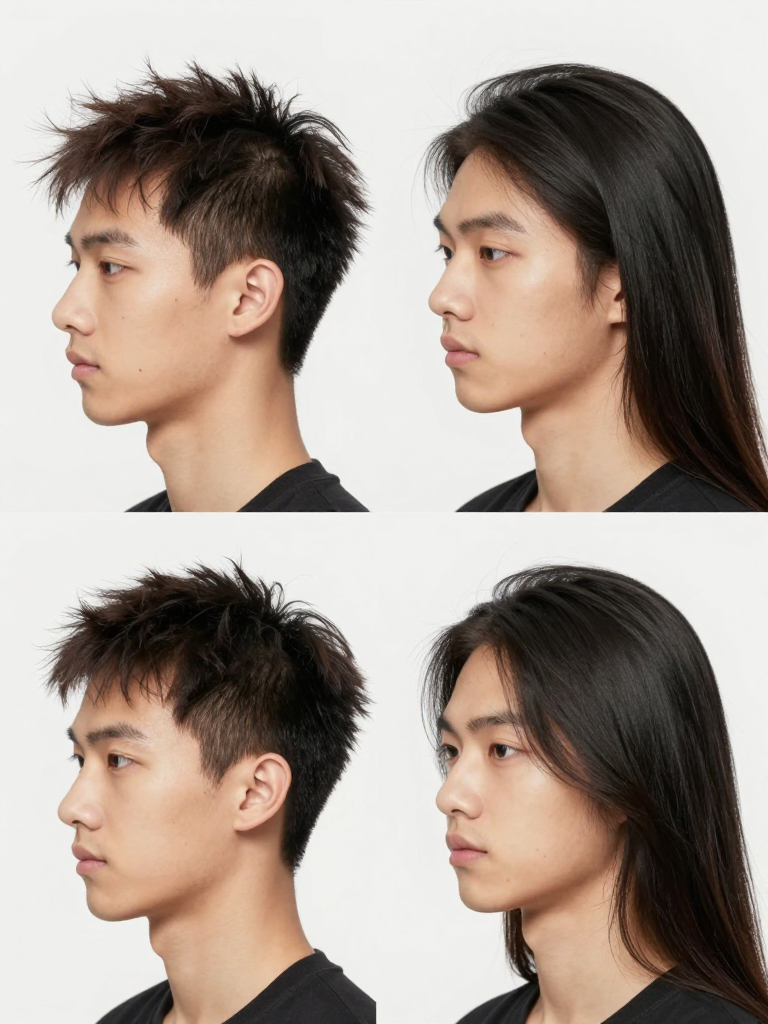
The awkward phase — when your hair is 3-6 inches long and doesn’t know what it wants to be — is where most men give up. The hair sticks out at the ears, flips at the collar, and looks like a helmet. The solution isn’t to wait it out. It’s to shape it. During the awkward phase, get the hair trimmed every 6-8 weeks — not for length, but for shape. Ask your barber to thin the bulk at the ears and neckline, blend the layers, and remove weight from the sides. This doesn’t reduce the length — it makes the length manageable. The awkward phase lasts 3-6 months depending on growth rate. Strategic shaping makes it look intentional rather than accidental.
Step 2: Layer for Movement, Not Length Reduction
Timing: 15-20 minutes
Prerequisites: Sharp shears, Sectioning clips, Comb, Mirror
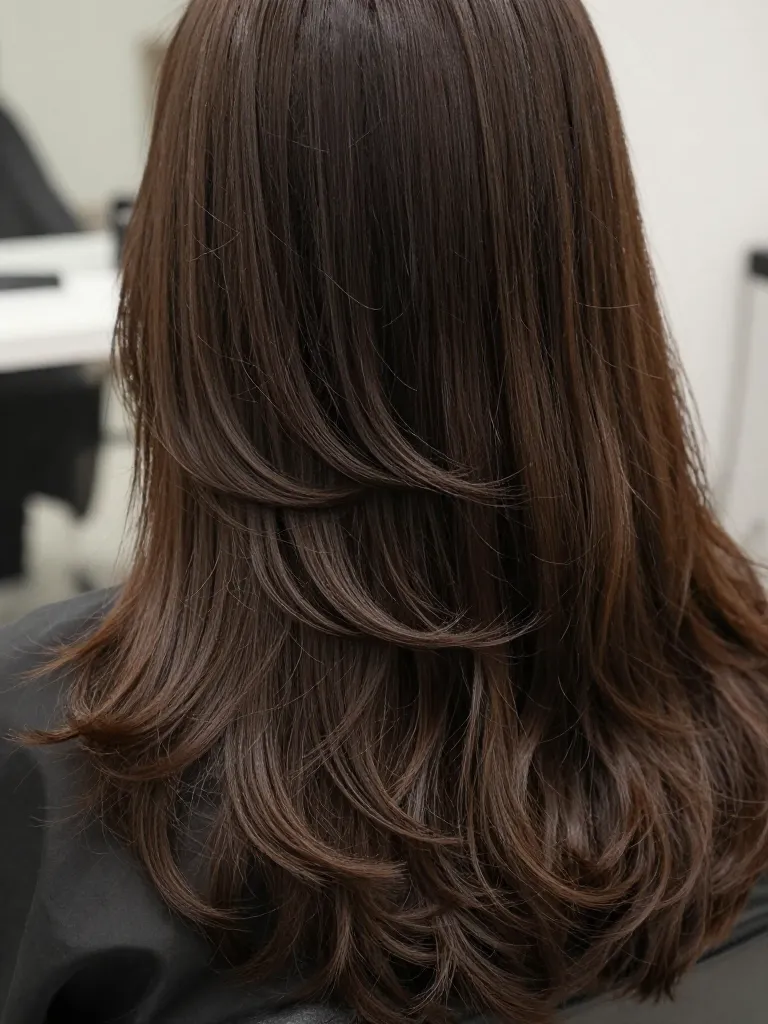
Long hair needs layering — but not the kind of layering that short hair needs. Short-hair layering removes weight. Long-hair layering creates movement. The goal is to add shape and dimension without reducing overall length. Pull horizontal sections straight down and cut each layer to a different length: the longest layer at your target length, the shortest layer 3-4 inches shorter. This creates a cascade of movement — each layer moves independently, creating the flowing, dynamic look that makes long hair look intentional rather than accidental. The layering should follow your hair’s natural wave pattern: more layering for wavy hair, less for straight. Too much layering on straight hair creates a stringy, thin look.
Step 3: Shape the Face Frame for Structure
Timing: 10-15 minutes
Prerequisites: Sharp shears, Comb, Mirror
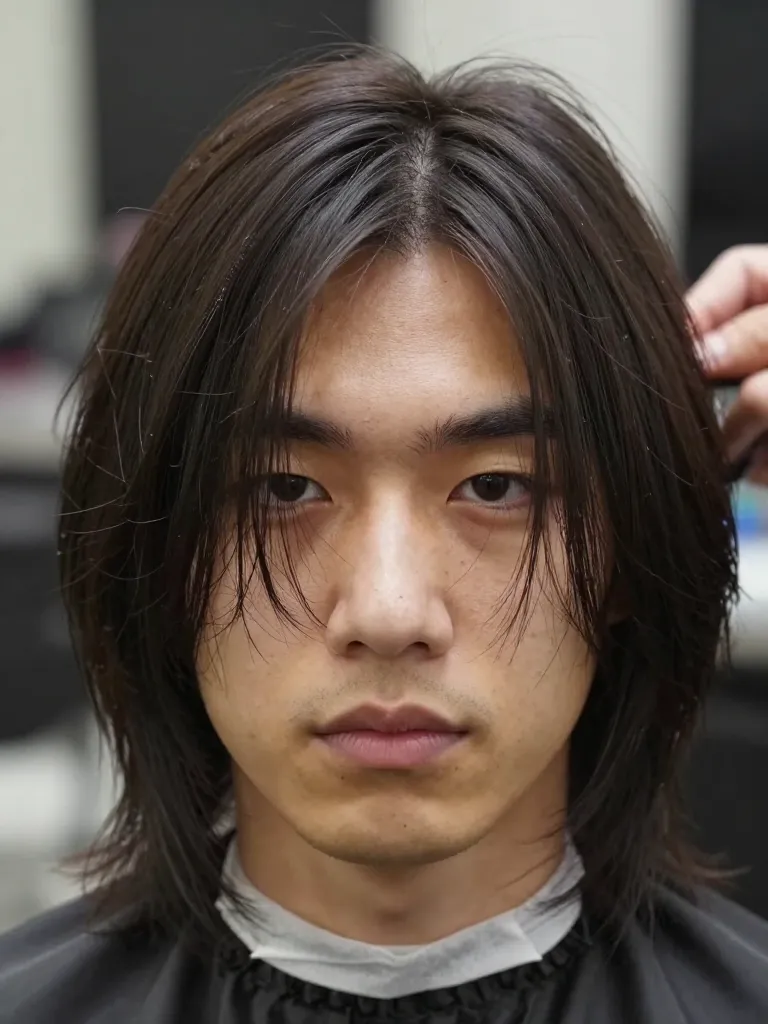
The face frame is the most important part of a long men’s haircut. It’s the first thing people see, and it’s what separates a deliberate long hairstyle from ‘I forgot to get a haircut.’ The face-framing layers should be cut to chin length (or wherever your jawline sits), point-cut for soft, piece-y texture. These layers create a structured frame around the face — they highlight the cheekbones, define the jawline, and prevent the hair from looking like a flat curtain hanging past your shoulders. The face frame should be slightly shorter than the rest of the hair, creating a natural cascade from the face to the back. This is the structural element that makes long hair look architectural.
Step 4: Maintain with the Right Products and Routine
Timing: 10-15 minutes daily
Prerequisites: Sulfate-free shampoo, Hydrating conditioner, Leave-in conditioner or hair oil, Wide-tooth comb, Satin pillowcase

Long hair maintenance is a daily commitment. Wash every 2-3 days — over-washing strips natural oils that long hair needs. Use a sulfate-free shampoo and a hydrating conditioner. After washing, apply a leave-in conditioner or hair oil to the mid-lengths and ends (not the roots — that causes greasiness). Air-dry when possible — heat styling damages long hair over time. If you must blow-dry, use a diffuser and low heat. Brush with a wide-tooth comb or detangling brush — never a regular brush on wet long hair, which causes breakage. At night, tie your hair in a loose bun or braid to prevent tangling. Sleep on a satin pillowcase to reduce friction. These aren’t luxuries — they’re maintenance requirements. Long hair that’s not maintained looks like straw. Long hair that is maintained looks like silk.
Safety Notes
- Never brush wet long hair with a regular brush — use a wide-tooth comb to prevent breakage
- Don’t skip the awkward phase shaping — trying to wait it out leads to most men cutting their hair short again
- Avoid heat styling more than 2-3 times per week — excessive heat damages long hair permanently
Pro Tips
- Patience is the real product: Long hair takes 12-18 months to reach full length — plan for the long game
- Layer based on texture: Wavy hair needs more layers; straight hair needs fewer to avoid looking thin
- The face frame is everything: It’s the first thing people see — invest in getting it right
- Wash less, condition more: Long hair needs its natural oils — wash every 2-3 days, condition daily
- Satin pillowcase, always: Cotton creates friction that causes tangles, breakage, and frizz overnight
- Trim to grow: Regular trims prevent split ends from traveling up — you’ll grow faster, not slower
Long hair on men isn’t a haircut — it’s a commitment. It requires patience through the awkward phase, precision in the shaping, and discipline in the maintenance. But when it works, it’s the most architectural hairstyle a man can have. The movement, the dimension, the face-framing structure — long hair that’s deliberately shaped and actively maintained looks like nothing else. It’s not for everyone. But for the men who commit to the system, it’s the most rewarding haircut they’ll ever have.
Length is earned. Shape is chosen. Flow is the reward. ✂️