How to Cut a Men’s Curly Haircut at Home: The Complete Guide
Your barber doesn’t understand your curls. You do.
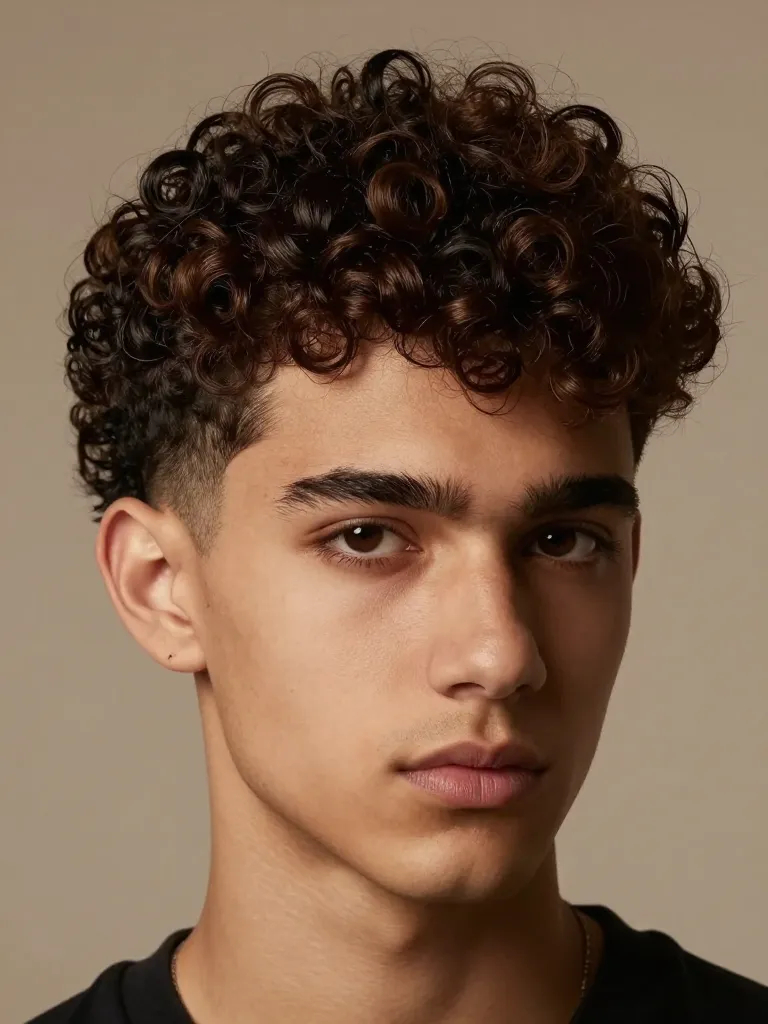
Step 1: Map Your Curl Pattern While Dry
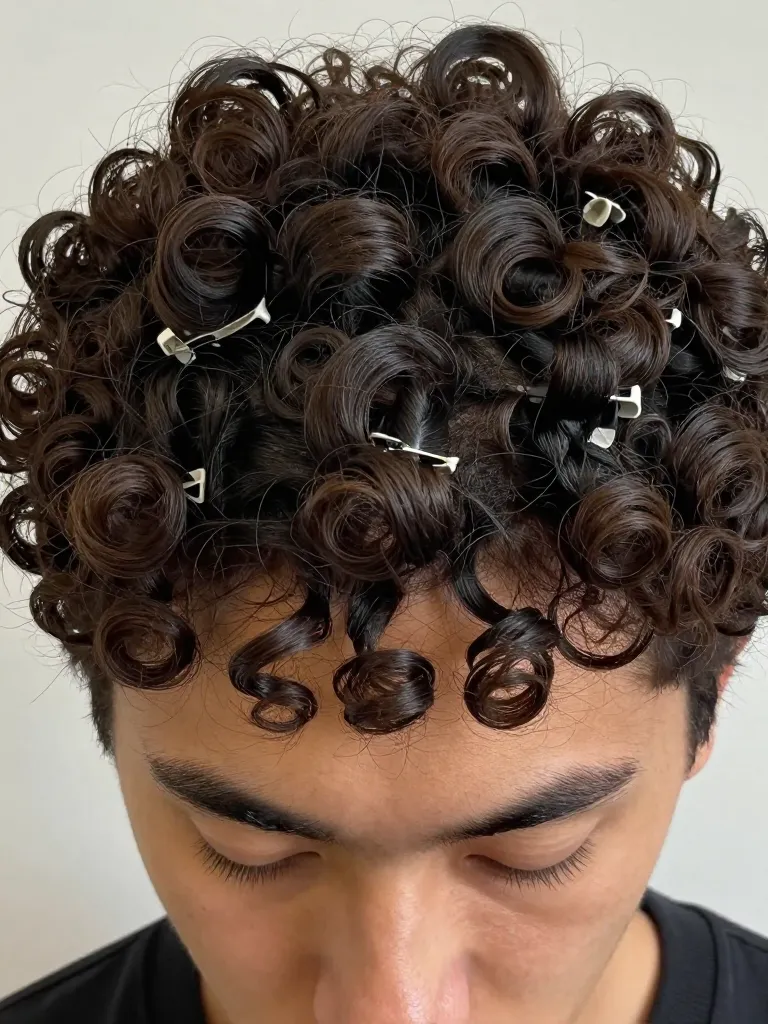
This is the step most people skip — and the reason most curly haircuts go wrong. Curly hair must be mapped while dry. Wet curly hair stretches to 1.5-2x its dry length, which means cutting wet gives you a haircut that’s 30-50% shorter than intended once it dries and the curls spring back. Start with clean, dry, product-free hair. Use a mirror and a handheld mirror to see the back. Identify your curl pattern zones: the crown (usually the tightest curls), the sides (medium tightness), and the back (loosest). Mark each zone with sectioning clips. Note where your natural part falls. Note the shrinkage ratio — pull one curl straight and measure, then let it spring back. The difference is your shrinkage. For 3A curls, expect 40-50% shrinkage. For 3B, 50-60%. For 3C, 60-70%.
Timing: 10-15 minutes
Prerequisites: Two mirrors (or a three-way mirror), Sectioning clips, Rat-tail comb
Step 2: Establish the Length with the Longest Curl First
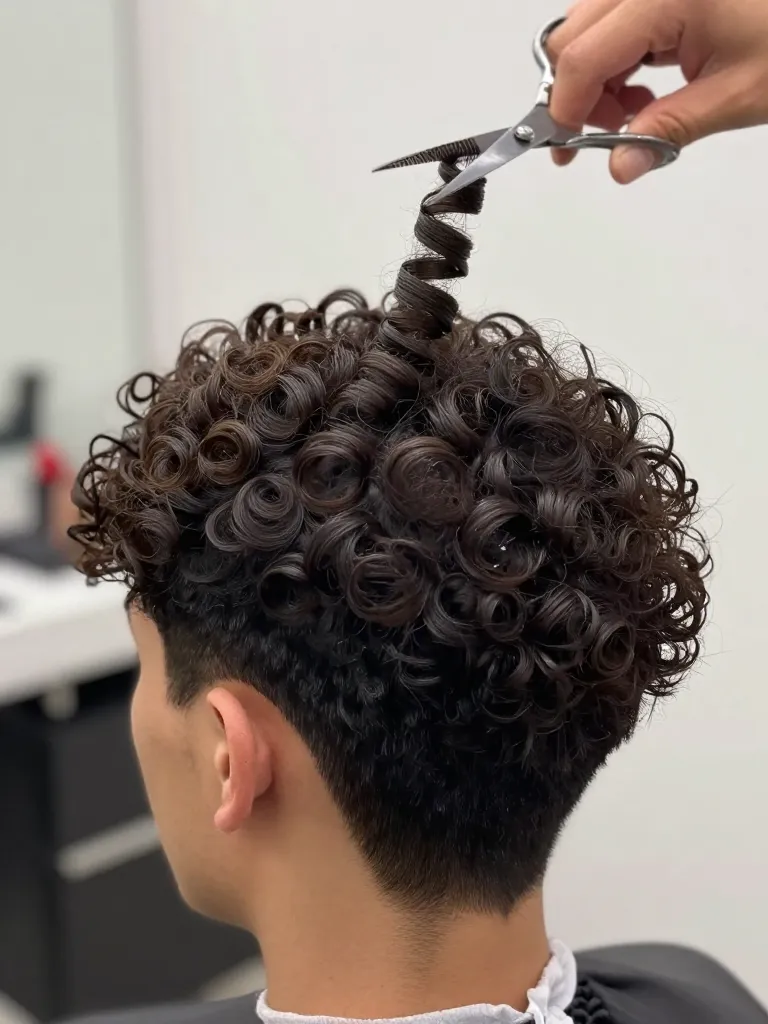
Find the longest curl in your target zone (start with the back — it’s the most forgiving). Lift it straight up — don’t pull it taut — and cut it at the length you want it to be when it springs back. Remember your shrinkage ratio: if you want 2 inches of visible curl, cut at 3-3.5 inches for 3A hair. This first curl is your reference length. Every other curl in this zone will be matched to it. Cut with the tips of your shears, not the full blade — this prevents the blunt-cut look that curly hair shows immediately. Point-cut into the ends at a 45-degree angle to create a soft, diffused edge.
Timing: 5-10 minutes
Prerequisites: Sharp hair-cutting shears, Sectioning clips, Comb
Step 3: Cut the Sides with the Grain, Not Against It
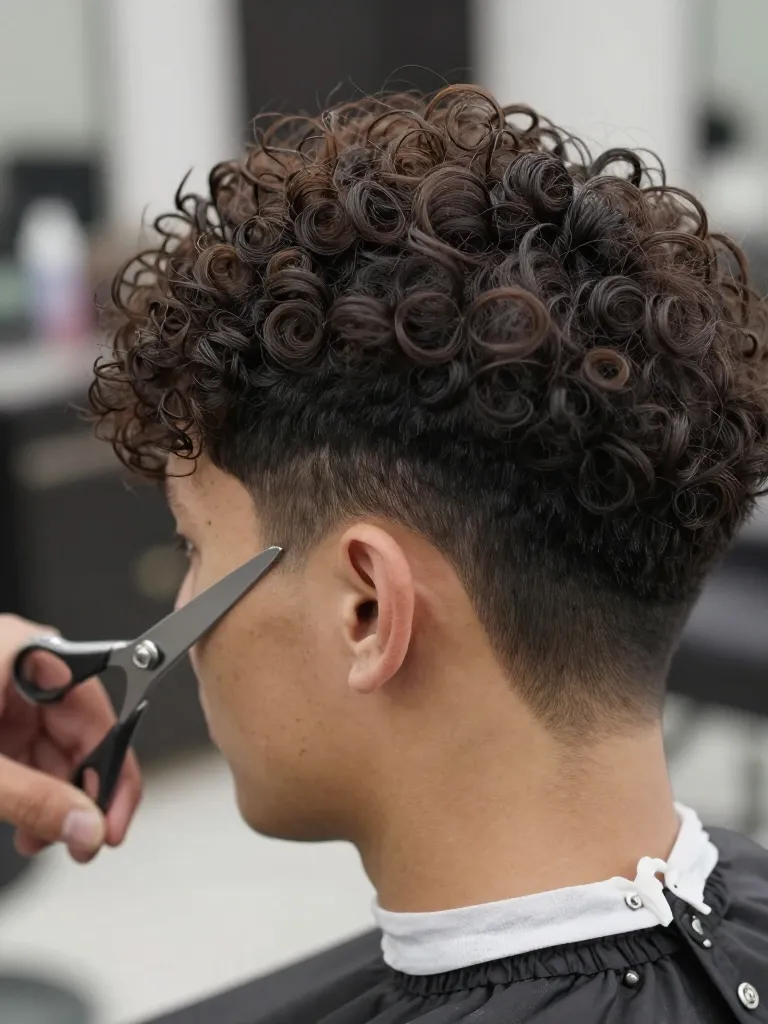
The sides of a men’s curly haircut are where most DIY attempts fail — because people try to create a straight, uniform line. Curly hair doesn’t grow in straight lines, so cutting it straight creates visible steps and gaps. Instead, cut with the grain: follow each curl’s natural growth direction. Start at the temple and work back toward the ear. Lift each curl cluster to its natural fall point and trim the excess. The goal is a gradual taper that follows the curl pattern — shorter at the temple, gradually longer as you move back. Don’t use clippers on curly sides unless you’re going for a fade (which is a different technique entirely). Shears give you the soft, natural transition that curly hair demands.
Timing: 10-15 minutes
Prerequisites: Sharp shears, Comb, Handheld mirror
Step 4: Remove Bulk from the Crown with Point Cutting
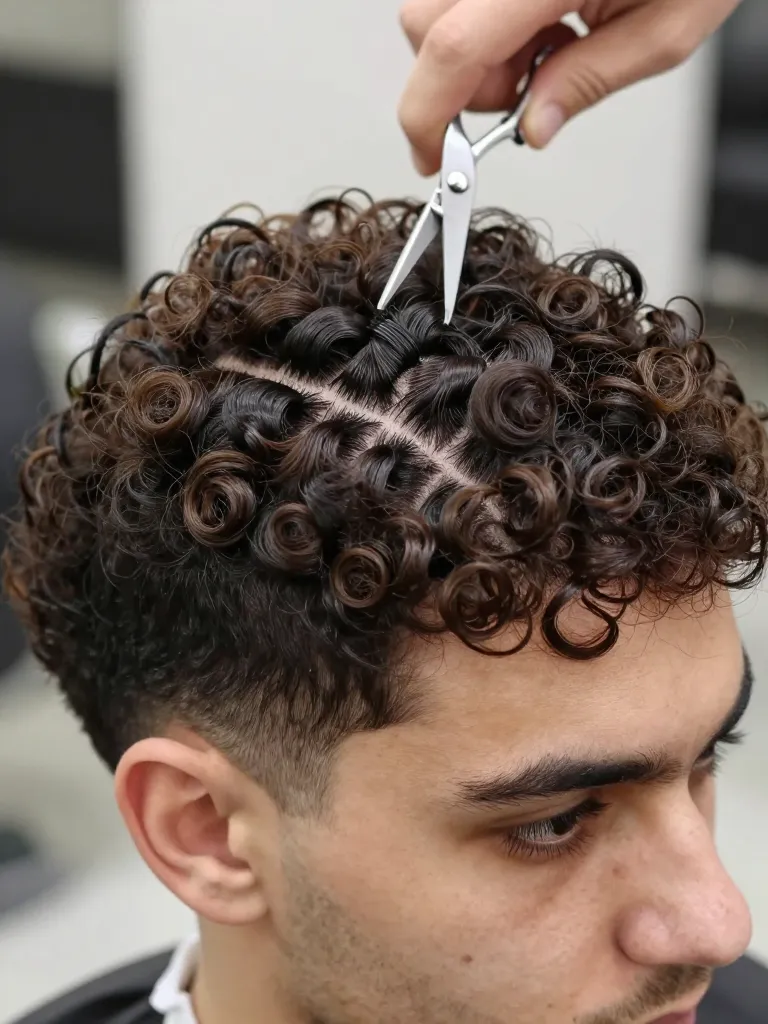
The crown is where curly hair creates the most bulk — and where most DIY haircuts go wrong by cutting too much length. The goal isn’t shorter hair at the crown; it’s less dense hair. Take vertical sections through the crown and point-cut into them vertically — insert the shears into the curl cluster and snip upward at random intervals. This removes internal bulk without creating visible layers or reducing the overall length. Work through the entire crown in a grid pattern: front-to-back, then side-to-side. After each pass, shake the curls loose and check the shape. The crown should feel lighter and more mobile without looking thinner. This step is what separates a men’s curly haircut from a bush.
Timing: 10-15 minutes
Prerequisites: Sharp shears, Sectioning clips, Patience
Step 5: Shape the Front and Define the Fringe
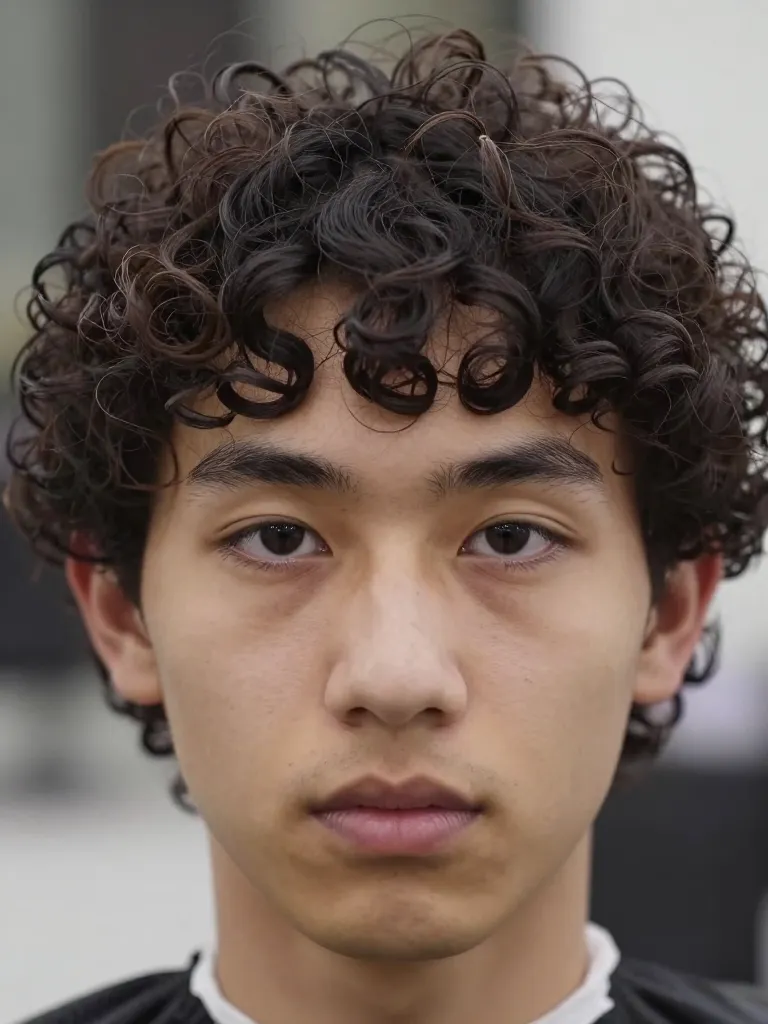
The front of a men’s curly haircut is the frame for your face — get this wrong and the whole cut reads as unintentional. Release the front section and let the curls fall naturally. Identify the longest curl in the fringe and trim it to your target length (for a controlled chaos crop, this is usually eyebrow to mid-forehead). Match the surrounding curls to this reference length, following each curl’s natural curve. The goal is a fringe that looks deliberate — each curl has space to spiral without overlapping its neighbor. If your curls are tight enough to stand up on their own, you can create a textured forward fringe. If they’re looser, let them fall to the side. Don’t force a shape that your curl pattern doesn’t naturally support.
Timing: 5-10 minutes
Prerequisites: Sharp shears, Comb, Mirror
Safety Warnings
- Always use sharp hair-cutting shears — dull blades crush curly hair cuticles and cause frizz
- Never cut curly hair when it’s wet — wet curly hair stretches to 1.5-2x its dry length, so you’ll cut too much
- Cut less than you think — curly hair springs up more than straight hair when cut
Why This Works
A men’s curly haircut works when it respects the physics of curl formation. Each curl is a helix — a coiled structure that has a natural length determined by the curl’s diameter and the hair’s elasticity. Cutting curly hair like straight hair (uniform length, blunt cuts) ignores this physics and creates the triangle shape, the mushroom cap, or the pyramid. The controlled chaos crop works because every cut follows the curl’s natural architecture: individual curl cutting respects the helix shape, point-cutting removes bulk without disrupting the curl pattern, and dry cutting ensures you see the actual length — not the stretched-out wet length. The result is a men’s curly haircut that works with your texture instead of against it.
Pro Tips
Dry cutting only: Wet curly hair is 30-50% longer than dry — cut dry to see the true length
Point-cut everything: Blunt cuts on curly hair create visible horizontal lines — point-cut every section
Follow the curl: Cut each curl at its natural fall point — don’t force uniform lengths across different curl patterns
Less is more: Curly hair springs up more than you expect — always cut less than your target length
Shake between cuts: Curly hair shifts dramatically when bulk is removed — shake it loose after every few cuts to check the shape
Style before judging: The true shape of a curly haircut only shows after applying product and letting the curls form naturally
Related Articles
The men’s curly haircut isn’t about controlling your texture — it’s about understanding it. Every curl has a natural shape, a natural length, and a natural growth direction. Your job isn’t to override those properties; it’s to work with them. The controlled chaos crop does exactly that: it follows the curl pattern, removes bulk without reducing length, and creates a shape that looks effortless because it’s aligned with your hair’s natural architecture. Stop fighting your curls. Start engineering them.
One curl at a time. That’s the whole secret. ✂️