Different Cornrow Styles for Men: 6 Patterns That Go Beyond Parallel Rows
Parallel rows are the starting point. These patterns are the destination.
Most men think cornrows mean one thing: straight rows from front to back. And sure, that’s the classic. But cornrows are a canvas — the braiding technique can follow any pattern you can draw on a scalp. Curved, intersecting, spiral, asymmetric, geometric — the only limit is the braider’s imagination (and skill). Different cornrow styles change the entire character of the braided look. Straight rows read as clean and professional. Curved rows read as artistic and bold. Intersecting patterns read as architectural and statement-making. The pattern you choose says something about you before you say a word. Here are six cornrow patterns that go beyond the basic grid, with guidance on when and why to choose each one.
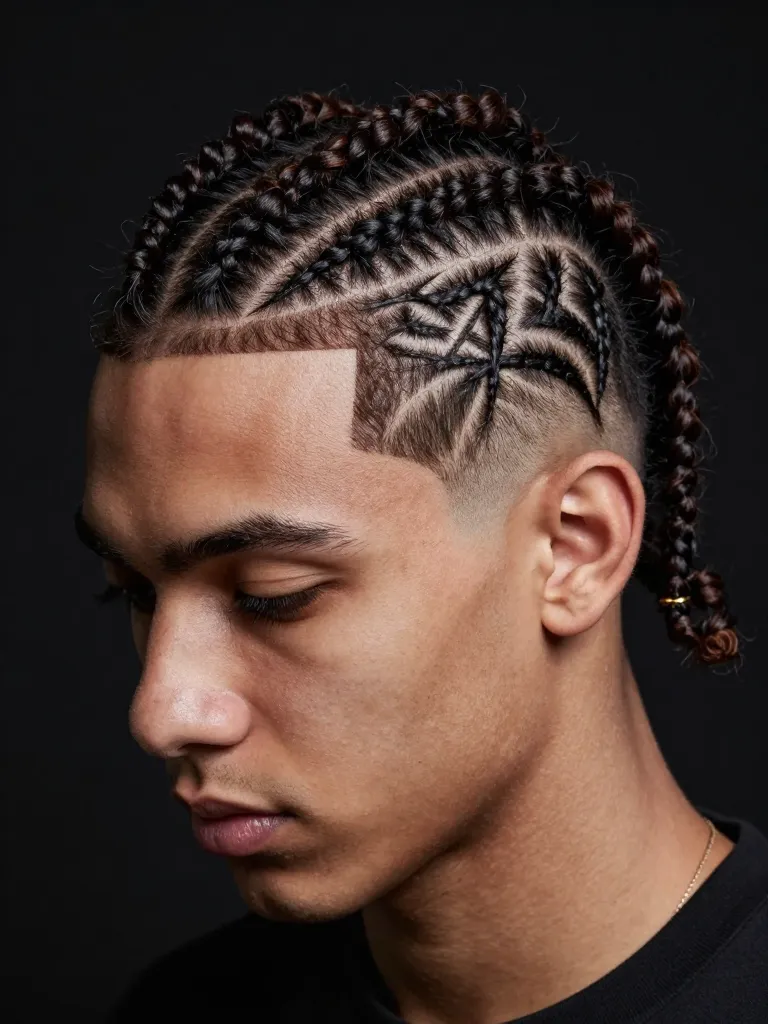
Step 1: Choose Your Pattern — Straight, Curved, or Freestyle
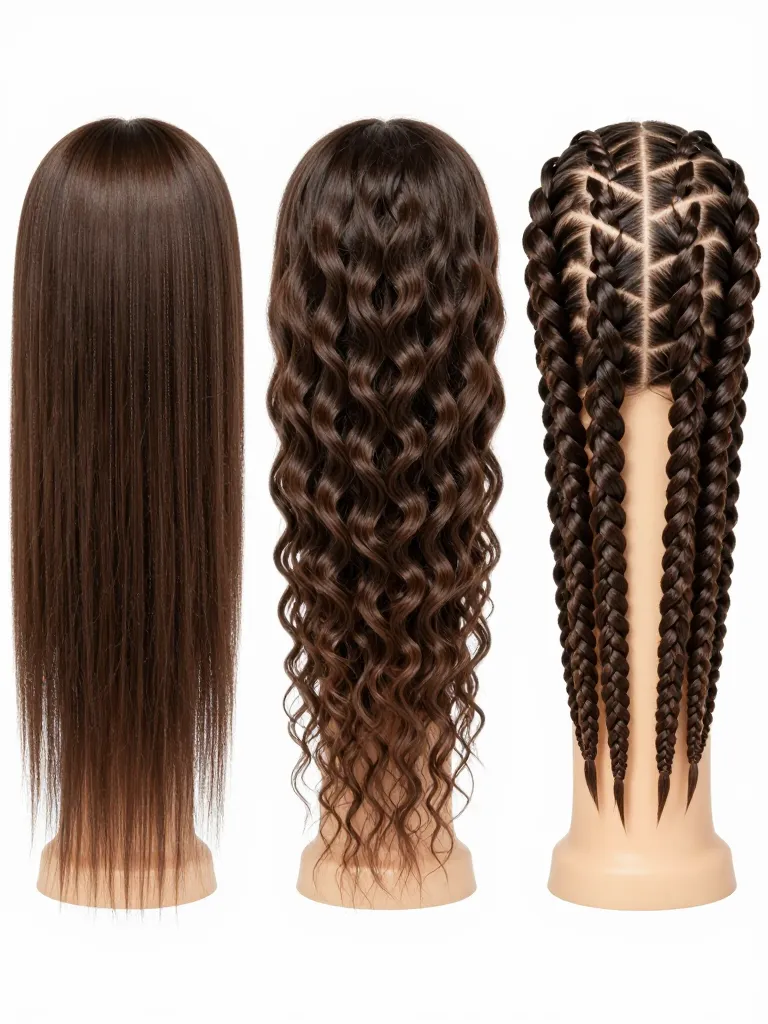
Before you pick up a comb, you need to decide the pattern category. Straight rows are the classic — parallel lines from hairline to nape. They’re clean, professional, and universally flattering. Curved rows follow arcs, waves, or diagonal angles across the head. They add visual interest and movement without being chaotic. Freestyle patterns are custom designs — intersecting lines, spirals, geometric shapes, asymmetric layouts. They’re the most visually striking and the most technically demanding. Your choice depends on three factors: your environment (straight for professional, freestyle for creative), your braider’s skill level (straight is easiest, freestyle is hardest), and how much attention you want (freestyle turns heads, straight blends in). Start with the pattern category, then refine from there.
Timing: 5-10 minutes of planning
Prerequisites: Reference images, Understanding of your environment and style goals
Step 2: The Diagonal Sweep — Angled Rows for Visual Movement
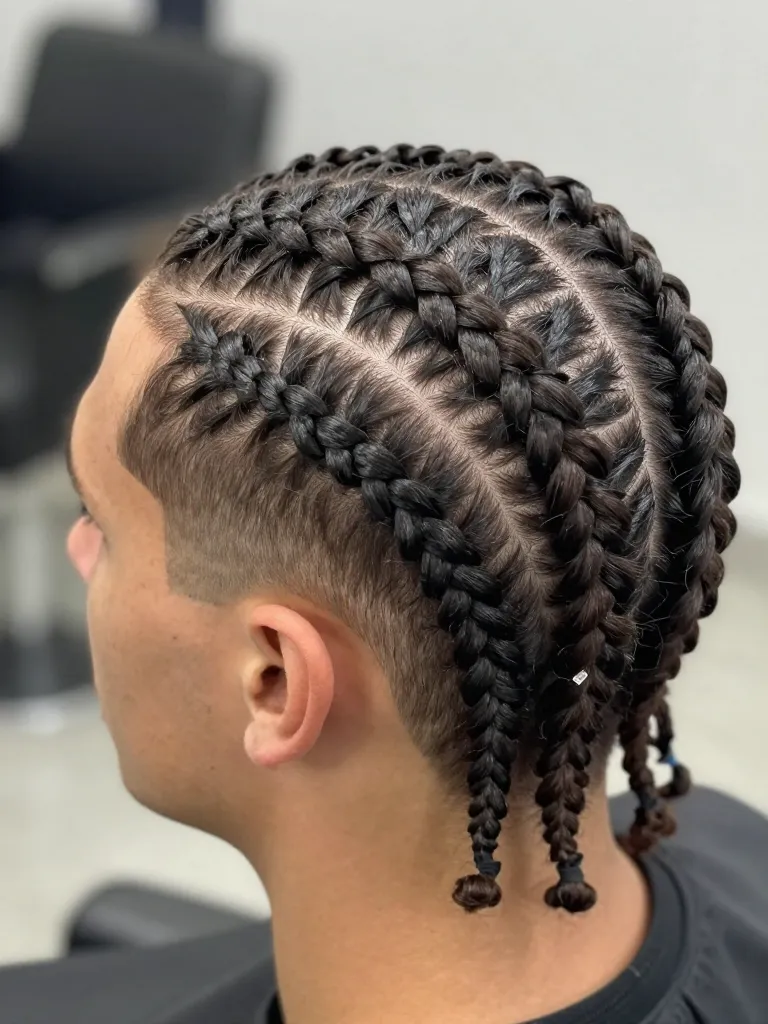
The diagonal sweep is the easiest upgrade from straight rows. Instead of running parallel from front to back, the cornrows angle from one side of the hairline to the opposite side of the nape — like stripes on a barber pole. This creates visual movement that straight rows don’t have. The angle is typically 30-45 degrees from center. The parting follows the same principle as straight rows — even spacing, consistent width — but the angle changes the geometry. The diagonal sweep is particularly flattering on oval and oblong faces because the angled lines add width and break up the vertical length. It’s also a good choice for guys who want something different but aren’t ready for full freestyle.
Timing: Parting: 20 minutes, Braiding: 90-120 minutes
Prerequisites: Rat-tail comb, Sectioning clips, Braiding gel
Step 3: The Curved Swoop — Arcing Rows for Organic Flow
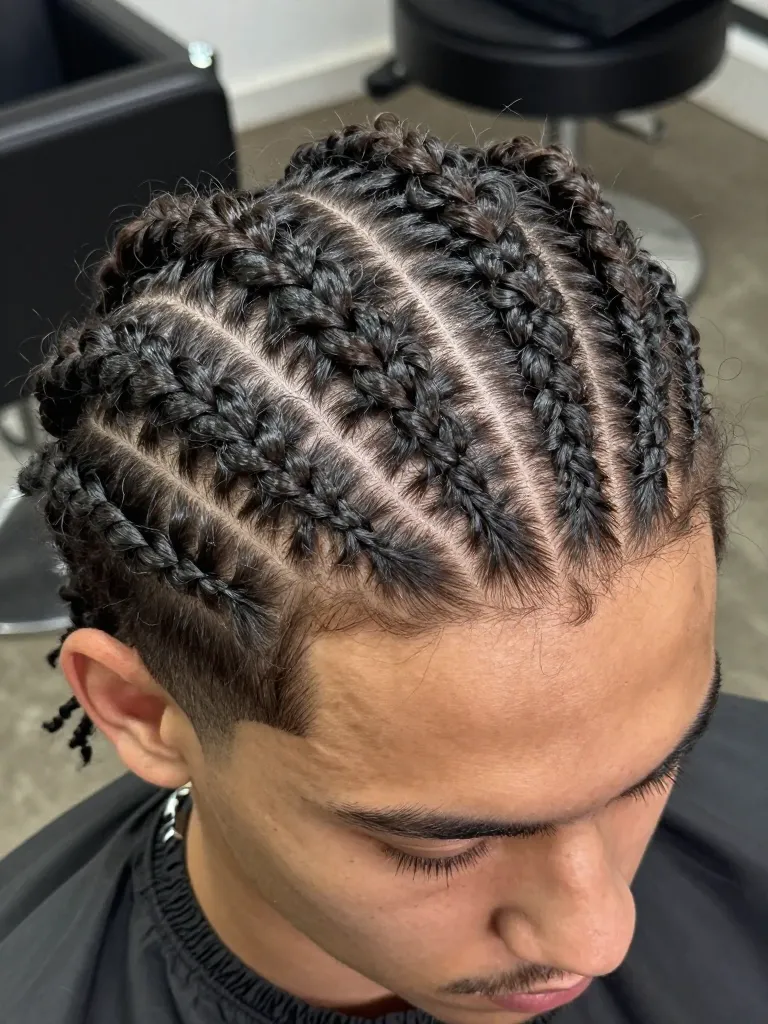
Curved swoop cornrows follow arcing paths across the head — think the curve of a wave, not the straightness of a ruler. The rows start at the hairline and sweep in a gentle curve to one side of the nape, creating a flowing, organic pattern. This style is more technically demanding than straight or diagonal rows because the braider needs to maintain consistent tension while following a non-linear path. The curve radius determines the visual effect: a gentle curve reads as elegant and subtle; a dramatic curve reads as artistic and bold. Curved swoop cornrows are particularly striking on guys with strong jawlines — the organic curves soften the angular features. They work best on medium to large head sizes, where the curves have enough surface area to be visible.
Timing: Parting: 25 minutes, Braiding: 90-120 minutes
Prerequisites: Rat-tail comb, Sectioning clips, Braiding gel, Experienced braider
Step 4: The V-Pattern Chevron — Geometric Precision
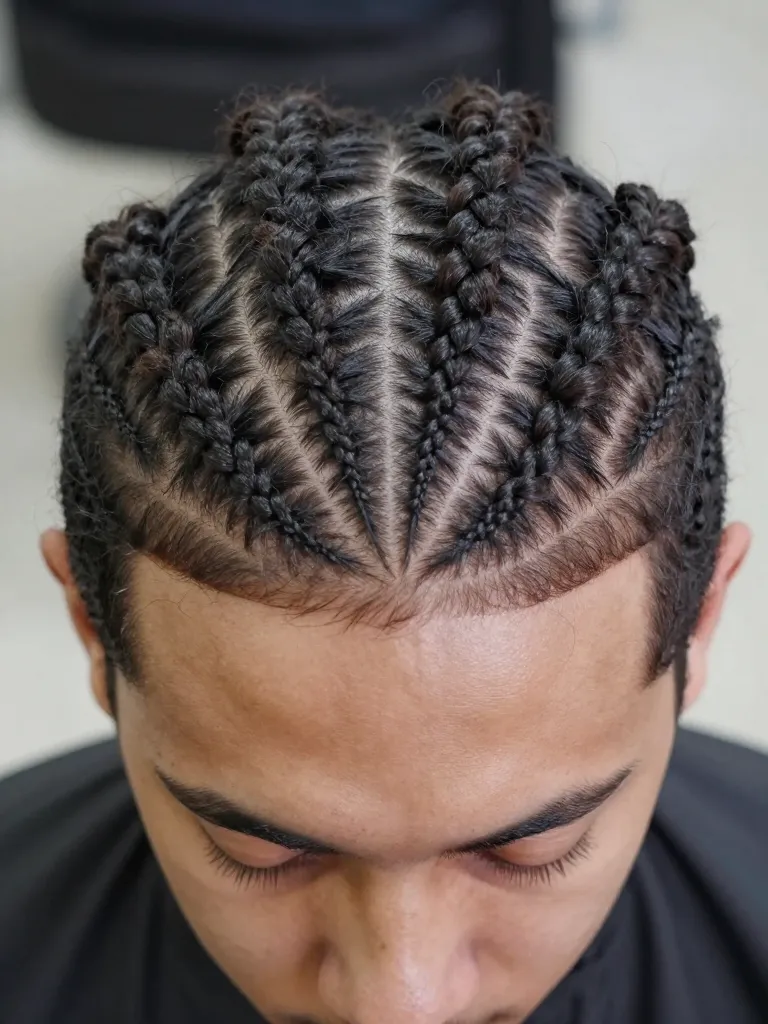
The V-pattern chevron is geometric cornrow art. Instead of parallel rows, the cornrows form a V or chevron shape — two sets of rows angling toward a center line, creating a repeating arrow pattern. This is one of the most visually striking cornrow patterns because the human eye is naturally drawn to geometric symmetry. The V-pattern requires meticulous parting — each V must mirror its counterpart exactly, which means the braider needs to work symmetrically from the center outward. The angle of the V determines the visual effect: a narrow V (30 degrees) creates a subtle, refined pattern; a wide V (60 degrees) creates a bold, graphic statement. The V-pattern works best on oval and diamond faces — the chevron lines add width at the temples and draw the eye upward.
Timing: Parting: 30 minutes, Braiding: 120-150 minutes
Prerequisites: Rat-tail comb, Sectioning clips, Braiding gel, Artist-level braider
Step 5: The Freestyle Map — Custom Design for One-of-a-Kind Results
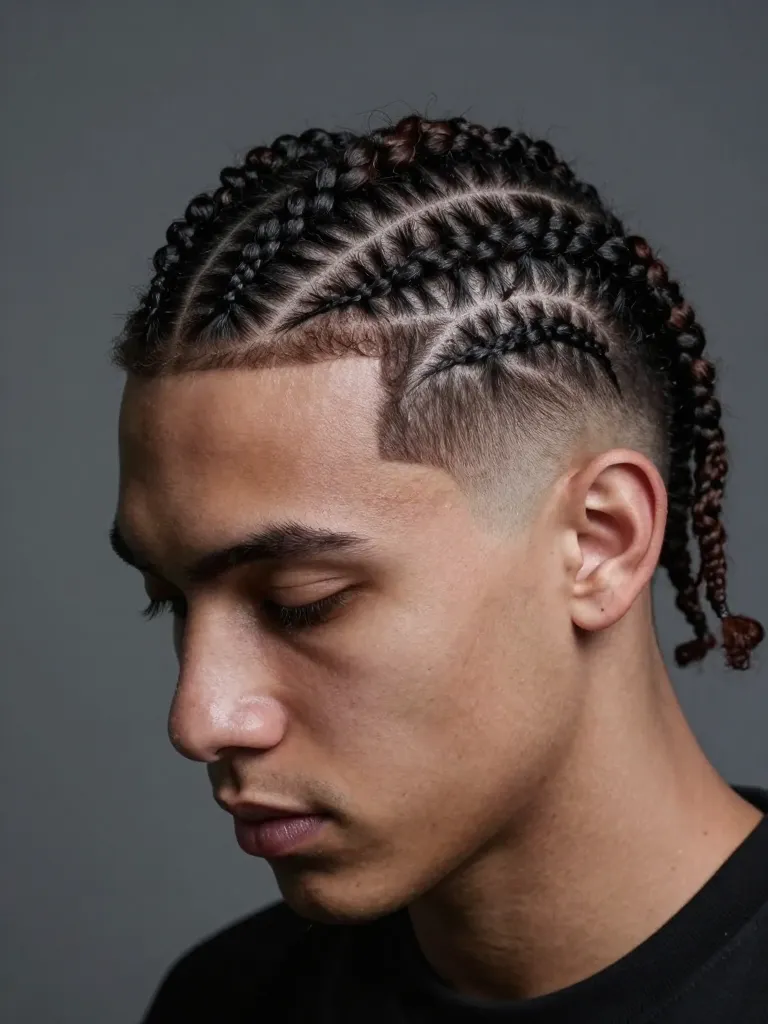
Freestyle cornrows are the pinnacle of braided art. The braider designs a custom pattern for your specific head shape — curved lines that intersect, spiral, diverge, and converge in ways that are unique to you. No two freestyle cornrow designs are alike, which is the entire point. This style requires the braider to have both technical skill and artistic vision — they need to see the finished design before the first part is made. The process typically starts with a consultation: the braider studies your head shape, discusses your style goals, and sketches a pattern. Then they execute it with the same precision as any other cornrow style, but following a custom map instead of a grid. Freestyle cornrows are a statement — they say ‘I take my hair seriously enough to commission a custom design.’ They work best in creative environments and for guys who want a braided style that’s impossible to replicate.
Timing: Consultation: 15 minutes, Parting: 30-45 minutes, Braiding: 150-180 minutes
Prerequisites: Artist-level braider, Reference images, Patience (this takes 3-4 hours total)
Step 6: Maintain the Pattern — Keeping Geometric Braids Sharp
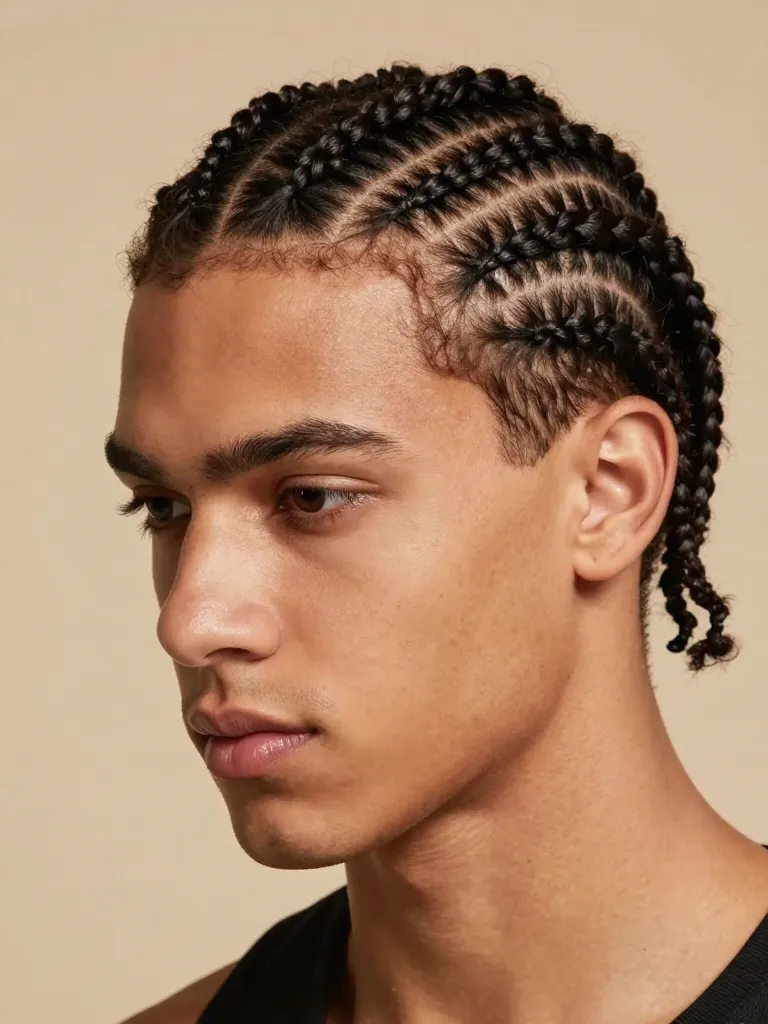
Geometric cornrow patterns require more maintenance than standard parallel rows — because the pattern is the point, any frizz or fuzziness that obscures the lines reduces the visual impact. The maintenance routine is the same as standard cornrows — satin durag nightly, lightweight oil on the scalp every 2-3 days, edge control on the hairline — but with extra attention to the pattern lines. If individual braids start fuzzing, you can smooth them with a small amount of mousse applied with a soft brush. Geometric patterns typically last 2-3 weeks, but the visual impact degrades faster than standard cornrows because the pattern is what makes them special. When the pattern starts looking muddy, it’s time for a re-do.
Timing: 5-10 minutes daily maintenance
Prerequisites: Satin durag, Lightweight oil, Edge control, Soft brush
Safety Warnings
⚠️ Geometric patterns require tighter tension to maintain crisp lines — communicate with your braider if it’s too tight
⚠️ Complex patterns (V-pattern, freestyle) take 3-4 hours — plan accordingly and don’t rush the braider
⚠️ Rest your hairline 1-2 weeks between complex pattern installations — the tension is higher than standard cornrows
Why This Works
Different cornrow patterns work because they exploit the human eye’s natural attraction to geometry and symmetry. Straight rows are the baseline — they read as clean and professional because the brain processes parallel lines as orderly and controlled. Curved and diagonal rows introduce movement — the brain follows the lines across the head, which creates visual interest. Geometric patterns (V-pattern, freestyle) create focal points — the eye is drawn to the intersection of lines, the center of spirals, the point of chevrons. The choice of pattern is a communication tool: it tells people how you want to be perceived before you say a word. Straight rows say ‘I’m precise.’ Curved rows say ‘I’m creative.’ Freestyle patterns say ‘I’m an individual.’ None is better than the others — they’re different messages for different contexts.
Pro Tips
- Match pattern to environment: Straight rows for professional settings, curved for creative, freestyle for statement-making
- Reference photos are non-negotiable: Verbal descriptions lead to mismatched expectations — always bring visual references
- Start simple, escalate: If you’ve never done geometric cornrows, start with diagonal sweep before attempting freestyle
- Head shape matters: Curved patterns soften angular features; straight lines sharpen soft features — choose accordingly
- Patience is the price: Complex patterns take 3-4 hours — the time investment is what makes them special
- Pattern degrades faster: Geometric braids need re-doing sooner than standard cornrows — the pattern is the point
Cornrows are a canvas. The basic grid is just the starting point — the technique can follow any pattern you can imagine. Diagonal sweep for subtle movement. Curved swoop for organic flow. V-pattern for geometric precision. Freestyle for one-of-a-kind art. The pattern you choose is a statement about who you are and how you want to be seen. Choose deliberately. The braider’s skill is the limit — and the right braider has no limits.
The head is a canvas. The braider is the architect. The pattern is your signature. ✂️