How to Start Freeform Locs: The Complete Guide to Unstructured Hair
The best locs are the ones you didn’t plan.
Freeform locs are the ultimate anti-method. While every other loc technique involves twisting, rolling, palm-rolling, or interlocking on a schedule, freeform locs ask you to do nothing. Literally nothing. Stop combing. Stop brushing. Stop manipulating. Let your hair do what it’s been trying to do your entire life — loc on its own terms. The result is a loc system that’s completely unique to you: no two freeform sets look alike because no two heads of hair grow the same way. But ‘doing nothing’ is harder than it sounds. Here’s how to do nothing correctly.
Step 1: The Big Chop or Transition
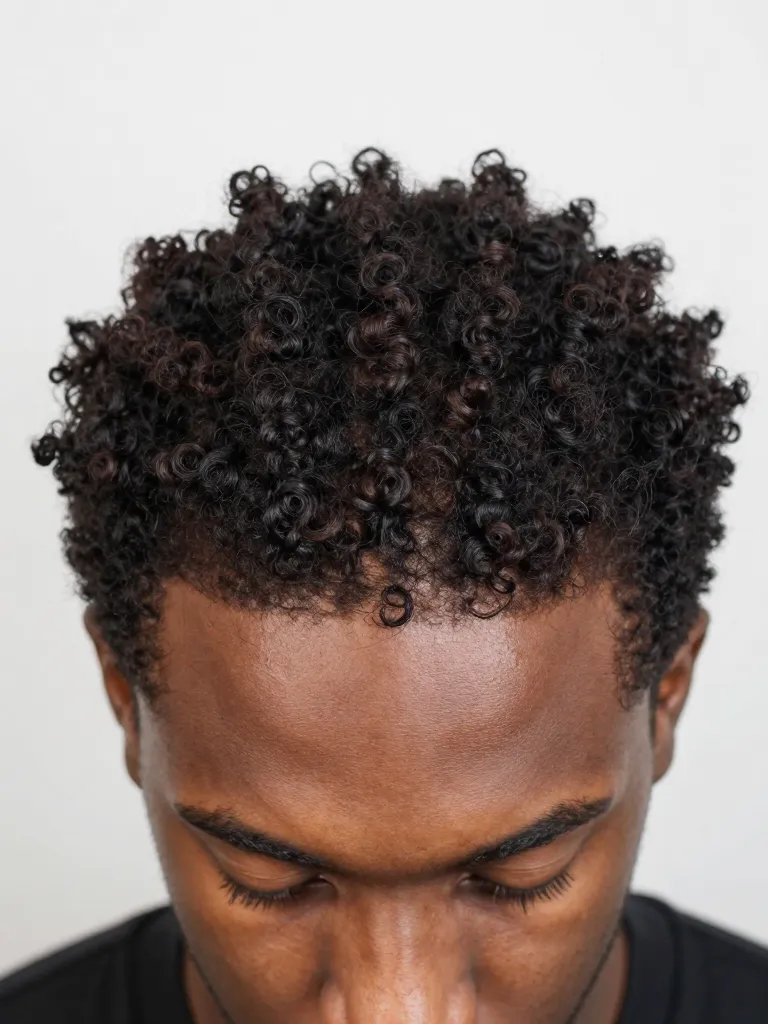
Freeform locs work best when started on short to medium-length natural hair. If your hair is currently relaxed, permed, or heat-damaged, you have two options: big chop (cut off the damaged hair and start fresh at 1-2 inches) or transition (grow out your natural texture for 3-6 months, then cut the damaged ends). For true freeforms, the big chop is better — you’re starting with a clean canvas of undamaged hair that will loc in its natural pattern. The ideal starting length is 2-4 inches — long enough to begin knotting, short enough that the early awkward stage is manageable.
Step 2: Wash and Separate
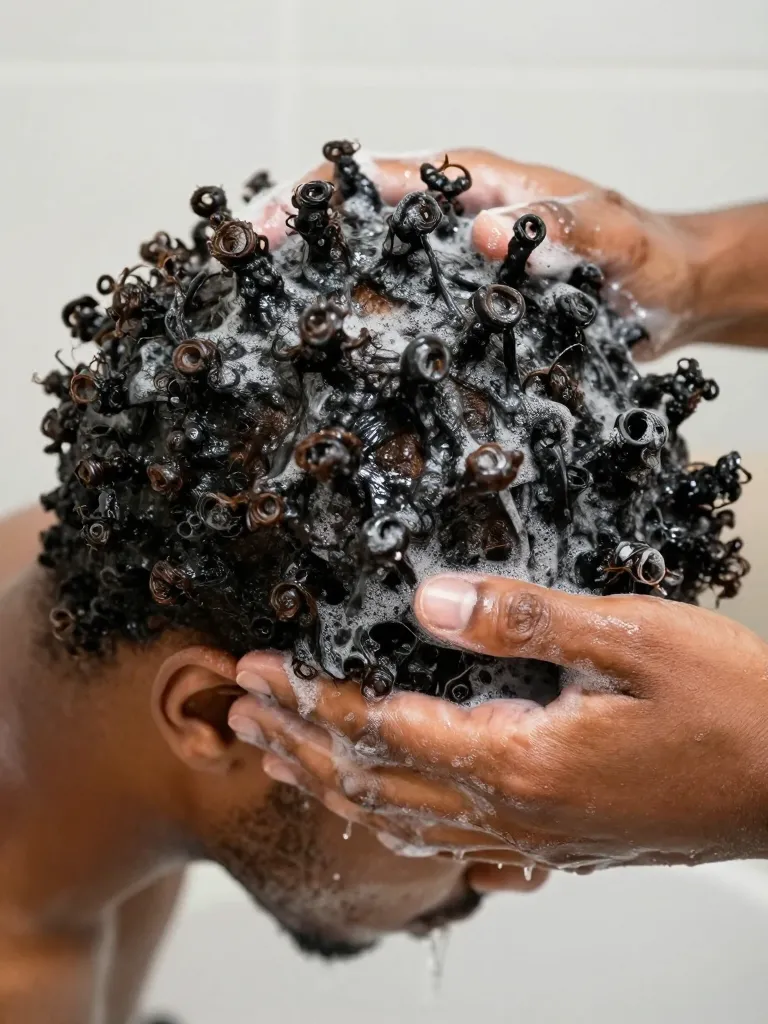
The first wash is the most important step in freeform loc development. Wash your hair with a residue-free moisturizing shampoo — avoid anything with silicones, heavy conditioners, or ‘smoothing’ agents, as these coat the hair shaft and prevent the natural knotting process. Wash in circular motions, encouraging the hair to clump into natural sections. Don’t try to detangle. Don’t use a comb. Let the water and your fingers do the work. After washing, towel-dry gently (pat, don’t rub) and allow to air dry. The hair will begin to clump into natural sections as it dries — these are the seeds of your future locs.
Step 3: The Patience Phase (Months 1-3)

Months 1-3 are the hardest part of freeform locs. Your hair will look messy. It will look like you’ve given up. People will ask if you need a haircut. This is normal. During this phase, your hair is doing the invisible work — forming the internal knots and coils that will eventually become mature locs. The visible sign of progress is ‘budding’ — small balls of tangled hair that form at the roots and gradually extend downward. Some sections will loc faster than others. Some will be thick, some thin. This irregularity is the entire point — it’s what makes freeform locs structurally unique. Wash once a week, moisturize with rosewater daily, and resist every urge to separate, twist, or manipulate.
Step 4: The Maturation Phase (Months 4-6)

By month 4-6, your freeform locs will have clearly defined structure. The budding phase transitions into the ‘teenage’ phase — the locs are formed but still developing their final shape and thickness. You’ll notice some locs have merged (two becoming one), some have split (one becoming two), and some have developed natural curves or bends. This is the phase where freeform locs develop their personality. The irregularity that looked messy in months 1-3 now reads as intentional and artistic. Continue washing weekly, moisturizing daily, and sleeping in satin. You can now start styling — pulling the locs back, to the side, or up — but avoid any tension-based styles that could stress the still-developing roots.
Step 5: Maintenance and Identity

After 6 months, your freeform locs are mature enough to have a maintenance routine — but it’s the lightest maintenance in the loc world. Wash once a week with residue-free shampoo. Moisturize with rosewater spray daily. Apply scalp oil (jojoba or tea tree) to the roots once a week to prevent dryness under the loc weight. That’s it. No retwisting. No palm-rolling. No interlocking. Your only job is to keep the hair and scalp clean and moisturized while the locs continue to develop on their own timeline. At this stage, you can experiment with more aggressive styling — loc ponytails, half-up styles, and even loc jewelry without worrying about root stress.
Why This Works
Freeform locs work because of a fundamental property of textured hair: when coily hair is left unmanipulated, the natural curl pattern causes adjacent strands to wrap around each other, forming knots. These knots are the structural foundation of locs. The coiler the hair, the faster this process happens — 4C hair can form visible locs in 2-3 months, while looser textures may take 6-9 months. The ‘method’ is literally the absence of method: by not combing, brushing, or manipulating the hair, you allow the natural knotting process to proceed uninterrupted. The result is locs that follow the hair’s natural growth patterns rather than imposed parting or sectioning — which is why freeform locs have the organic, irregular character that maintained locs can’t replicate.
Freeform locs are the purest expression of natural hair. They’re not a style you choose — they’re a style you allow. Every other loc method imposes human will on the hair’s natural behavior. Freeforms ask the hair what it wants to do, then get out of the way. The result is a loc system that’s as unique as a fingerprint — no two freeform sets look alike because no two heads of hair grow the same way. The hardest part isn’t the technique. It’s the patience. But if you can survive the awkward phase, you’ll have a hairstyle that no one else on the planet can replicate.
Stop combing. Start building. Let your hair do the work. ✂️