Gothabilly Hair: 4 Styles Where Rockabilly Meets the Dark Side
Victorian mourning hair meets 1950s pin-up. The subculture aesthetic that refuses to die.
The victory roll is the signature rockabilly hairstyle, and in gothabilly it gets the dark treatment. The hair is jet black (or deep burgundy), and the victory rolls are larger and more dramatic than the traditional version. The process: section the front into two panels, backcomb each for volume, r
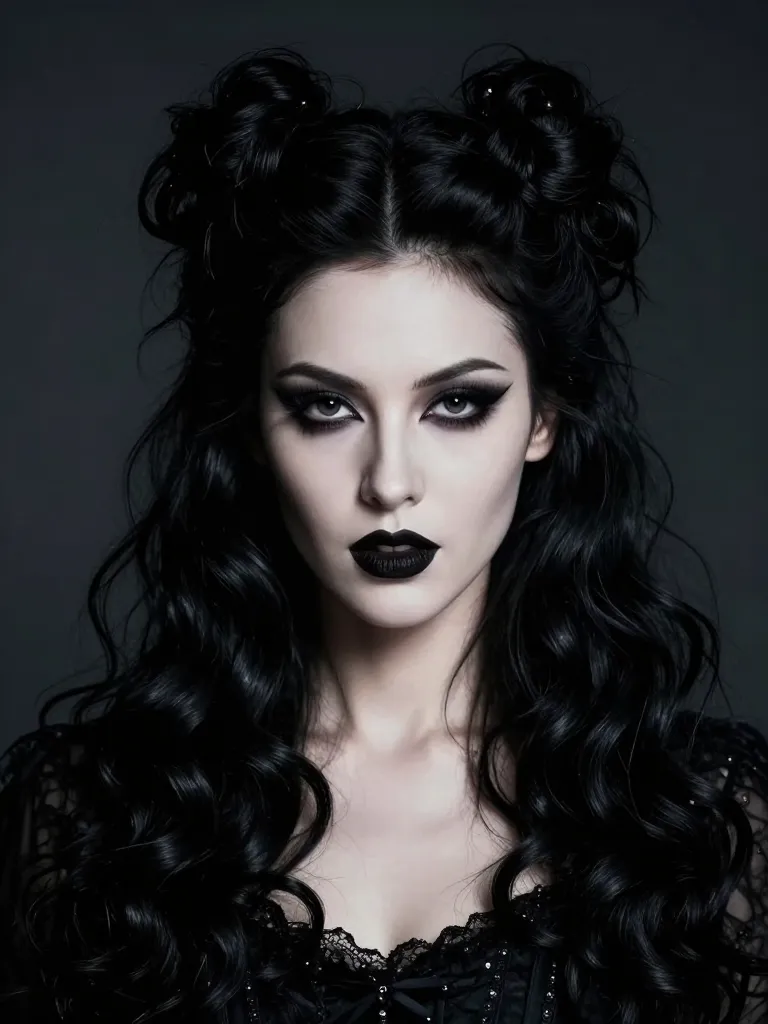
1. The Victory Roll into Darkness
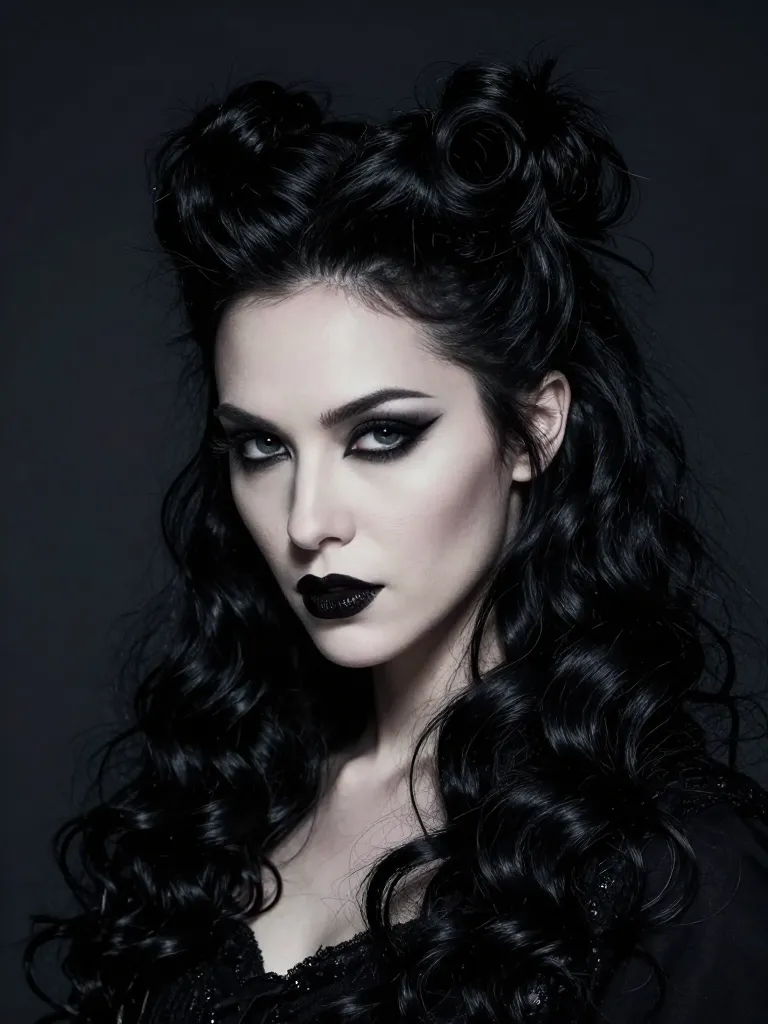
The victory roll is the signature rockabilly hairstyle, and in gothabilly it gets the dark treatment. The hair is jet black (or deep burgundy), and the victory rolls are larger and more dramatic than the traditional version. The process: section the front into two panels, backcomb each for volume, roll each section backward and pin at the crown. The rest of the hair is curled in loose, vintage waves. The key difference between rockabilly and gothabilly victory rolls is the attitude — they’re messier, bigger, and more deliberately dramatic. Add a dark flower or skull clip for the finishing touch.
2. The Bettie Page Bangs
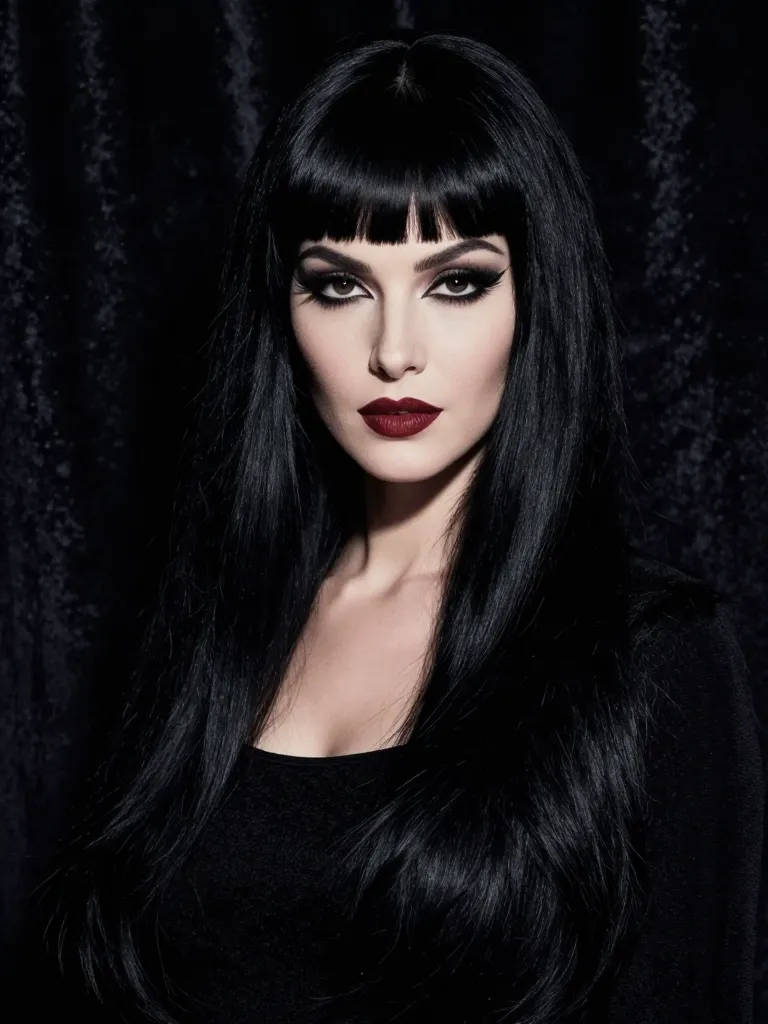
Bettie Page bangs are the foundation of gothabilly hair. The bangs are blunt-cut, sitting just above the eyebrows in a straight, heavy line. The rest of the hair is long and flowing — either straight or in loose vintage curls. The bangs should be thick and full, not wispy or side-swept. Cut them yourself with professional shears (not kitchen scissors) while the hair is dry — wet hair shrinks and you’ll end up with too-short bangs. The Bettie Page bangs work best on straight to slightly wavy hair. On curly hair, you’ll need to flat-iron the bangs daily.
3. The Psychobilly Quiff
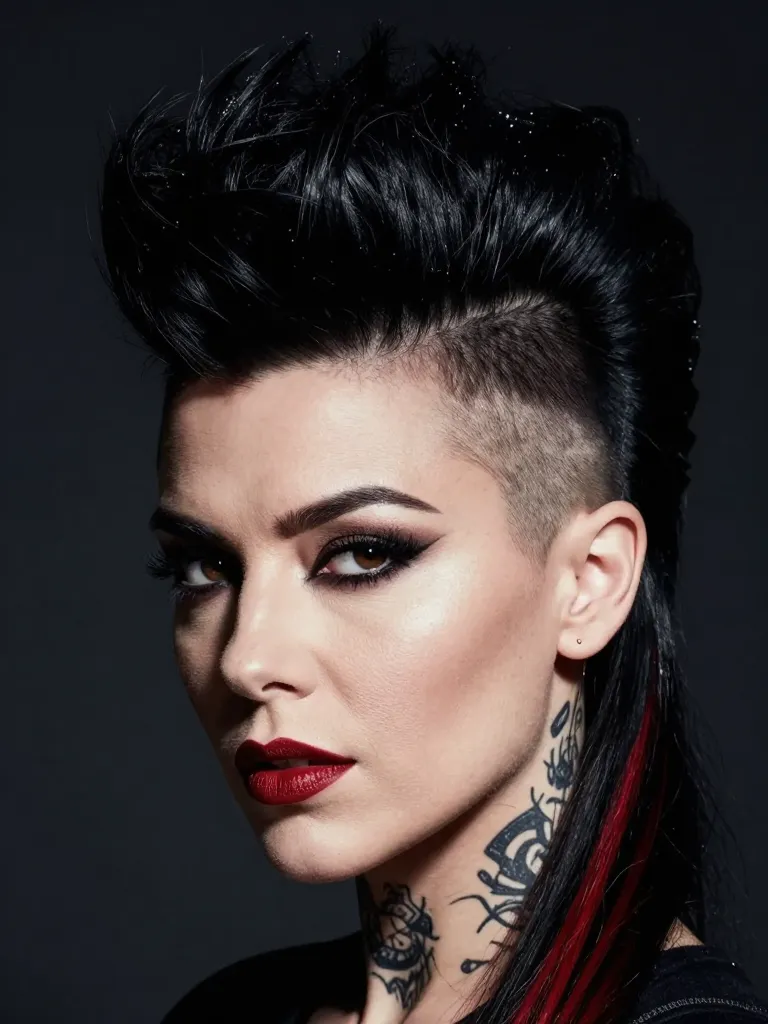
The psychobilly quiff is the most extreme gothabilly hairstyle. The front is a massive pompadour — 6-8 inches of hair swept up and back with maximum volume and hold. The sides are shaved (undercut or full shave) creating dramatic contrast. The back can be left long (mullet-style) or buzzed short. The styling requires strong-hold pomade, a blow dryer, and a fine-tooth comb. Start with damp hair, apply pomade, blow dry upward while combing the front into the pompadour shape. Finish with hairspray for all-day hold. This style is a commitment — it takes 15-20 minutes daily.
4. The Dark Bouffant
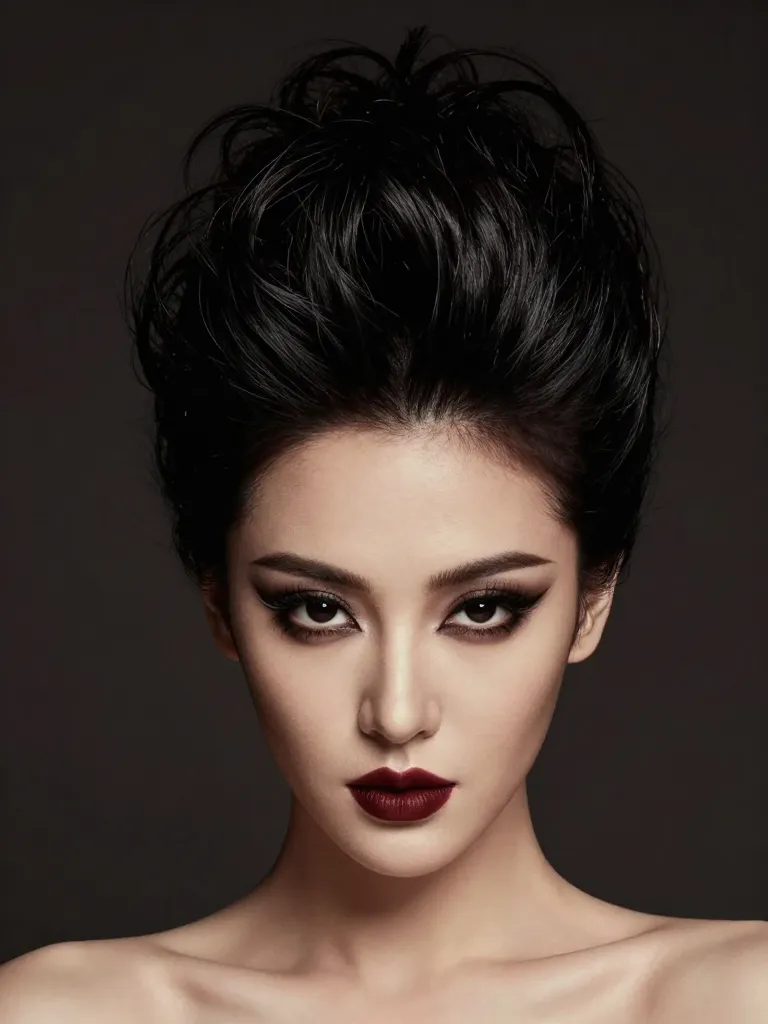
The dark bouffant is the gothabilly answer to the 1960s beehive. The crown is teased aggressively with backcombing, creating 4-6 inches of volume. The surface layer is smoothed over the teased base, creating a sleek dome of hair. The sides are pinned back or left to frame the face. The color is always dark — jet black, deep burgundy, or midnight blue. The styling process: section the crown, backcomb each section at the root, smooth the top layer with a boar bristle brush, and pin the sides. Finish with maximum-hold hairspray. The dark bouffant is a statement piece — wear it to concerts, events, or anytime you want to be the tallest person in the room.
What You’ll Need
| Item | Purpose |
|---|---|
| Strong-hold pomade | Victory rolls and psychobilly quiff styling |
| Maximum-hold hairspray | Setting bouffants and victory rolls |
| Rat-tail comb | Backcombing and teasing for volume |
| Bobby pins (black) | Securing rolls and bouffant |
| Dark hair dye (jet black) | Achieving the gothabilly color |
Every haircut is a statement. These ones just happen to be worth making.
Cut it. Own it. Repeat.