Long Loc Styles: How to Style, Maintain, and Wear Locs Past Your Shoulders
Length is leverage. Here’s how to use it.
Long locs are a different material than short locs. Short locs are structural — they hold shape, create silhouette, and frame the face. Long locs are gravitational — they flow, cascade, and respond to movement. The styling vocabulary changes completely once your locs pass your shoulders. You’re not working with form anymore. You’re working with weight, momentum, and drape. Most loc guides stop at ‘how to grow them.’ This one starts where they leave off — what to do with all that length once you have it.
Step 1: Assess Your Length and Weight
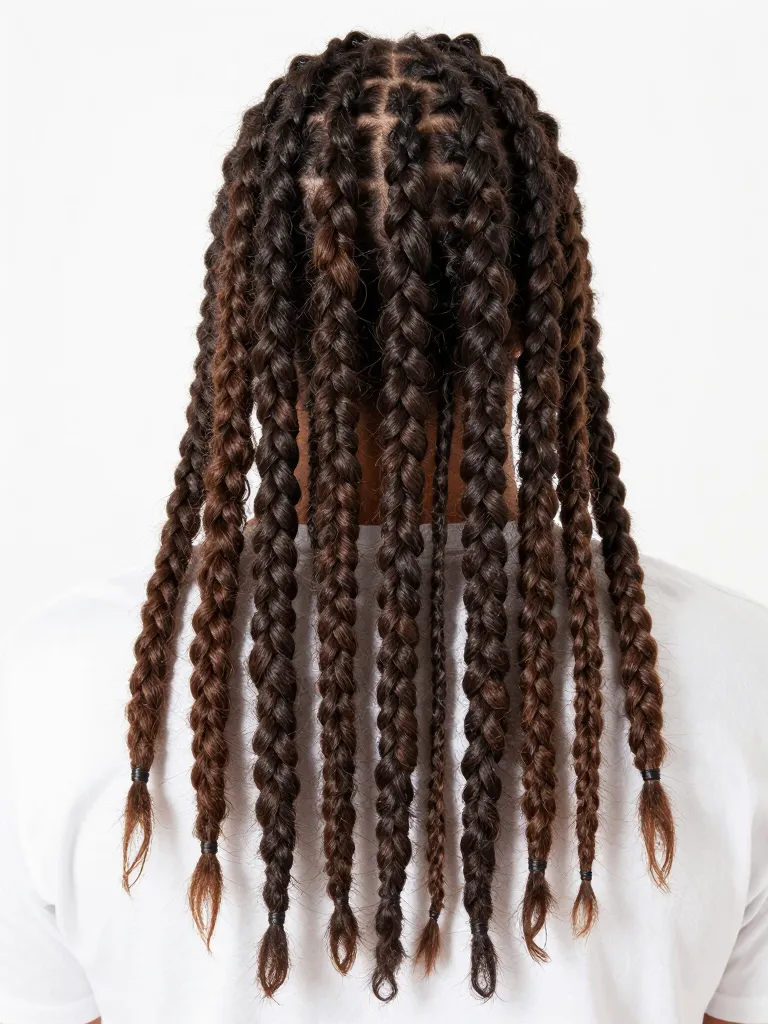
Before styling long locs, you need to understand your specific loc system. Measure your longest loc — anything past 12 inches is considered ‘long’ in the loc world. Next, assess weight: thick locs (finger-width or wider) carry significantly more weight than thin locs, which affects which styles are comfortable for all-day wear. A high ponytail of thick locs creates substantial tension on the hairline — the same style with thin locs is much lighter. Finally, assess your loc health: long locs that are thinning at the roots, have excessive lint buildup, or show uneven taper need repair before styling. Healthy long locs have consistent thickness from root to tip, a clean surface texture, and no weak points.
Step 2: The Weight Distribution Styles
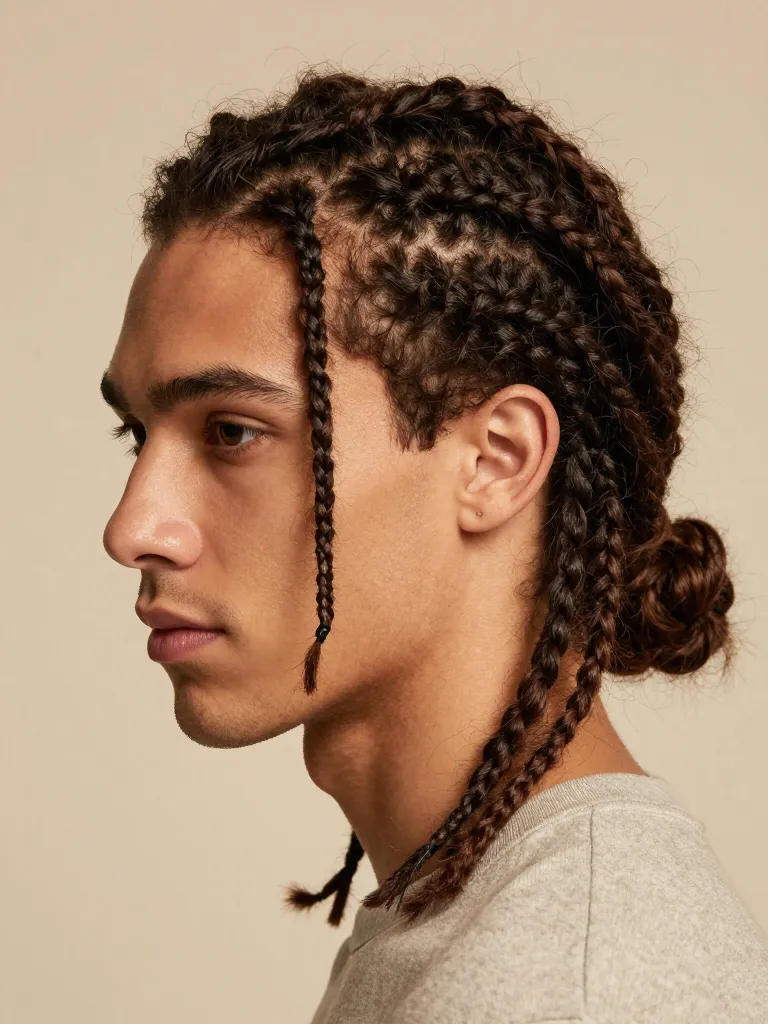
Long locs need weight distribution — styles that spread the gravitational load across multiple anchor points rather than concentrating it at one. The three core weight-distribution styles are: the low loose bun (loc gathered at the nape, no tension on the hairline), the side sweep (all locs draped over one shoulder, weight distributed across the side of the head), and the half-up cascade (top section secured, bottom section flowing freely). Each style keeps the locs off your face while avoiding the tension damage that high ponytails cause on long, heavy locs. The key word is ‘loose’ — if you can feel pulling at your hairline, the style is too tight.
Step 3: The Layered Cascade
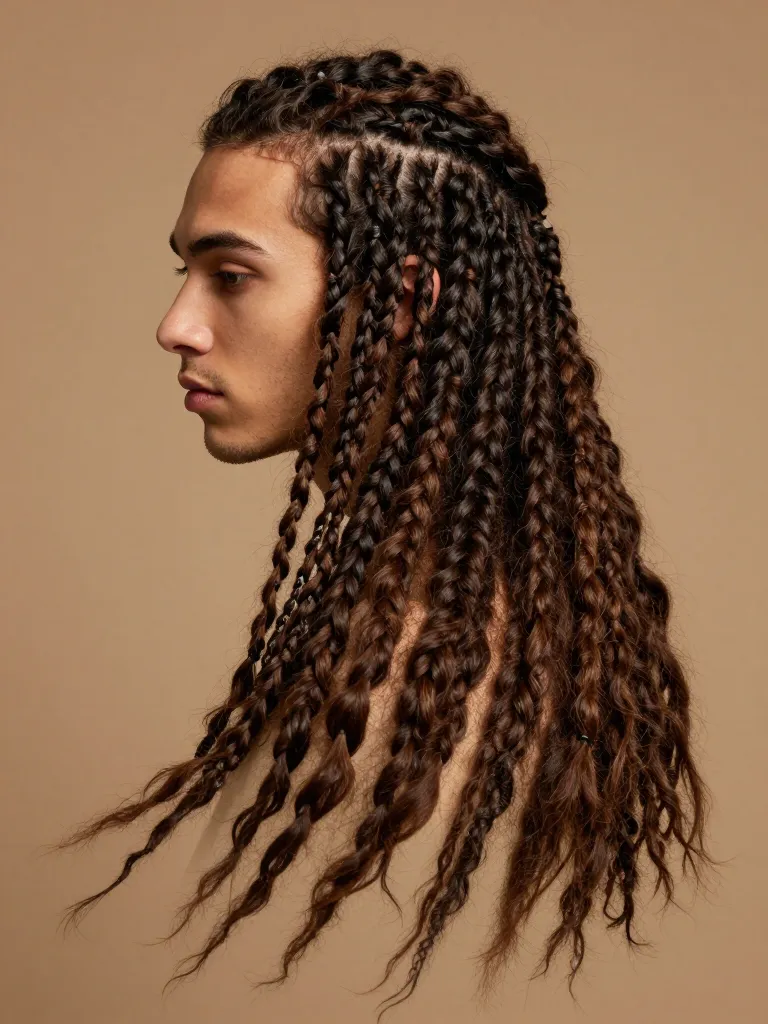
The layered cascade is the most visually complex long loc style — and the easiest to wear. Instead of treating all your locs as one mass, divide them into three horizontal layers: crown (top third), mid (middle third), and nape (bottom third). The crown layer is pulled back loosely into a half-up style or secured with a single clip. The mid layer is left to frame the face — these are the locs that create the curtain effect around your jaw and neck. The nape layer flows freely down your back. The result is dimensional movement — when you turn your head, the three layers move at different speeds and in different directions. It’s the loc equivalent of layered loose hair, but with more structure and zero frizz.
Step 4: Protective Styling for Length Retention
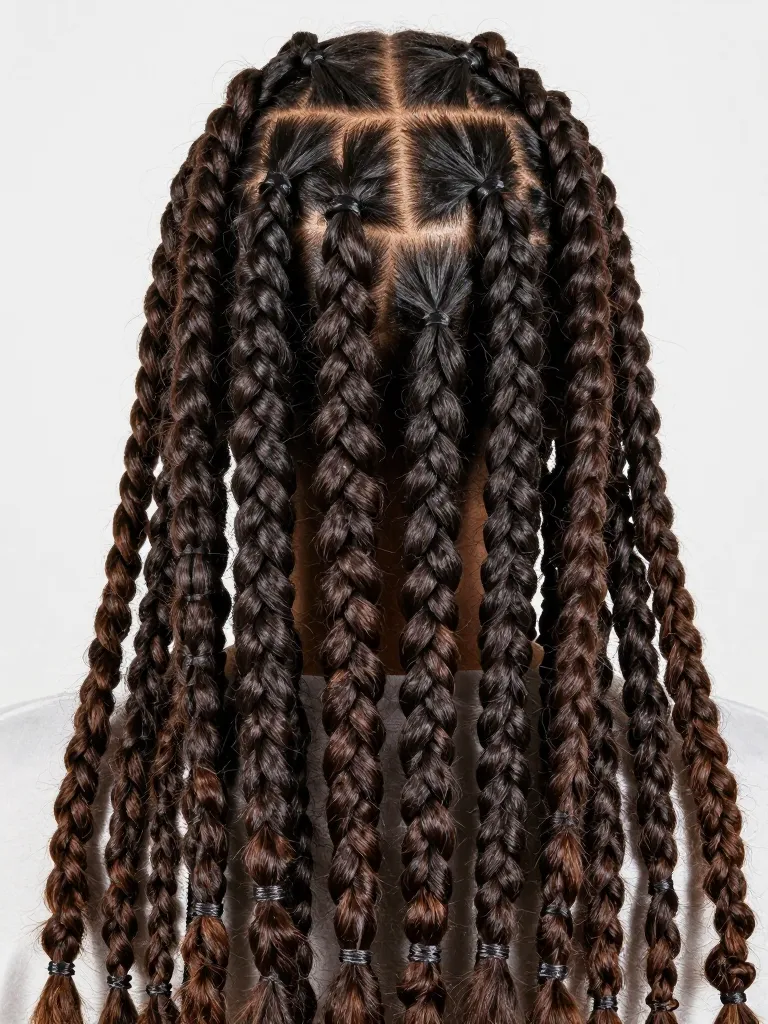
Long locs need protection to maintain length. The ends of long locs are the oldest hair on your head — they’ve been through years of environmental exposure, manipulation, and friction. Without protection, the ends thin, fray, and eventually break off, shortening your locs from the bottom up. The two primary protective techniques are two-strand twisting (twisting locs together in pairs from mid-length to tip) and loc wrapping (wrapping the bottom 2-3 inches of each loc with embroidery thread or yarn). Both techniques protect the ends from friction and environmental damage while adding visual texture. Wear protective styles for 2-3 weeks at a time, then release for 1-2 weeks to let the locs breathe.
Step 5: Night Care for Long Locs
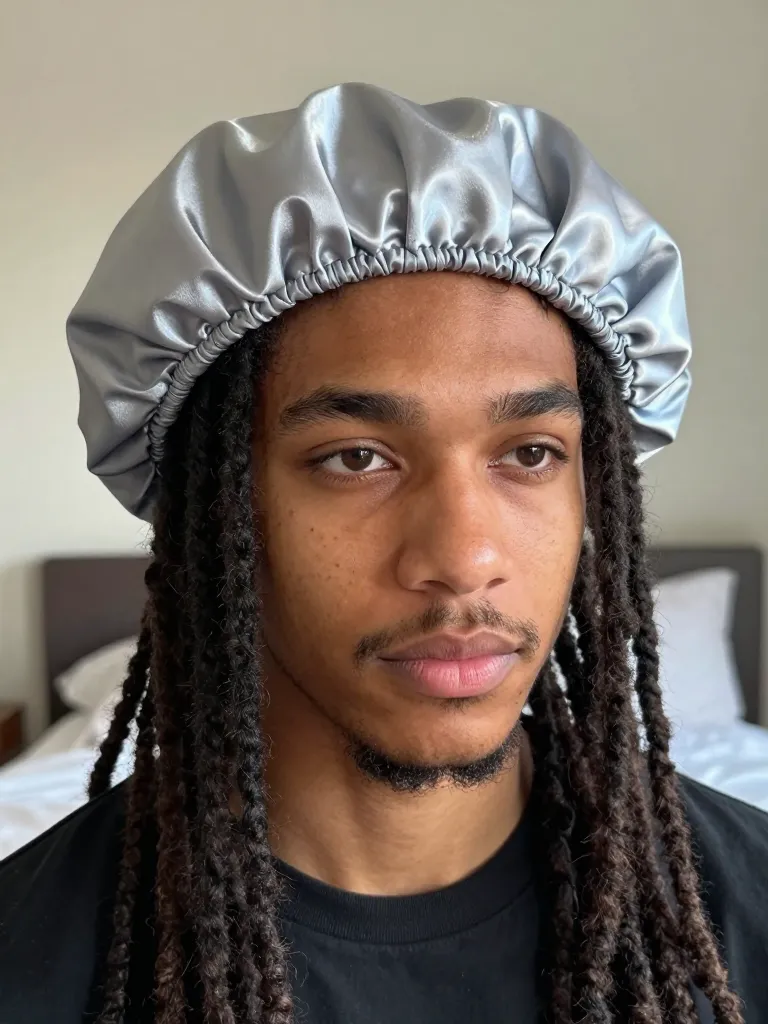
Long locs require a night routine that short locs don’t. The weight and length of long locs means they’re constantly in contact with your pillow, creating friction that causes frizz, lint accumulation, and end damage over time. The minimum night routine: gather all locs loosely on top of your head (the ‘pineapple’ method), cover with a large satin bonnet, and sleep on a satin pillowcase. The bonnet protects from friction. The pillowcase is backup protection if the bonnet shifts. For extra-long locs (past mid-back), consider a satin-lined loc sock — a long tube that contains the entire loc length without compression. The goal is zero friction between your locs and any cotton surface for 6-8 hours every night.
Why This Works
Long locs behave according to basic physics — specifically, gravitational force and tensile strength. Each loc is essentially a rope: it has a fixed weight per unit length, and that weight increases linearly with length. A 12-inch loc weighs roughly twice as much as a 6-inch loc of the same thickness. This means long locs exert significantly more force on the root anchor point, especially in high-tension styles like ponytails and buns. Weight-distribution styles work by spreading that force across multiple anchor points — a low bun distributes weight across the nape, while a side sweep distributes across the temporal region. Protective styling works by reducing friction on the oldest, most fragile hair at the loc tips. The night routine eliminates 6-8 hours of friction exposure per day, which compounds into significant length retention over months.
Long locs are the ultimate commitment hairstyle. They represent years of growth, maintenance, and patience — and they reward that patience with a visual presence that no other hairstyle can match. The weight, the movement, the drape — long locs are less a hairstyle and more a material system that you’ve cultivated over time. The styles here aren’t just about looking good. They’re about preserving the investment you’ve made in your locs while using their length as the dramatic asset it is.
Length is earned. Wear it like architecture. ✂️